


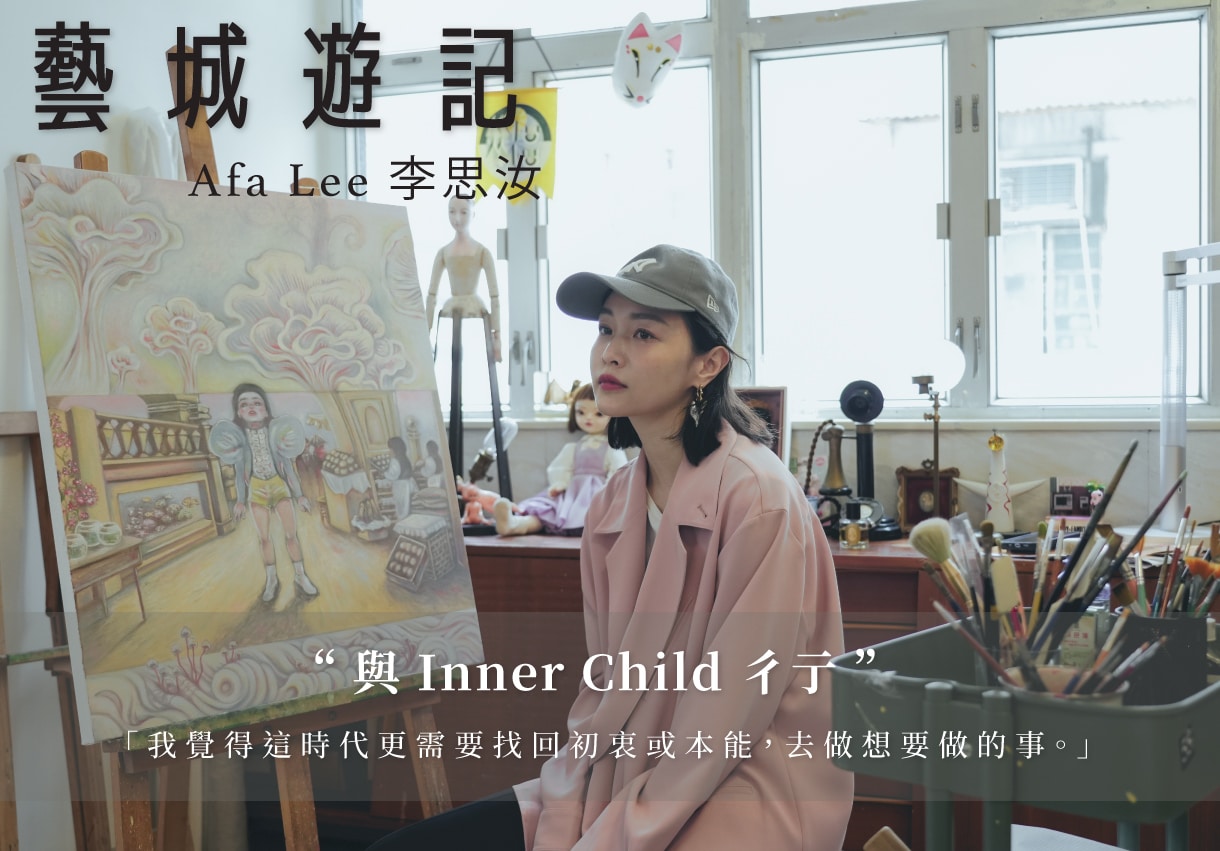
Hong Kong artist interview: During Hong Kong’s art month this spring, artist Afa Lee (李思汝) invited us into her Tai Hang studio to talk about the dolls and paintings that map her ideas about identity, desire and the inner child.
Winter turned to spring, and flowers were in bloom. While at an art-month fair, I noticed one of Afa Lee (李思汝)’s works: two picture-perfect girls playing in a pool, their wide, expressive eyes like blossoms. The image lingered, beautiful and haunting.
Mentioning Afa brings to mind a fashionable presence, refined features, and model poise, along with many professional hats: illustrator, on-camera performer, and contributor to music video art for artists such as Eason Chan and Khalil Fong. She has even been nominated for Best MV in Taiwan. Every facet of her career feels richly layered, drawing attention and admiration.
With the season of flowers upon us, we met Afa Lee (李思汝) to walk through her doll-filled world, and to unpack the floral motifs that recur in her work.
Afa and the Doll
Looking at Afa Lee (李思汝)’s work, you notice a quirky style that recalls Japanese ukiyo-e and strange comics, paired with delicate brushwork. Her invented characters feel dimensional, alive in both expression and color. Walk into her studio and the bright, clean energy makes it easy to say the work reflects the artist herself.
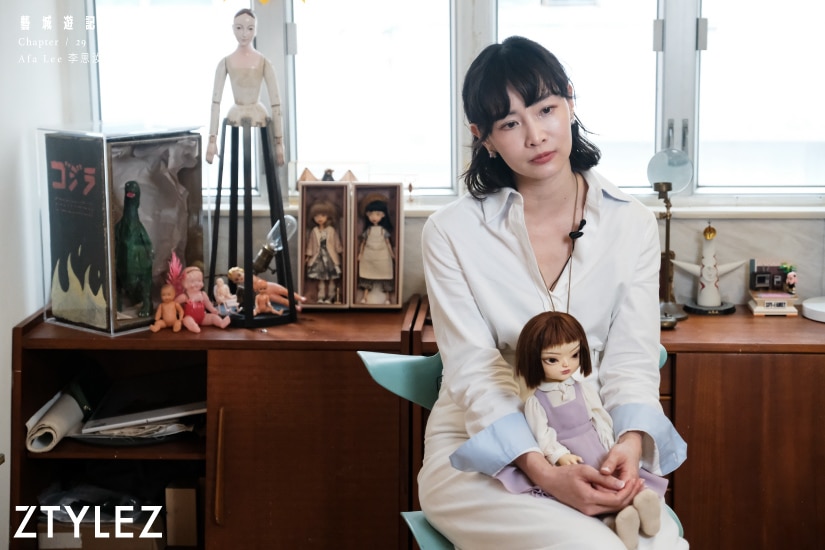
There were no flowers in the studio. Instead, shelves held a range of dolls, some worn and patched, some vintage and unnerving. Each stared out with big eyes, as if assessing visitors.
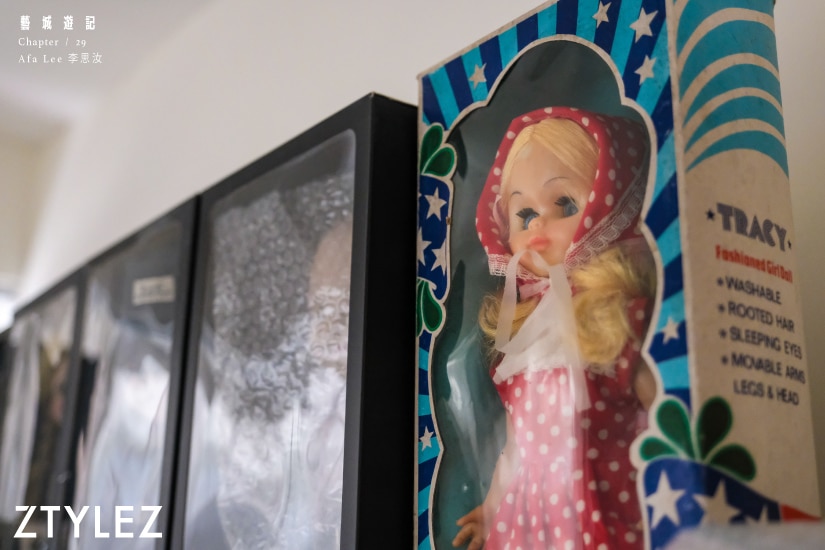
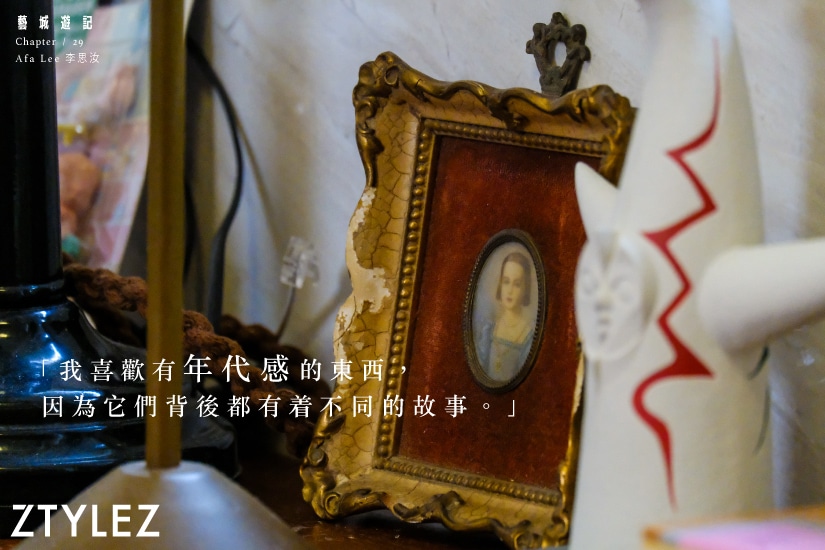
Afa Lee (李思汝) said many of the dolls were found at antique shops and flea markets around the world. Some had no space and were boxed away. She pointed to one and explained it was handmade, and that its name is “Sichuan Flower” (川花).
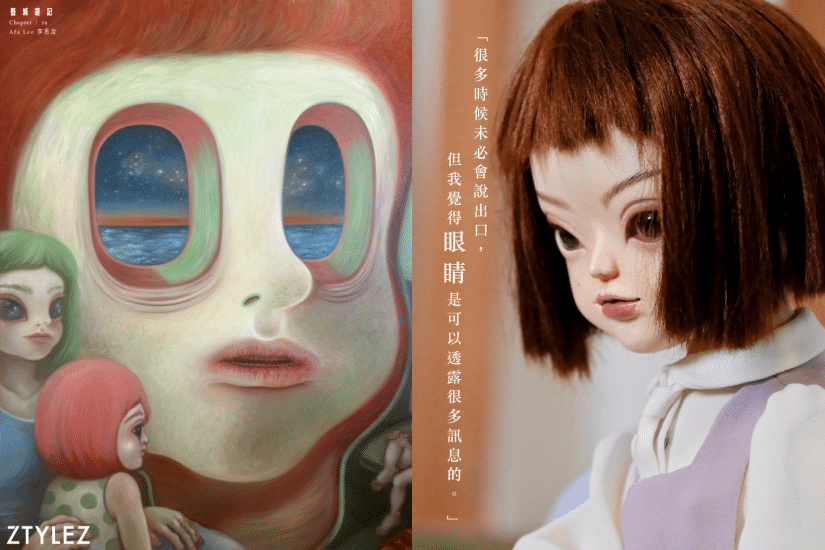
“I spent almost three months making “Sichuan Flower” (川花), from shaping powder into clay, to layering, firing, and carving. I even flew to Taipei to learn specific techniques — everything from the eyes to the hair is made by hand,” she said.
As she described the doll, it became clear that “Sichuan Flower” (川花) resembles her creator, even in name. Afa Lee (李思汝) said her English name comes from a Chin-lish rendering of a nickname meaning “flower,” so it made sense the doll, too, carries that floral link and even a name tattoo.
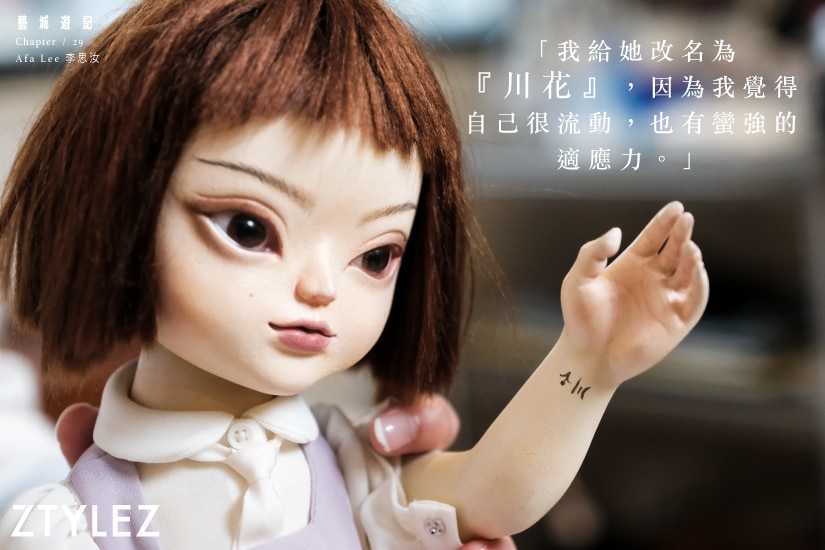
No wonder “Sichuan Flower” (川花) feels lively and mischievous, her gaze full of character. Are the doll and the painted figures the same person? “There is only one “Sichuan Flower” (川花),” Afa Lee (李思汝) said, “but the girls I paint are called “Qiqi” (琪琪), so I am especially attached to “Sichuan Flower” (川花).”
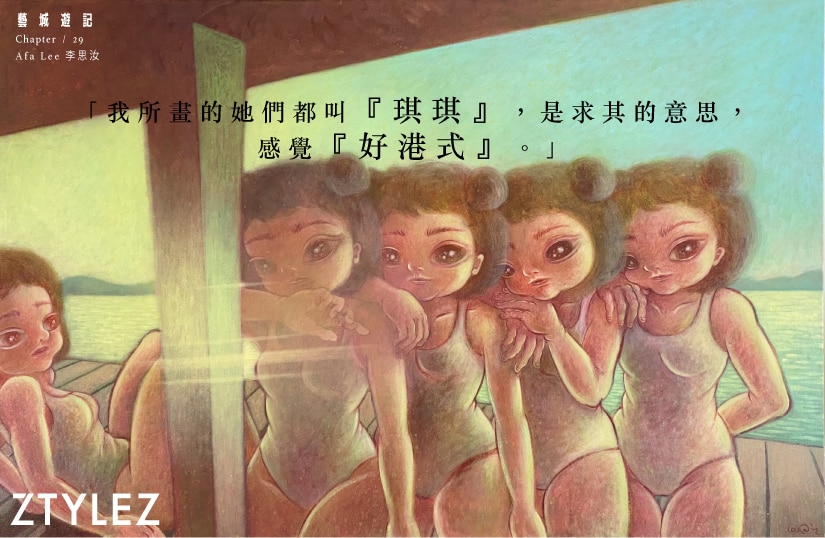
She recalled how she named “Qiqi” (琪琪). At Art Central two years ago, she made an installation about the recent emigration wave, splitting the space into a mock “Kiki Laundry” and a British home interior. The name “Kiki” came to her in a rush, feeling traditional and fitting for an old Hong Kong laundry shop. The name stuck and became the moniker for the girls in her paintings. Yet she emphasized, “”Qiqi” (琪琪) is not a single person, but a collective. I gather traits, people, and ideas I notice, integrate them, then split them into many versions to express different aspects.”
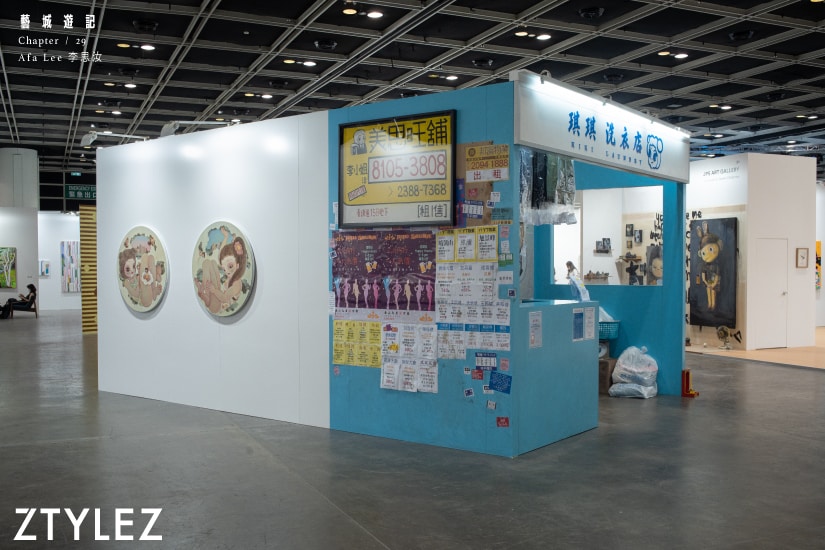
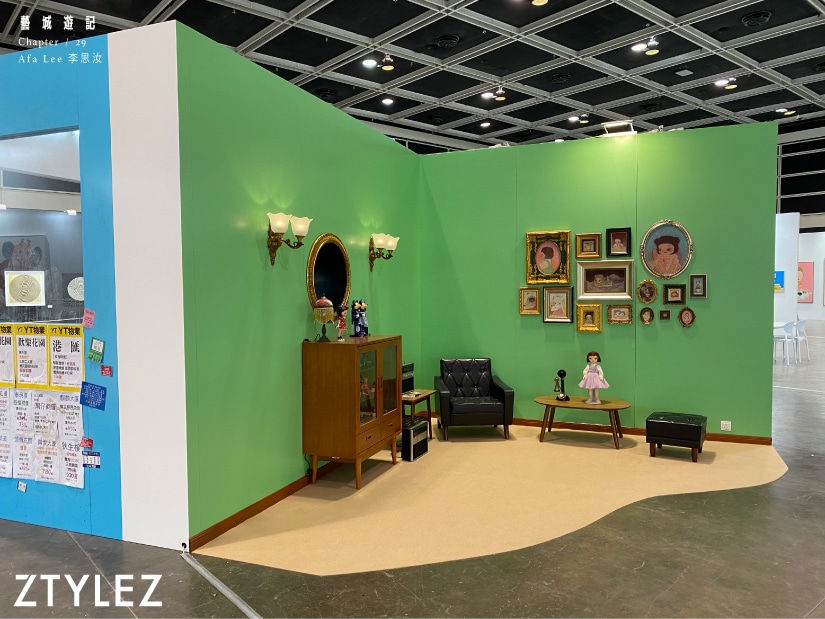
Different as they are, what unites her figures is that pair of eyes, as if holding entire worlds inside.
Origins of the Work
“I like drawing people, especially expressions, eyes, and hands. I am drawn to things linked to life and feeling, and I believe the world is full of flaws; wounded people tend to be kinder,” she said.
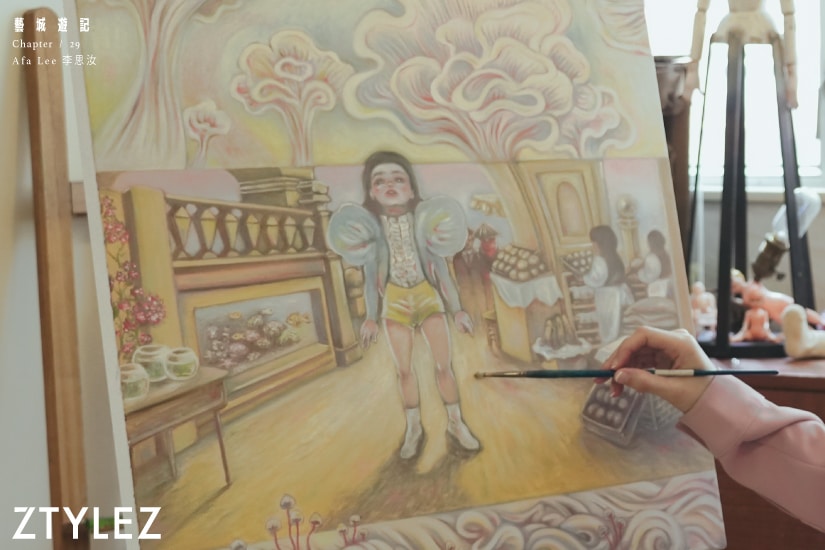
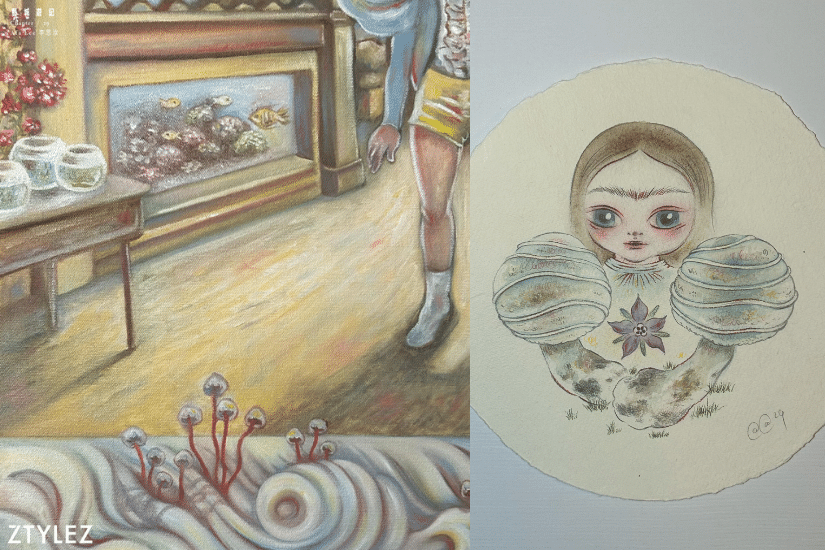
“I am always looking for links between different things, and building new contexts to present them. My latest work was inspired by the film Poor Things and the documentary Fantastic Fungi,” Afa Lee (李思汝) said. “For example, mushrooms break things down and create new things; in the film a heroine dies and is brought back to life by scientists. Emma Stone’s puff-sleeved blouse in the film felt mushroom-like, so I connected those ideas to explore life and death.”
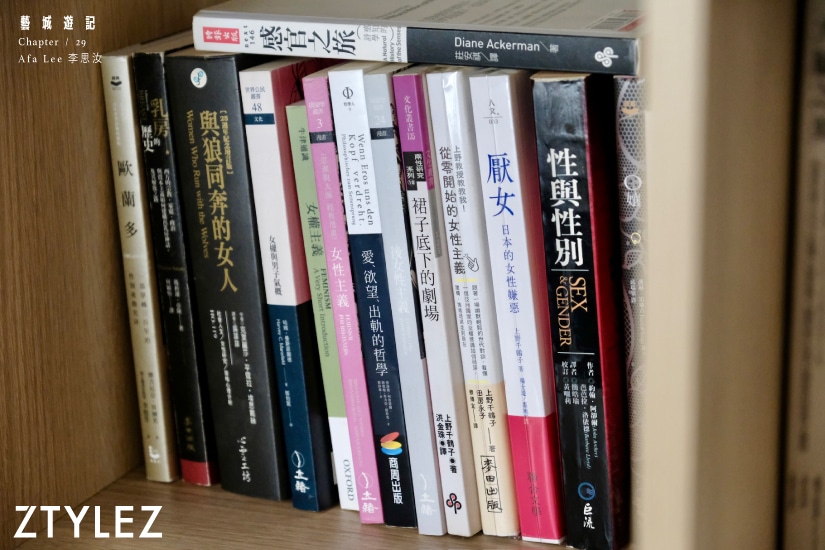
Women, instinct, life and death, and even ghosts are recurring themes in her work, and her studio bookcase reflects those interests. Her favorite book there is The Voyage of the Senses, which examines the origins and natural history of perception.
She described herself as highly sensitive, attentive to sensory perception, and easily influenced by people and environments. She laughed as she explained that some of the yokai or monster characters she created were drawn from the darker sides of human nature.
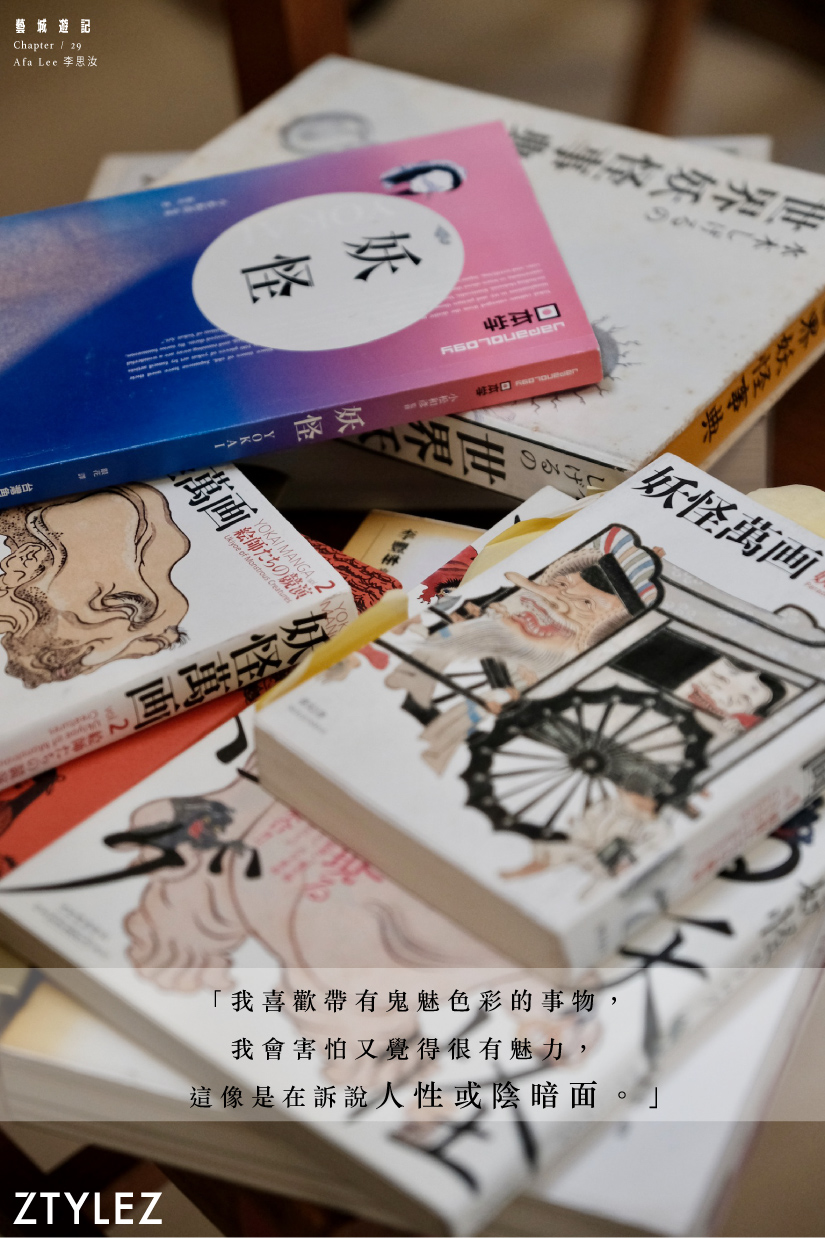
“Whether erotic or monstrous, these are our deepest, most primal desires. Society places too many constraints and norms that strip people of character. I think this era needs to rediscover our original intentions and instincts, to do what we want. Through my art I try to express more of this.” she said.
True to Herself
“I think staying curious is key, it keeps you passionate about life,” she said.
Her curiosity drives work and art, and allows her to explore many directions. She traced her love of drawing back to her father, but never planned to make art a career. “We’re all pragmatic in Hong Kong. Parents rarely encourage careers in art; the idea that artists cannot earn a living is ingrained,” she said.
She took a practical path initially, studying design and working as an art director at an advertising agency. Yet illustration kept tugging at her. Three years later she left full-time employment to pursue illustration freelance. The choice seemed impulsive, but it followed careful thought and experience. “What you choose to wear signals what you want to project to others; my work shows the deepest, truest part of myself.”
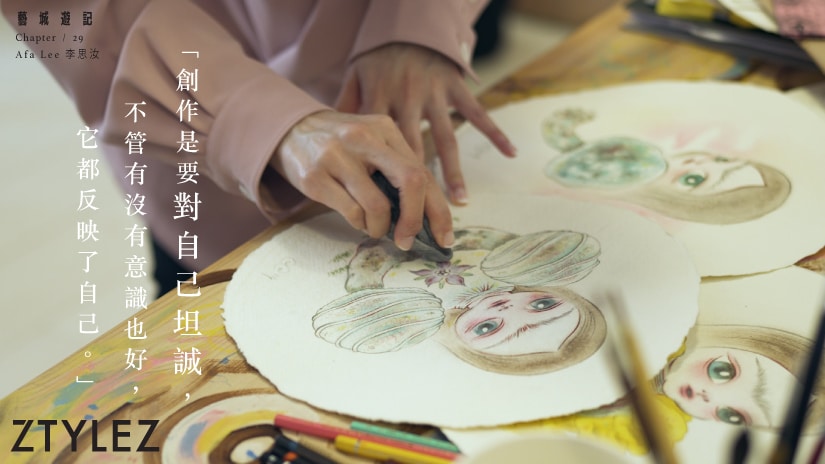
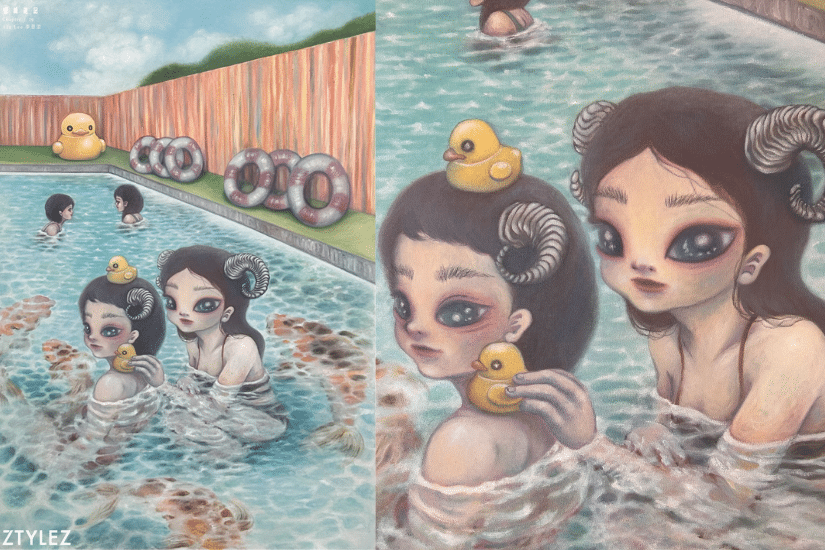
Look closely and listen carefully, and you will notice a contrast between the innocent “Sichuan Flower” (川花) and her tougher, glamorous public image. “People often expect the artist and the work to match, but after a few sentences they see I have a little of an ‘old soul’ side. I want my clothes to express strength and toughness,” she said. “My painted girls rarely wear fashionable clothes, usually simple underwear or swimwear, because they represent my original intention and inner child in a pure, naked form.”
Companionship in the Walk
Everyone brings a subjective view, so translations of meaning can vary. We cannot fully know an author through translation, nor a performer through a role, and often we cannot even fully know ourselves, much less expect others to understand us.
Sometimes Afa Lee (李思汝) feels lonely, like the innocent “Sichuan Flower” (川花) who hides a quiet melancholy. Behind “Qiqi” (琪琪)’s lively look, the eyes can give the impression of falling into a black hole. “Sometimes I feel like I drift too far, like I belong nowhere,” she said.
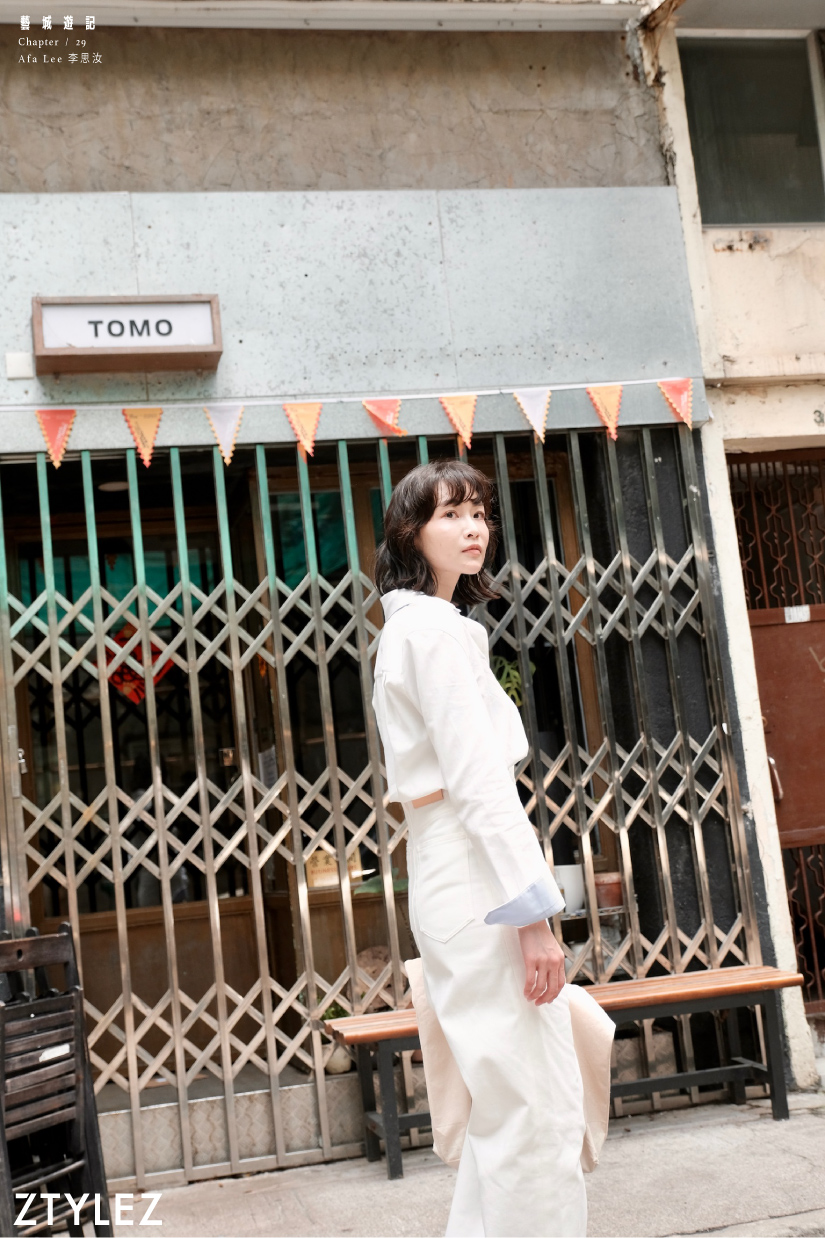
Her multiple roles are both a highlight and a vulnerability. “Because I move between circles, in acting I feel I am not really an actor; in the art world it is even harder to gain acceptance. People sometimes say I am just playing around,” she said.
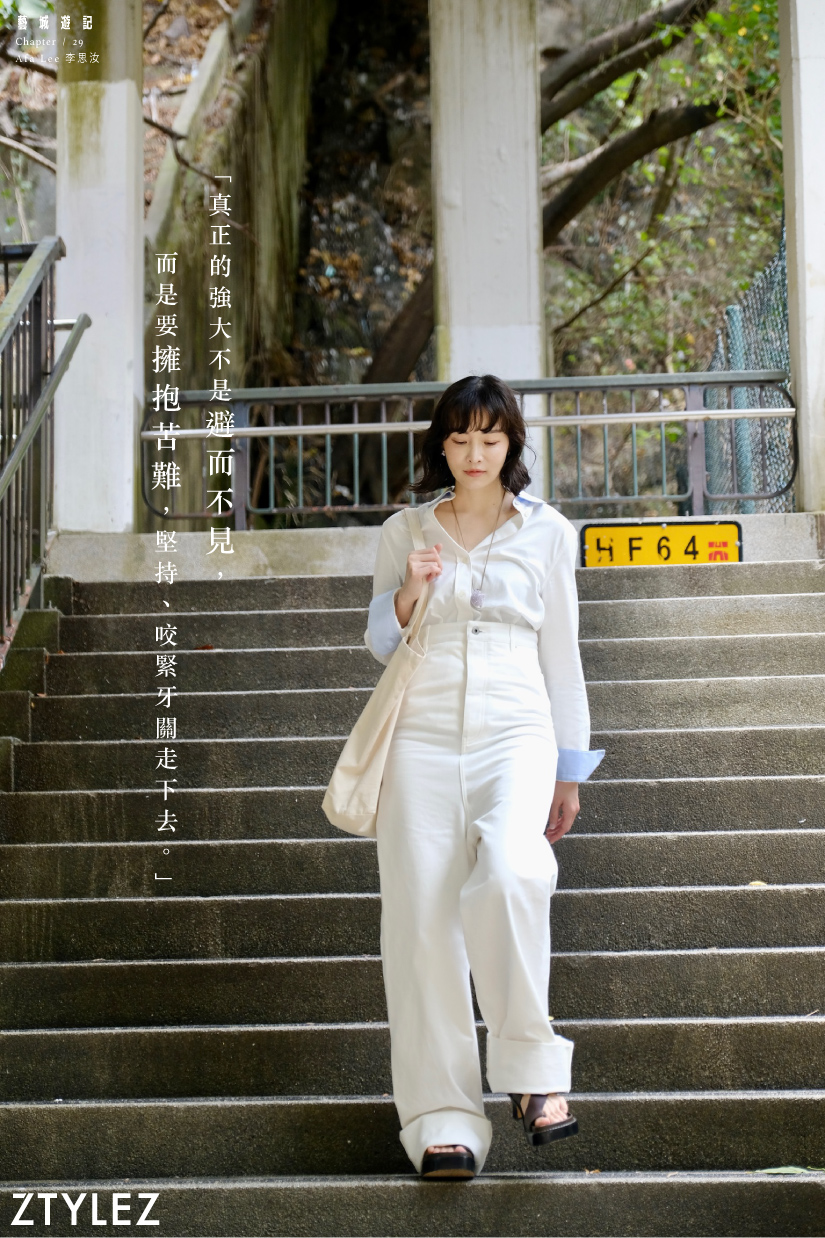
Painting has always been a form of personal achievement and satisfaction. Turning it into a profession is difficult, and reputation is not built overnight. Over the years she has received recognition, including a DFA Hong Kong Young Design Talent Award and several art-related nominations, which allowed her to show she took painting seriously. Yet she now thinks differently. “You do not need to tell others, because I enjoy the different roles, and they enrich my life,” she said. “Acting in TV, commercials, or theater assigns roles to me; painting is the only thing I control completely, where I can expand and contract at will. When I create, I feel most at ease.”
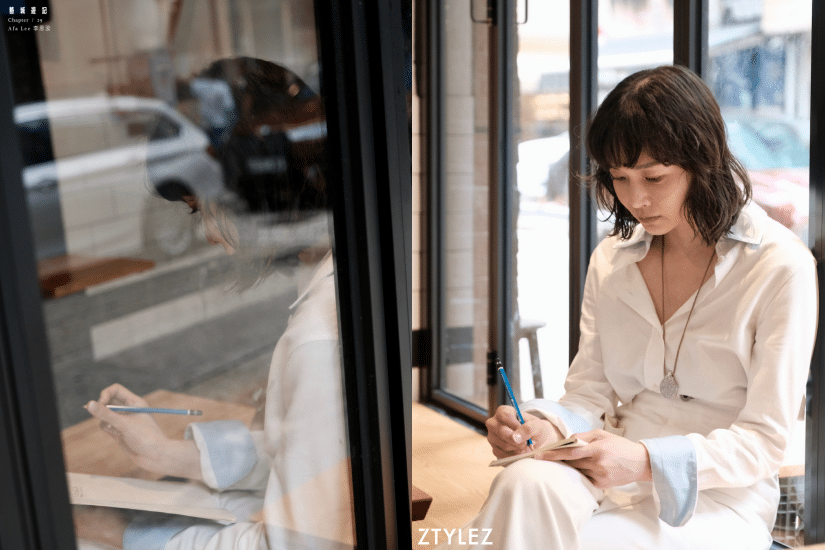
Clear eyes do not guarantee a clear future, but the unknown gives reason to keep trying. Though lonely and uncertain at times, the arrival of “Sichuan Flower” (川花) felt like a companion, a soulmate to share the slow walk forward. Suddenly she felt less alone.
“Although I appear to have many identities, I have long pared them down; all that remains is painting,” Afa Lee (李思汝) said.
Curiosity About the Wider World
Her curiosity has led her into different fields and roles, and it keeps her studio and life moving from place to place.
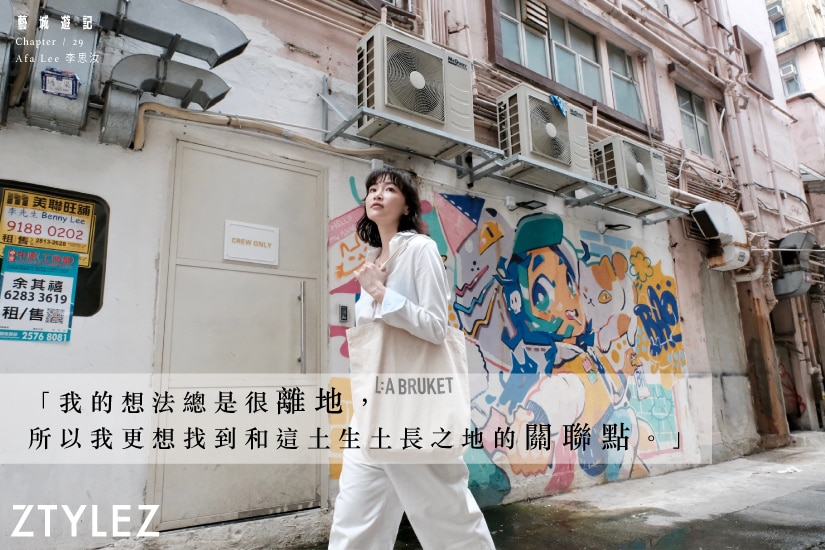
Recently she moved her studio to Tai Hang, a neighborhood on Hong Kong Island with a strong local vibe, and she noticed a change. “My old studio was in an industrial building — larger, but it did not stimulate thought. It felt busy and cramped. A friend recommended this place and I fell in love with it. Now there is an artistic energy and a strong neighborhood camaraderie, which is wonderful,” she said.
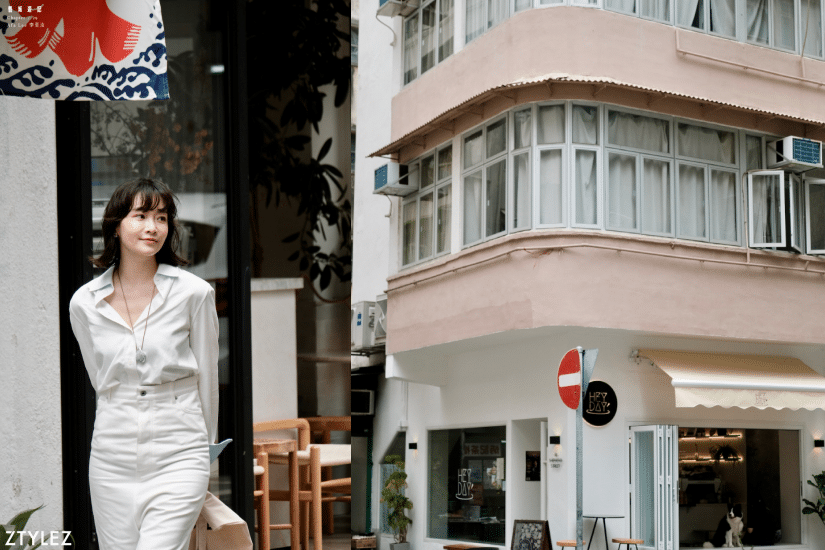
Did the new surroundings change her work? She laughed that the added foot traffic brought both energy and distraction, meaning less uninterrupted painting time. Then she grew serious. “I used to paint on large framed canvases, but the new studio is smaller and on stairs, so I cannot carry big frames upstairs. Now I stretch canvas on wooden walls and paint, then fit frames later. Space constraints in Hong Kong force trade-offs. My artist friends and I discuss how place, climate, and space affect an artist’s practice; I hope to explore that theme in future work.”
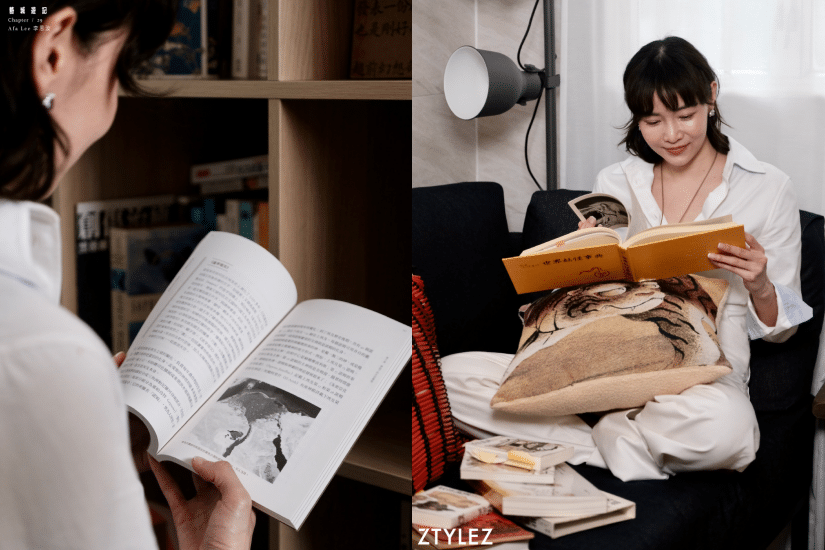
Watching the sincere interaction between Afa Lee (李思汝) and “Sichuan Flower” (川花) calls to mind a line from Hong Kong writer Xi Xi: “In the floating city, looking into mirrors cannot predict the future, but knowing the past is not a bad thing; history can be a lesson.”
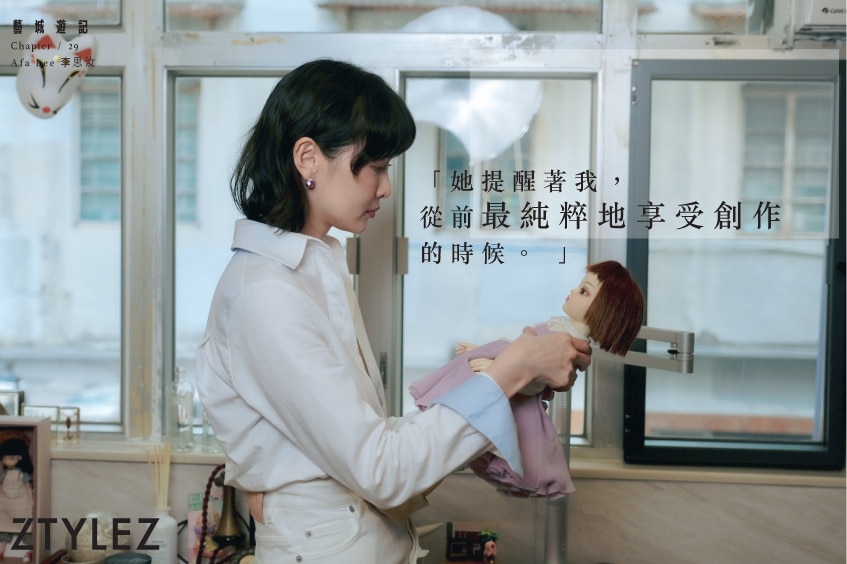
Liking and making dolls gives her a place to anchor her intentions and soul. They represent a hope, a dream, and many chapters of her life.
A flower need not outshine others; it only needs to bloom as itself. One breath, one step, let the heart live like a child and keep growing resiliently.