


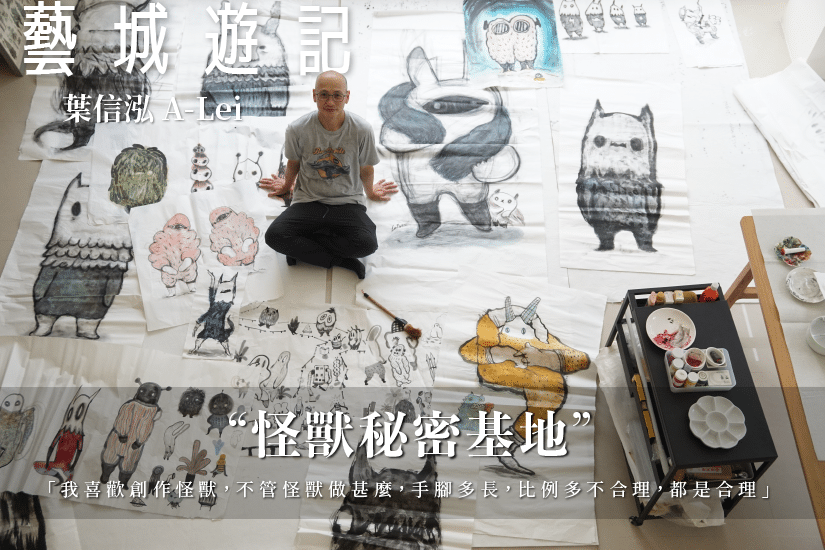
Taiwan monster artist A-Lei opens his studio in a new episode of “Art City Diary,” revealing how he turns ink, clay and bronze into whimsical, humanlike monsters that blend humor and melancholy.
Ye Xinhong (葉信泓), who works under the professional name A-Lei, grew up with a playful, boyish energy that he channels into his work. He molds round, charming figures by hand, then reinterprets them with ink brushwork; this story takes readers inside the artist’s private “monster” studio.
A-Lei traces a long and uneven creative path. He graduated from the National Taiwan University of Arts in the ink painting program, and then worked as an illustrator drawing delicate, sorrowful young women that belied his own temperament. Life pressures showed in his work, and he said those images often carried a lingering sadness.
At age 29 his life turned. He entered a designer-toy competition and won the gold prize in 2005, and that success began a move from paper and illustration to three-dimensional work. He said the 2005 award was the moment he discovered he could support himself through figurine design, and he moved from paper clay to ceramic as his primary material.
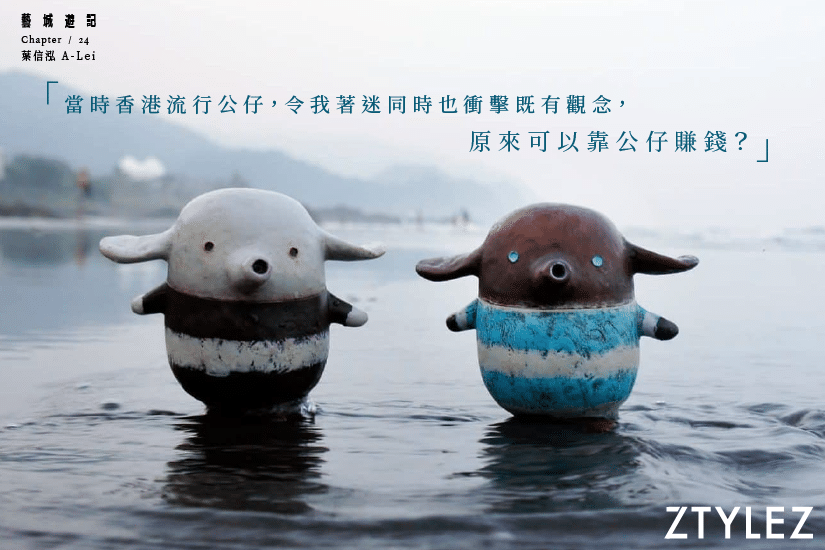
How the Taiwan monster artist found his form
A-Lei said he was inspired in part by the 1990s designer toy wave led by Michael Lau, whose 12-inch figures changed how toys and art could intersect. He recalled seeing dozens of Lau’s figures arrayed in Taipei, and feeling that the work made it possible to do what you love and also make a living.
Struggling to earn a living solely from illustration, with monthly take home often below NT$5,000, A-Lei submitted a low-cost paper-clay figure to the designer-toy contest. He won gold the first time he entered, and that recognition pushed him into three-dimensional design and, eventually, into ceramics.
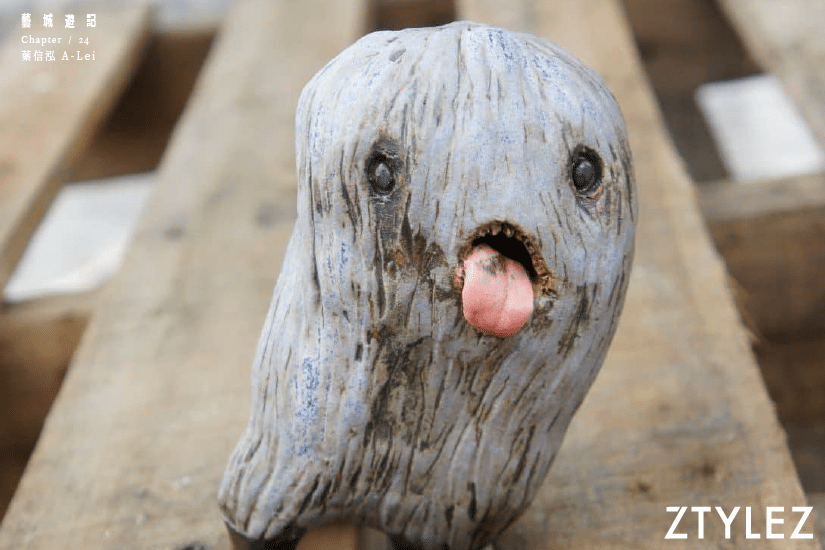
Ceramics, texture and the ink painting lineage
Although trained in ink, A-Lei says he fell in love with the tactile, unpredictable nature of clay. He learned ceramics at a community college and began making figures with arms and legs among older students who were shaping bowls and plates. The shift from flat illustration to three-dimensional forms opened up his practice.
“Ceramic clay has warmth and life,” he said. He prefers to layer glazes, scrape with sponges and knives, and let firing produce accidental textures. He avoids glossy, factorylike finishes because they feel commercial and lifeless; instead he seeks surface complexity that reads like aged ink.
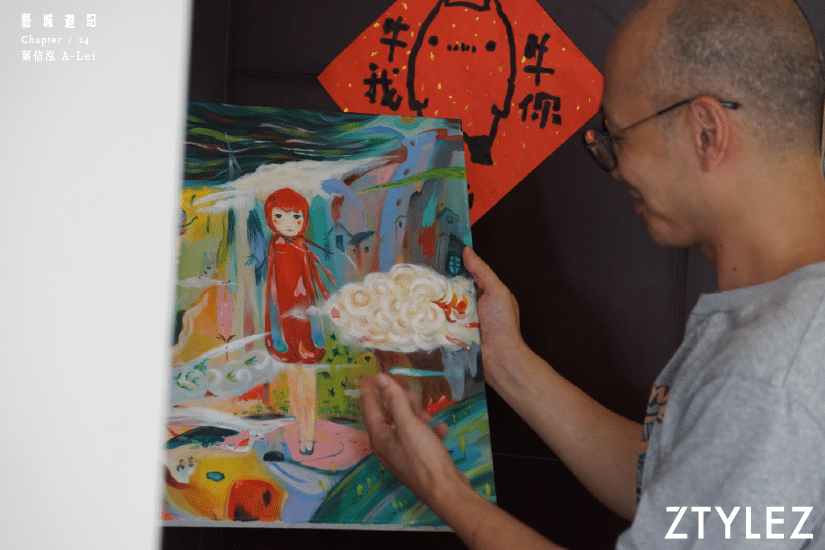
He said the same inks and brushwork from his training translate to ceramic surfaces. “I use ink painting techniques when applying glazes,” he explained. “Sometimes I stack two or three whites to create depth rather than a single flat white.” Those choices yield an inklike, weathered surface that keeps the monsters from looking polished.
Personality, life and the shape of monsters
A-Lei described his monsters as embodiments of marginal feelings, of people who are overlooked or not accepted. “I think some monsters are those who feel left out by society,” he said. “When I could not find work because I did not do computer drawing, I felt like a small, curled up monster in a corner.”
His figures mix familiar cues such as catlike faces or geometric shapes with absurd proportions and multiple limbs. The result is both recognizable and strange. He said this freedom lets him make creatures that act like living beings, sometimes lying down, sometimes staring off into space, often prompting a wry smile.
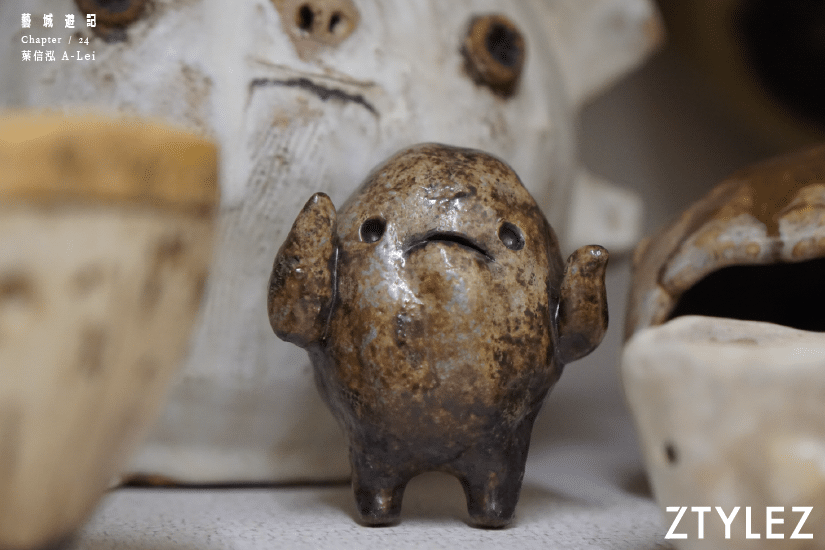
That blend of humor and vulnerability helped A-Lei attract institutional attention. He said the Fubon Art Foundation invited him to exhibit after seeing his work, a moment he described as moving his practice from the shadows into the spotlight.
From blown inflatables to bronze, the Taiwan monster artist grows in scale
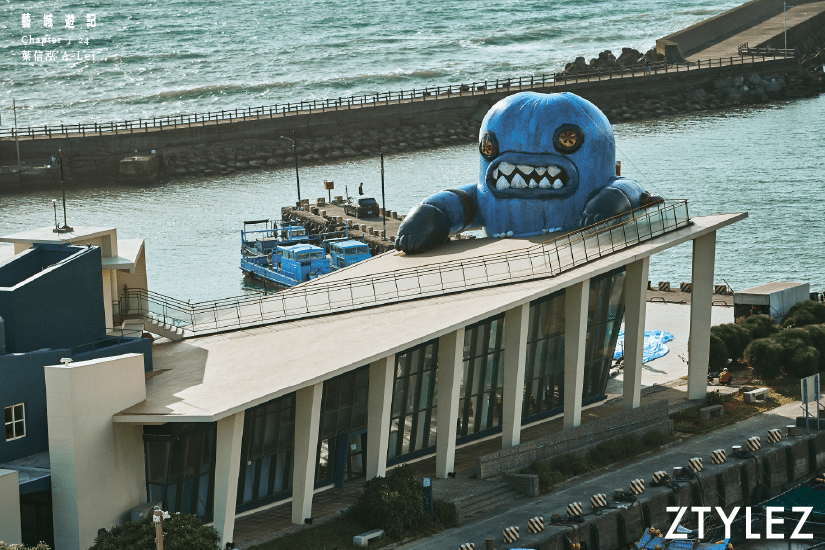
In 2021 a highlight came when one of his creatures, nicknamed Spring River, was made into a large inflatable and placed on the roof of the museum in Checheng, Pingtung. The image of a giant creature atop the building made a strong public impression and fueled his interest in scale.
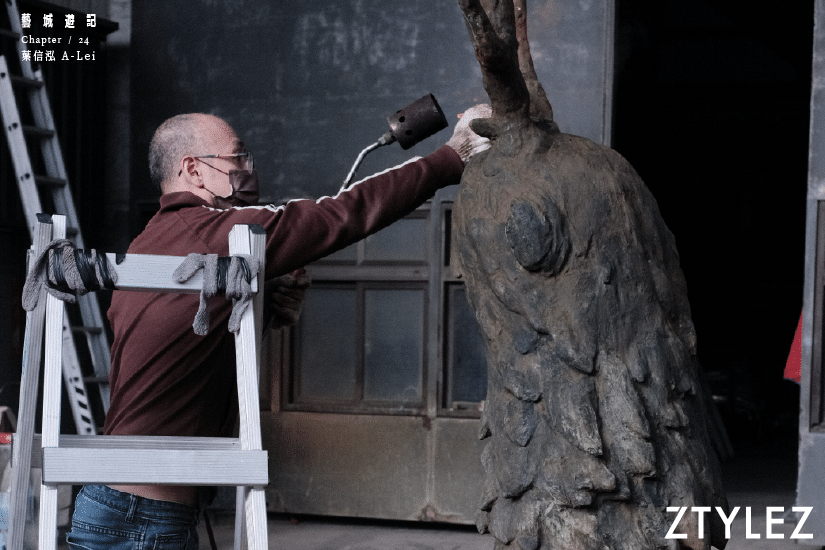
He moved from ceramics into bronze so the works could live outdoors and reach a broader public. Bronze is heavy and requires chemical patination that can take weeks, but it also withstands weather and allows him to place monsters in landscapes. He said the material’s unpredictability appeals to the same sensibility that led him to clay.
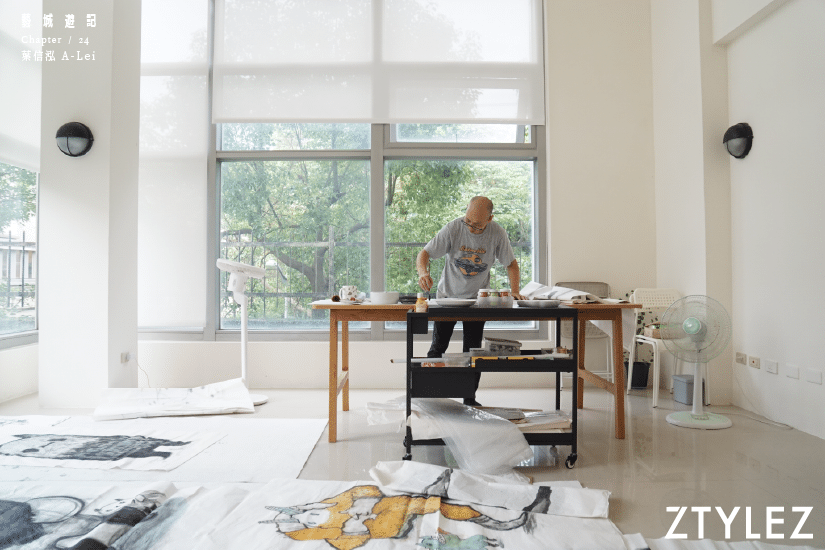
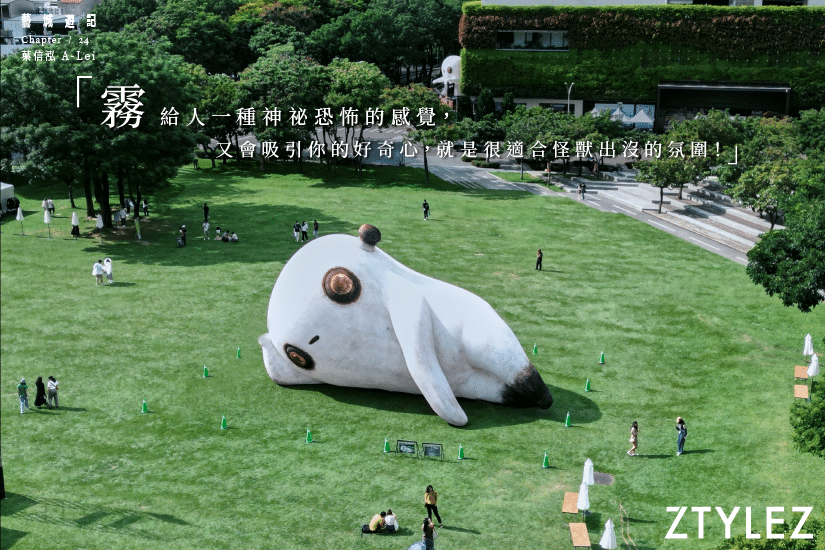
He said he now dreams of building a museum of monsters set in a misty, rainy place, an environment he thinks suits his creatures. “Fog feels mysterious and also a little scary, and that pulls curiosity,” he said. He picked a remote studio partly because dense fog and mountain trees matched the atmosphere he wants for his work, and he calls the site his monster secret base.
Returning to ink and maintaining a child’s view
Alongside large outdoor work, A-Lei has returned to ink painting, using the same monster vocabulary in brush and paper. He described the practice as ritualized, a quiet night activity that requires a clean workspace and a meditative process of grinding ink and listening to the paper respond.
For him the core of sustained creativity is preserving a child’s outlook. “You must stay honest with yourself,” he said. “Make the thing you truly want to make, not something judged only by how easily it will sell.” He named sunlight, air, water and humor as four essentials for survival and creative energy.
A-Lei was born in Kaohsiung, grew up in Taipei, studied in Keelung, did military service in Kinmen, lived in Xindian and now works from Taoyuan. He said each city left traces on his work, but Keelung in particular, with its frequent rain and fog, shaped his ideal for a monster museum that is at once mysterious and inviting.
Producer: Mimi Kong
Interview & text: Kary Poon
Photographer: Wei
Video Edit: Kason Tam & Alvin Kong
Design: Alvin Kong