


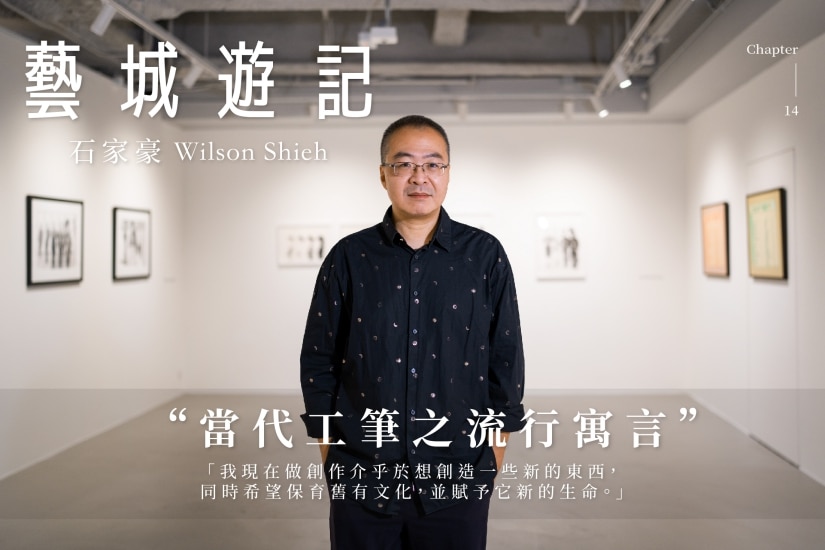
Wilson Shieh exhibition at JPS Gallery in Hong Kong opens Oct. 28, showcasing 14 years of the artist’s contemporary gongbi work in a retrospective titled Wilson Shieh: Chop Suey 2008-2022.
Wilson Shieh (石家豪) is best known for updating Chinese gongbi, a meticulous traditional brush technique, to depict Hong Kong landmarks, film scenes, pop-culture figures, and costume studies. His work appears in the Hong Kong Museum of Art, the Hong Kong Heritage Museum, and M+ Museum, as well as in numerous commercial galleries.
Shieh builds his paintings on classical materials such as xuan paper and silk, then extends the practice into pencil, oil, collage, and installation. The artist said he uses local culture and costume as recurring themes to explore identity, gender, and cultural preservation.
Artist background and technique
Shieh said he does not fit the personality that typically produces bold, loose ink painting. “When I tried freehand work in school, my teachers told me my marks were too restrained and too layered,” he said, reflecting on his student years. “That criticism helped me find my path.”
Under formal training, he copied traditional subjects such as the four gentlemen: plum, orchid, chrysanthemum, and bamboo, and classical portraits in court dress. Over time, Shieh said he began to wonder what would happen if he applied those fine-line methods to contemporary topics.
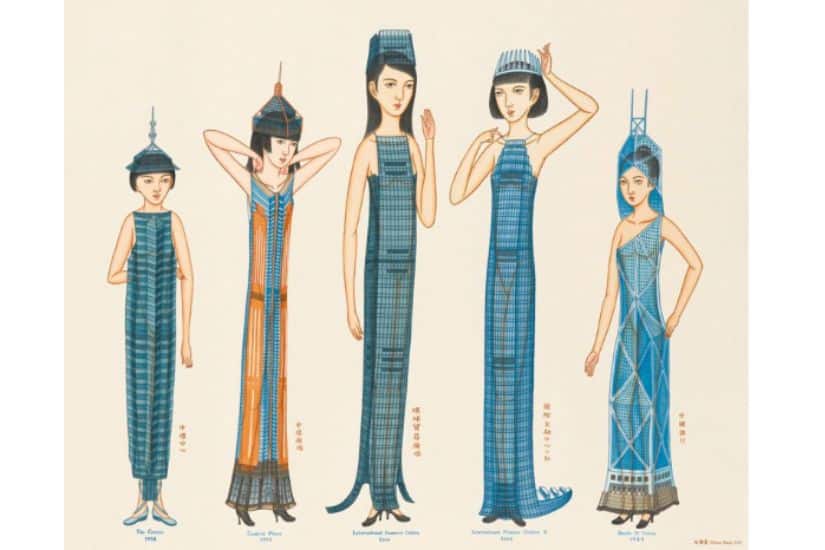
From that experiment arose a distinct visual language: towering Central skyscrapers become ornate gowns, classical portrait sitters wear contemporary seasonal outfits, and icons of Hong Kong pop culture are reborn in finely detailed costume studies.
Wilson Shieh exhibition highlights
The JPS Gallery show, titled Wilson Shieh: Chop Suey 2008-2022, gathers the artist’s signature series across 14 years, from his architecture costumes to collage and installation works. The exhibition aims to trace continuity and change across his practice.
One standout is the architecture series, in which Central’s landmark buildings, including the Bank of China Tower and IFC, are reimagined as elegant evening wear worn by refined, classical figures. “I purposely put opposing things together: old and new, East and West,” Shieh said. “That collision is one way culture renews itself.”
The exhibition title, “Chop Suey,” nods to a mid-20th-century North American Chinese-American dish, and to the idea of a mixed assortment. Shieh said the title felt apt for a survey that assembles disparate pieces of his work into a single presentation.
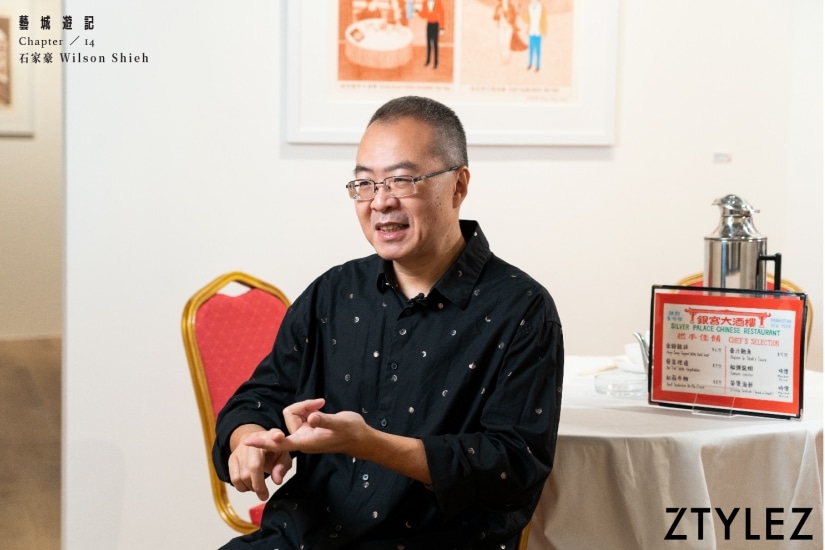
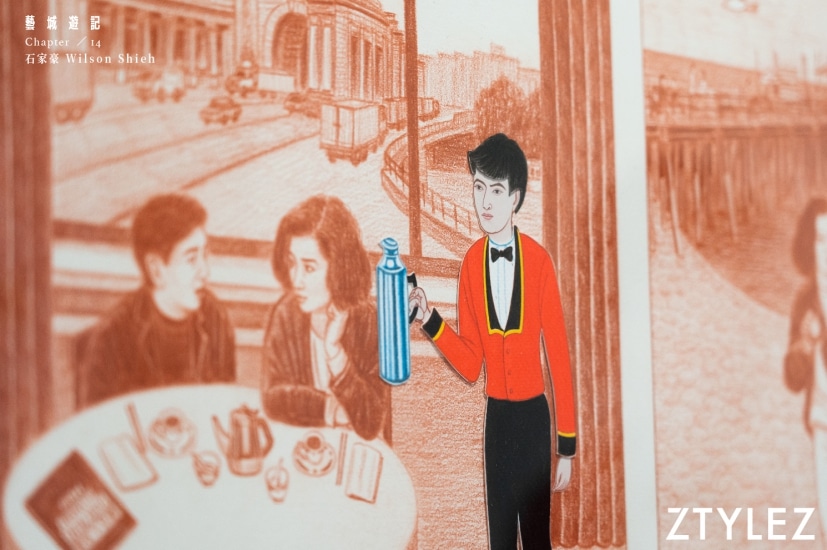
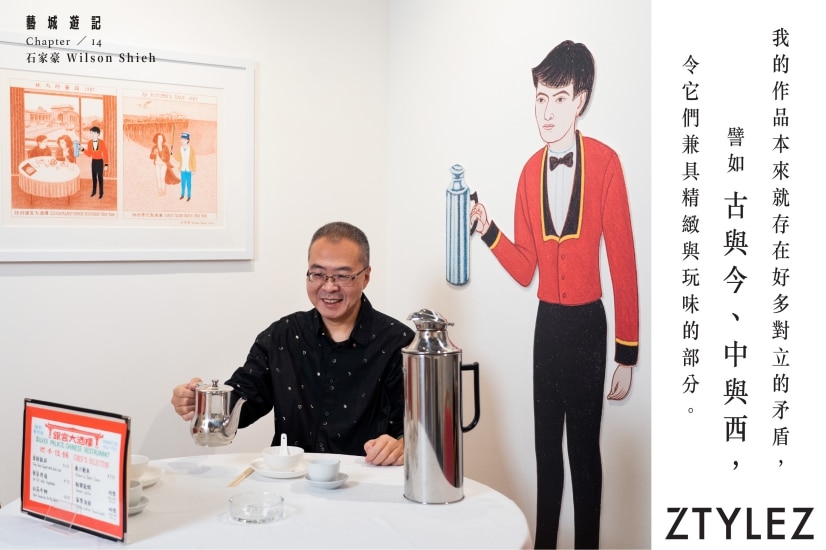
In the gallery Shieh recreated a scene from the Hong Kong film Autumn Moon, staging a restaurant tableau that lets visitors pose as patrons. “I hope installations like this let people revisit collective memories,” he said.
Themes: memory, costume, and local identity
Shieh’s work mines several strands of Hong Kong visual culture: film, music, fashion, and school uniforms. He described clothing as a narrative device that signals design, class, and cultural meaning.
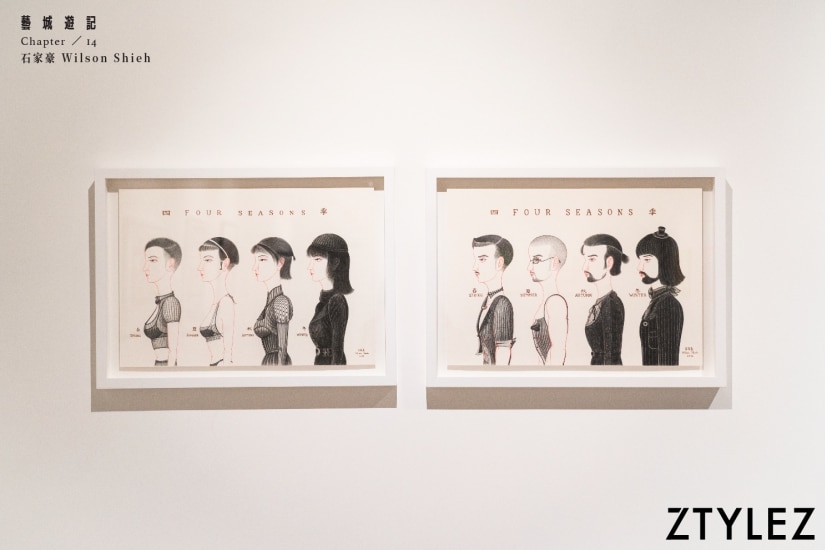
One recurring idea is the paper-doll changeable wardrobe, a nostalgic toy from the 1960s and 1970s. In the Four Seasons series, the same portrait is dressed in different hairstyles, accessories, and seasonal outfits, turning fashion’s cycle into a meditation on time and culture.
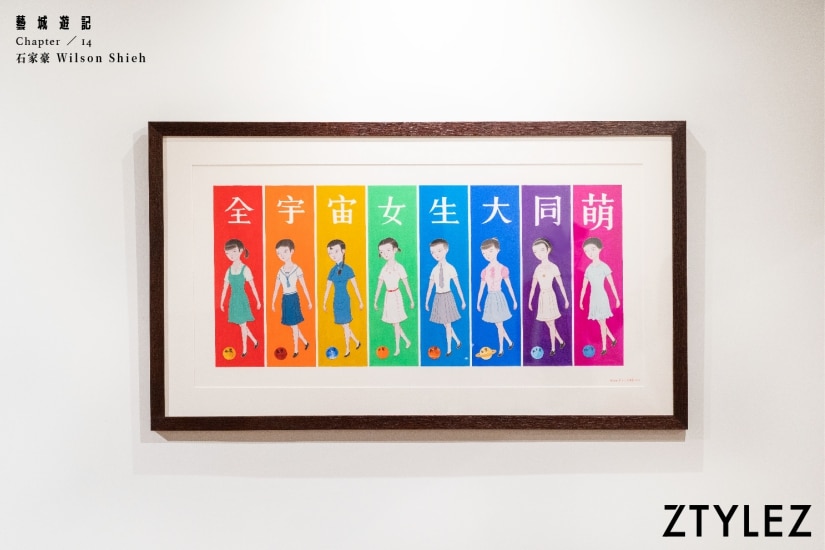
In another work, Shieh compiled a visual guide to girls’ school uniforms, drawing on memories of cousins and classmates. He said local schools supply more than one hundred uniform styles, a fact that surprised him and inspired a playful cataloging of local variations.
Pop culture portraits and careful research
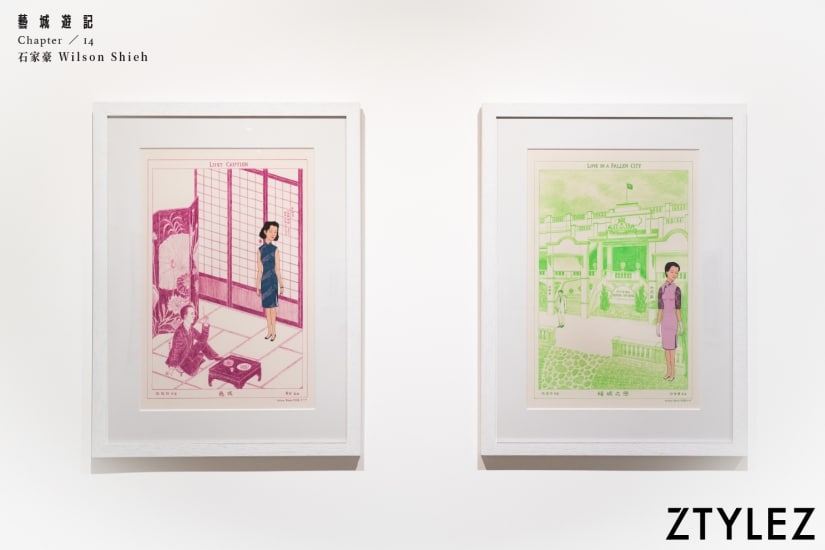
Shieh’s portrait subjects include writers and screen icons from Hong Kong and the region, rendered with painstaking costume detail. For his Eileen Chang series, he studied photographs, the author’s wardrobe, and film adaptations to create hybrid likenesses of the writer and her on-screen avatars.
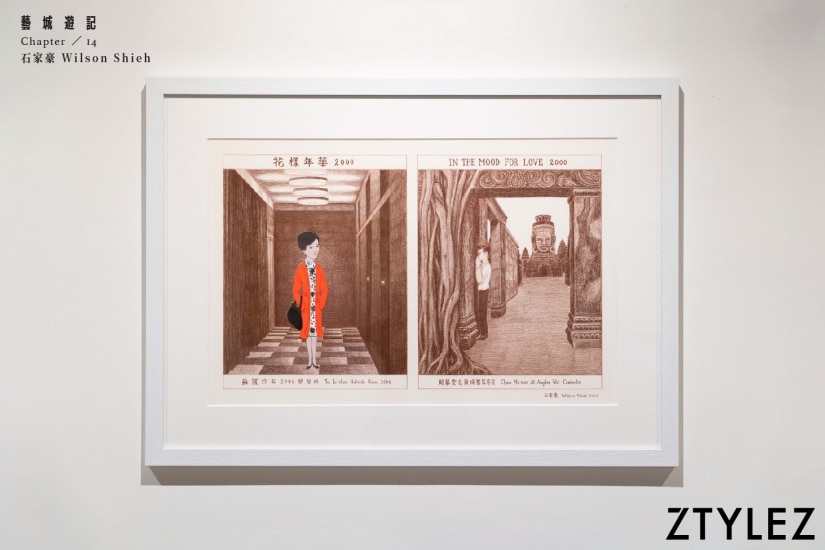
He also revisits film and music icons whose work became regional touchstones: Chow Yun-fat’s role in Shanghai Beach, Maggie Cheung and Tony Leung’s figures in In the Mood for Love, and Teresa Teng’s stage personas. “Popular culture is ephemeral, but the things that stand the test of time become cultural history,” Shieh said.
In a cassette-tape series, Shieh assembled lyrics and names from the 1970s through the 1990s, including Leslie Cheung, Anita Mui, Samuel Hui, and Roman Tam. He said the handmade tape packages encode both personal memory and a wider music history.
Conservation through reinvention
Shieh said he sees his work as both invention and preservation. “When I remake an old thing with new feeling, it can give it fresh life,” he said, noting a recent rise in local interest in conserving cultural heritage.
The artist has spent more than 20 years creating work full time, and he described the career as a series of doubts and recoveries. “I still go through the same emotional cycle: uncertainty, critique, improvement,” he said. He added that showing work and waiting for audience response is a slow process, but one he intends to continue.
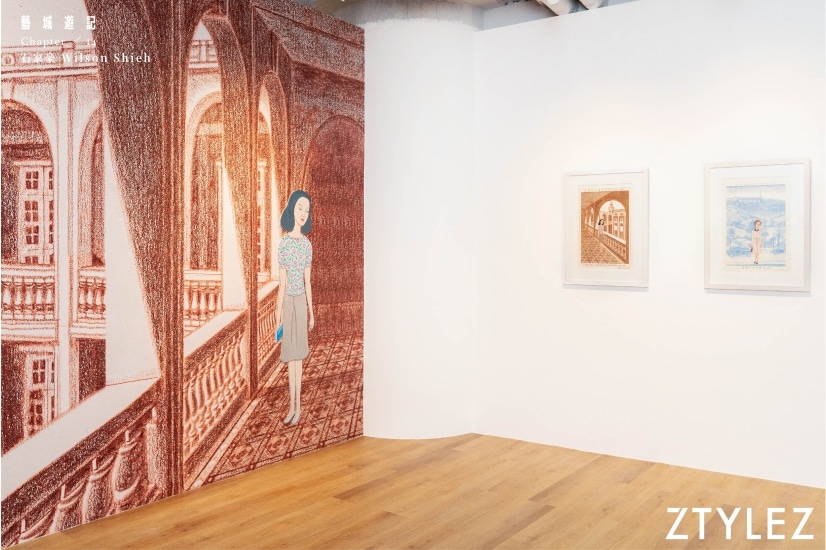
Shieh said the retrospective spans nearly half of his career, and he remains modest about validating cultural meanings. “I still need to keep showing and wait for responses to see whether these works resonate,” he said.
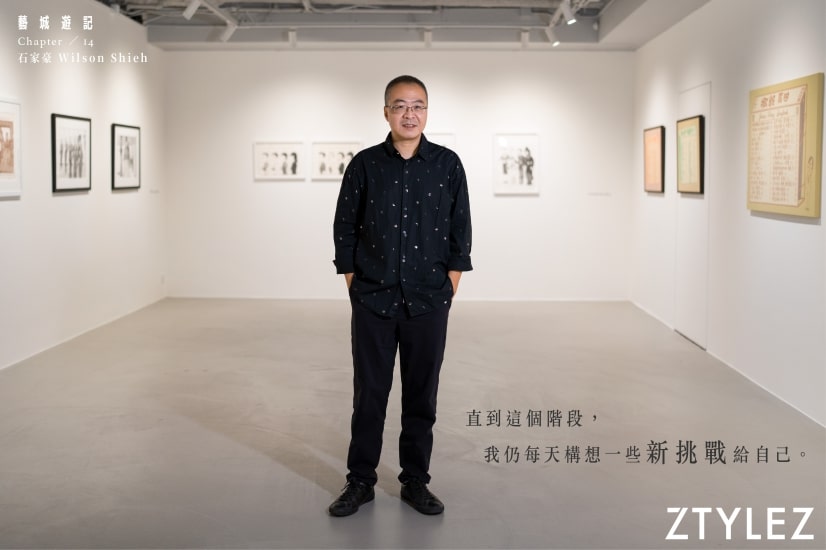
The artist also confirmed a new solo show is planned for the following year and that he will include fresh work. Those who want to see the current presentation can visit JPS Gallery in Central.
Wilson Shieh: Chop Suey 2008-2022
Dates: Oct. 28 to Nov. 27, 2022
Hours: 11 a.m. to 7 p.m.
Venue: JPS Gallery, Shop 218-219, 2/F, Landed Galleria, 15 Queen’s Road Central, Central, Hong Kong
Executive producer: Angus Mok
Producer: Mimi Kong
Interview and text: Ruby Yiu
Videography: Andy Lee, Kason Tam
Photography: Kris To
Video editor: Andy Lee
Designer: Kris To
Location: JPS Gallery
Special thanks: Wilson Shieh