



Hong Kong mountain paintings begin the story of artist Stephen Wong Chun Hei and his decade of sketching trails, seas and city edges in and around Hong Kong.
For people in Hong Kong, mountains are familiar companions. The city has more than 300 peaks across Hong Kong Island, the Kowloon Peninsula, the New Territories, and more than 263 outlying islands. From communities that grew up at their feet to the so called “Lion Rock spirit” that shaped a local identity, the hills remain a vital part of daily life and now a popular source of leisure and creativity.
That relationship with the landscape is at the heart of the work of artist Stephen Wong Chun Hei. His plein air paintings and imagined scenes fuse memory, time, and the feeling of place, turning hiking routes into visual narratives.
Take a walk with him through ridges and shorelines to see how those Hong Kong mountain paintings were forged.
Into the landscape
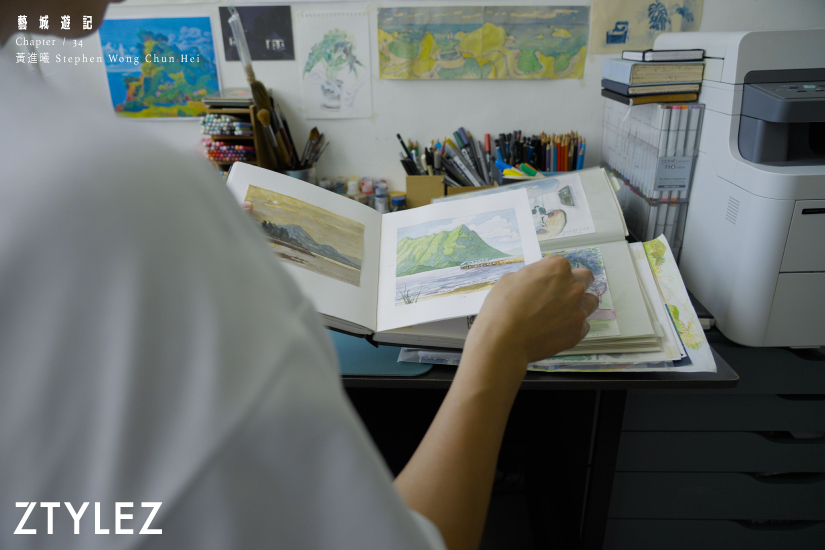
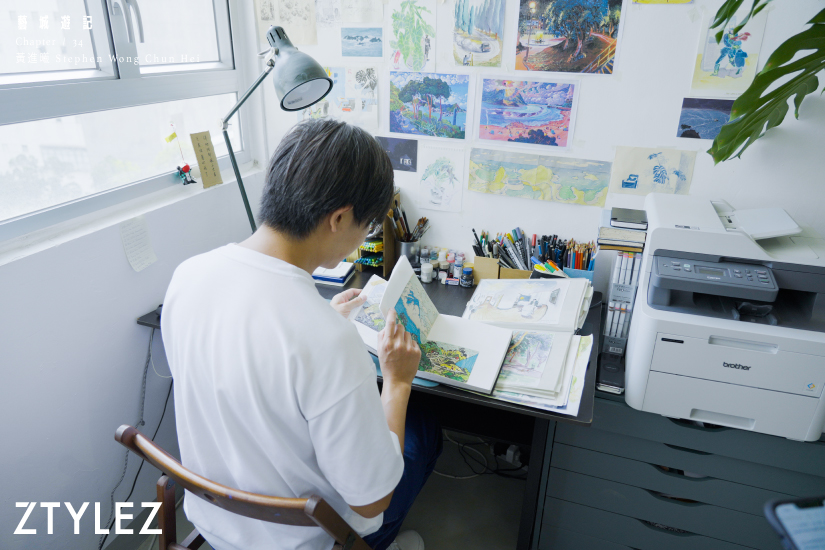
Stephen graduated from the Department of Fine Arts at The Chinese University of Hong Kong in 2008. His early interest in virtual landscapes came from video games, where he drew scenes from game environments as studies in visual impact. More recently he has focused on sketching on location, blending observation with imagination to explore the distance between people and nature. Each work is the result of walking and looking rather than studio invention.
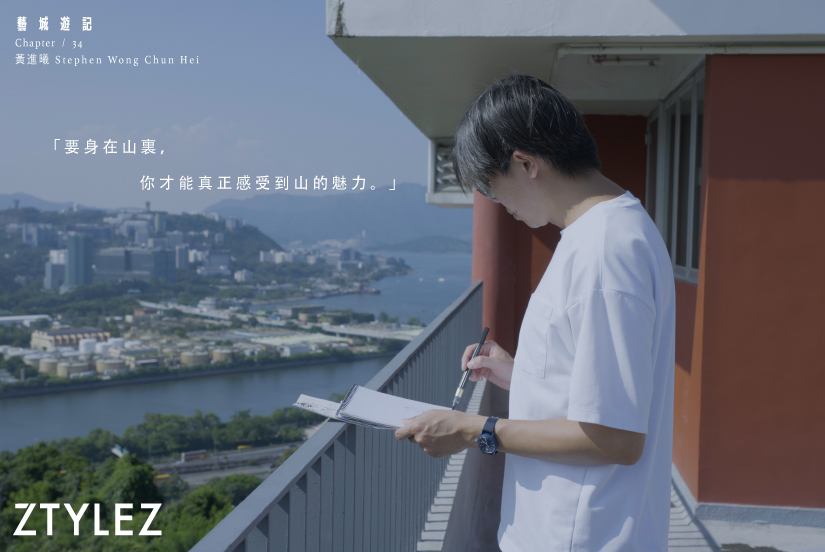
He says that being in the mountains is the only way to truly feel a peak’s presence. While he grew up near hills and spent college days at New Asia College beside the pavilion known as the “Harmony of Heaven and Man” on campus, he avoided drawing from life for a time because he considered it unfashionable. After graduation, unable to give up painting, he returned to landscapes and at first painted scenes from handheld game consoles that people often played on trains and buses. He wondered whether those virtual vistas could be part of a shared memory and whether he could bring them back into the real world.

At first he experimented inside racing games by driving slowly and studying roadside views. Eventually he decided to make excuses unnecessary and go outside to sketch for real. He bought a small sketchbook, rode a bicycle from Fo Tan to Wu Kai Sha Pier to catch a wide view of the sea, and worked from late afternoon as the light changed. The experience taught him that sketching records time as well as place.
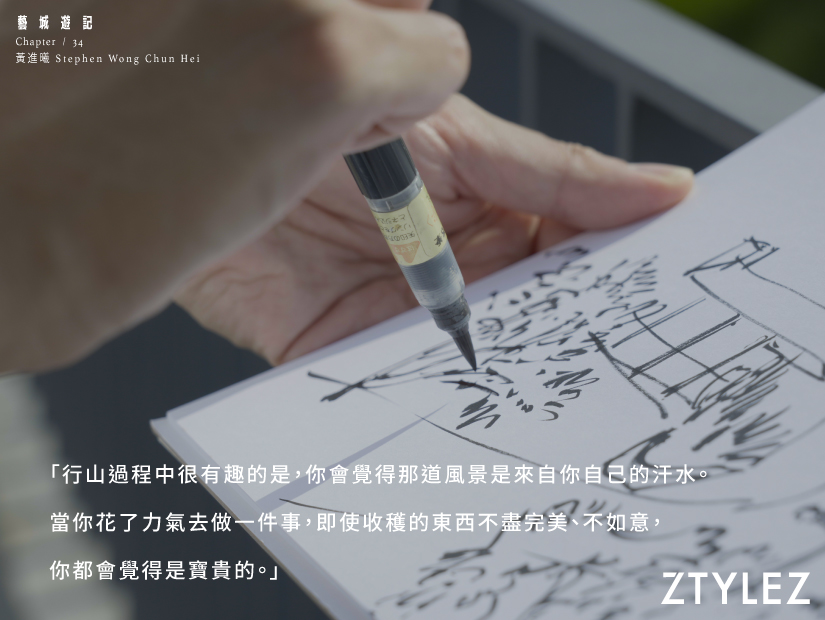
His first formal hike for sketching took him from Po Lo Shan in Tuen Mun to Ha Pak Nai because a guidebook praised Ha Pak Nai sunsets. Po Lo Shan is sometimes called Pineapple Hill and is a modest inland ridge in the Tuen Mun area. That trip introduced him to the practical challenges of painting outdoors, from sudden wind to paints drying quickly, and to the discovery that the labor of hiking makes a captured view feel earned.
Hiking became more than a way to gather subjects. He began to love the act of walking itself. On winding, uneven trails he says sweat and effort give the landscape an immediate meaning. The uncertainty of each bend and the small figures moving along distant paths remind him that people become very small in nature, the opposite of the enlargement of the self in dense city life. That contrast feeds his work.
Between sea and summit
On the trail he will often recompose what he has seen. He wants viewers to recognize the locations in his Hong Kong mountain paintings, but not to be able to find the exact viewpoint, because each canvas is a reconstruction that includes his own position in the scene. Slowing down, leaving distractions behind, and observing the shifting light leads to discoveries that a photograph does not always capture. He takes photos, but he rarely reopens them, whereas painting requires sustained attention and deepens his observational habits.
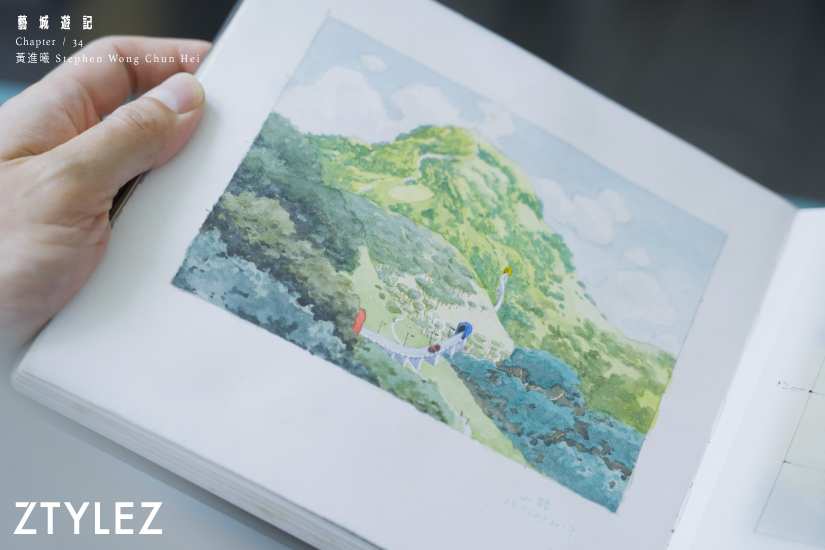
Places change slowly, but people change fast. When Stephen returned to Wu Kai Sha Pier to paint for a collaboration with Cartier, he found the beach fuller and its activities different from his memory. More people camp, play music, and gather there now, and those human patterns alter the atmosphere even where the landscape is constant.
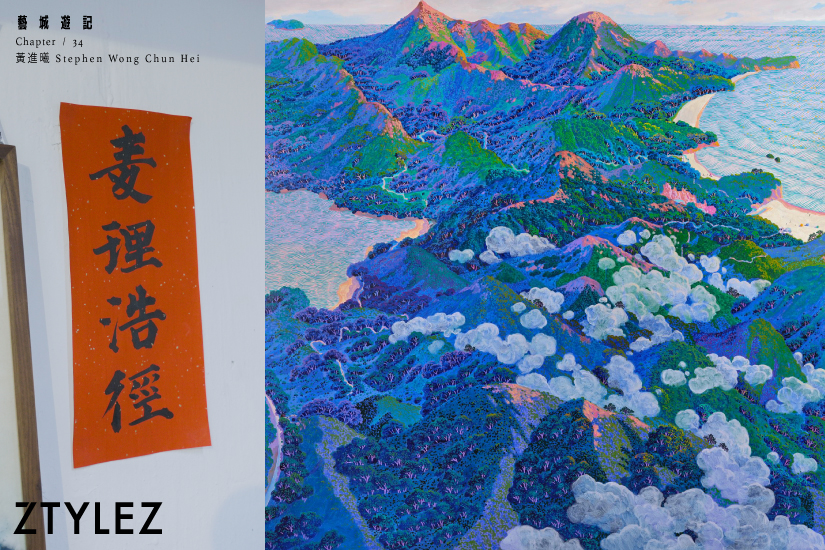
One of his most ambitious projects came during the COVID 19 pandemic when he walked and painted sections of the MacLehose Trail, the long distance hiking route that crosses Hong Kong from Sai Kung to Tuen Mun. The series had been in his mind for a long time, but the pandemic prompted him to quit a full time job and commit to the work. Walking the MacLehose Trail reshaped his view of Hong Kong. He learned that while the city is composed of separate neighborhoods, the hills form a continuous spine that connects the territory.
Painting the trail enlarged his sensory awareness and attention. He says he wanted to join the Oxfam Trailwalker endurance event this year but did not get a place. He hopes to walk the MacLehose Trail from end to end next year, not only as an artist but as someone who lives in Hong Kong and should experience the route at least once.
Stephen also paints when he travels abroad. He recommends Mount Takao when visiting Tokyo because the summit can offer a clear view of Mount Fuji on a lucky day and a spectacular display of autumn colors in peak season. He has returned there four times and plans to go again.
Reaching the summit
On top of the hills he aims to record not just what the eye sees but how he feels. He increases saturation deliberately to push color beyond safe palettes, influenced in part by his early interest in game lighting. The result sits between realism and impressionism, sometimes edging toward the unreal. He says high color can look sweet or tacky but helps him escape predictable tones.

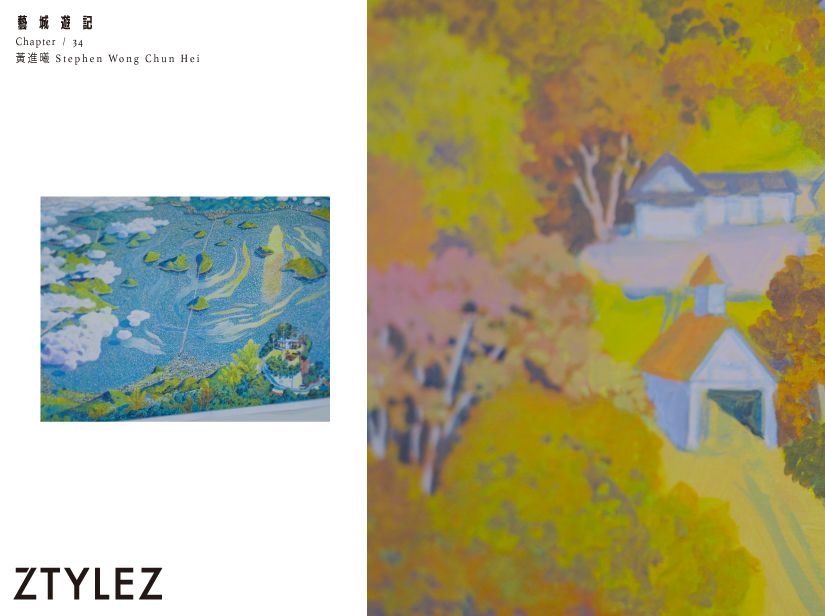
He is not worried about AI replacing artists. Machines can produce precision and detail but human work can embrace flaws and inaccuracy as a distinct strength. When he painted his neighborhood of Fo Tan after years living there, he noticed small differences between memory and reality and chose to keep those idiosyncrasies on the canvas because they felt special to him.
Stephen has shown his work in London, Taipei, and Hong Kong in a total of 19 solo exhibitions. His market profile rose after auction results, and one work in the MacLehose Trail series, “MacLehose Trail: Section 10,” sold at auction for HK$1,143,000, approximately US$146,300. He says the auction attention came with mixed emotions because conversations after a high sale often focus on price rather than content, a change that can affect an artist’s long term development.
He says many people assume that high auction prices mean artists earn large sums, but often the benefits do not flow back to the creator. High prices can force an artist to raise their own asking prices to ward off speculation, which in turn can put their work out of reach for true admirers. He would prefer not to see works funnelled into auctions if possible.
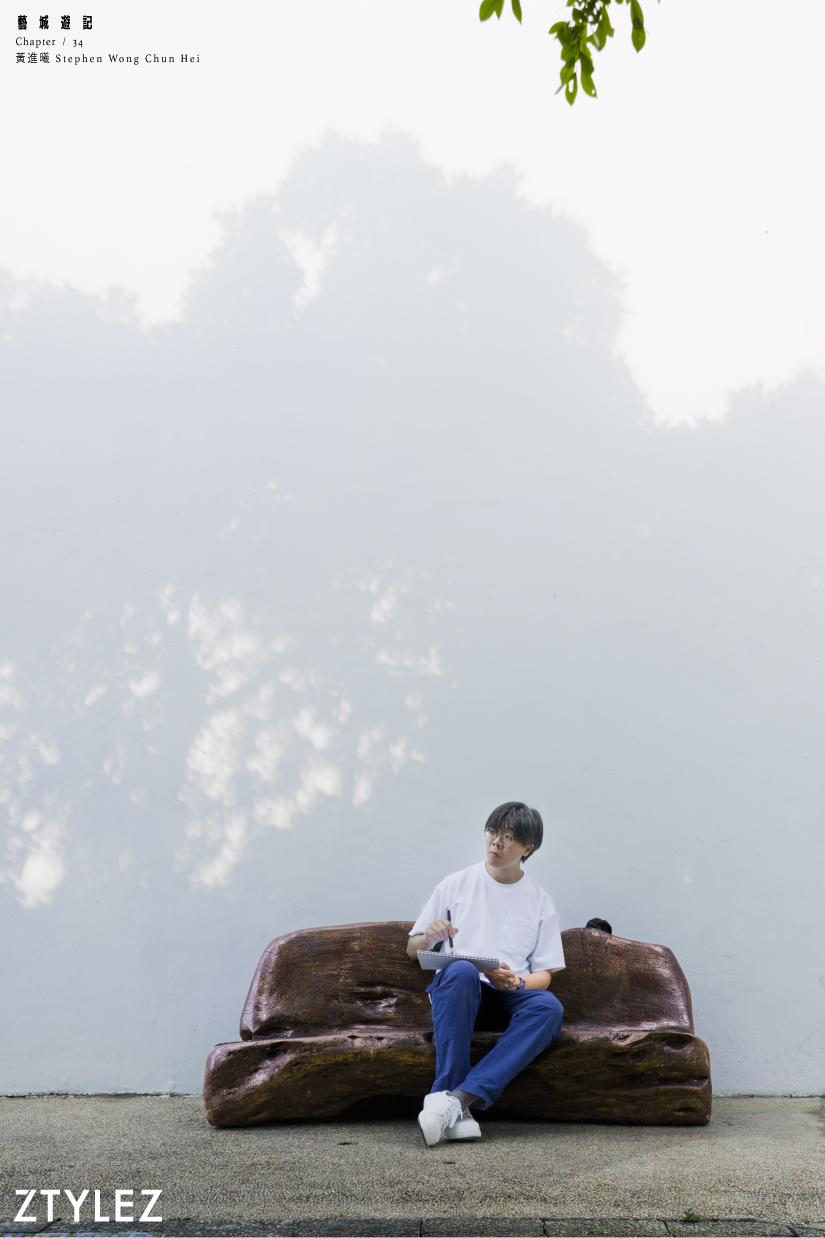
Still, he says being able to sustain himself through painting is a dream realized. He wants to keep his practice pure and protect his creative work from market pressures while acknowledging the practical need to earn a living. He hopes Hong Kong will value art beyond market metrics and not measure cultural progress only by transaction totals during events such as Art Basel weekend and other commercial moments.
A long walk starts with a single step
Looking ahead, Stephen says he still feels the youthful intensity he calls his creative obsession, but his view has changed with time. He now looks inward to rediscover beauties that were once overlooked instead of always seeking them elsewhere. That attitude feeds the next Hong Kong mountain paintings and the many canvases he still hopes to make.
“The past is past and the future is yet to come,” he wrote this year. It is a reminder to focus on the present, which for him means spending time on location, observing changes, and keeping painting close to the act of living.
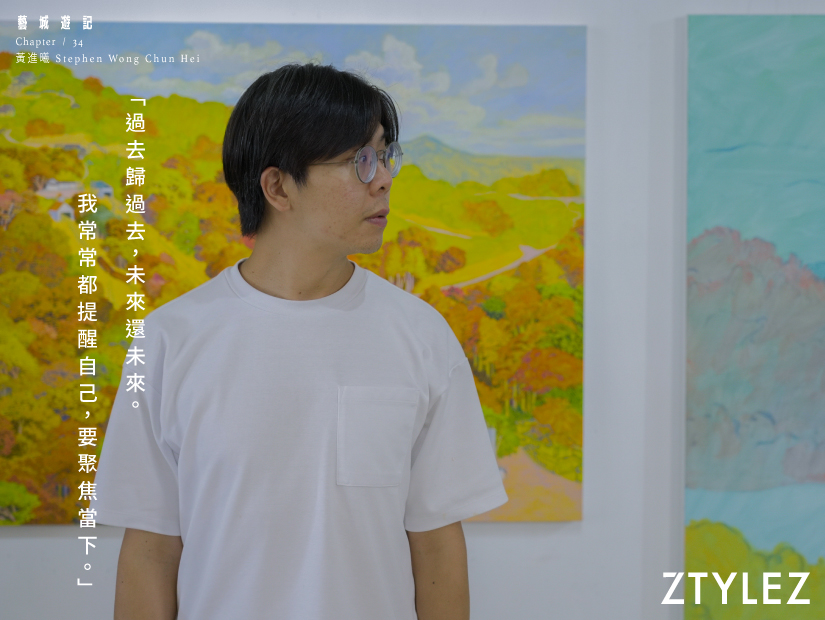
He wants to make painting feel more like a pure hobby again, but admits that balancing market demands with protecting artistic integrity is difficult. Every artist who chooses painting as a profession must reckon with those tensions, he says.
Hong Kong’s hills, he says, helped him find the city’s beauty and taught him that each person has a tempo and preference. Rather than compare with others, he advises finding and enjoying your own walking rhythm, and letting each step inform the view you will paint next.
One step at a time, one painting at a time, the Hong Kong mountain paintings continue to appear, born of trails, memory, and the steady work of looking.