


Taiwan illustrator Wu Chi is one of the artists who has stood out amid Taiwan’s booming creative scene, and this profile enters the high-pressure world that drives his work.
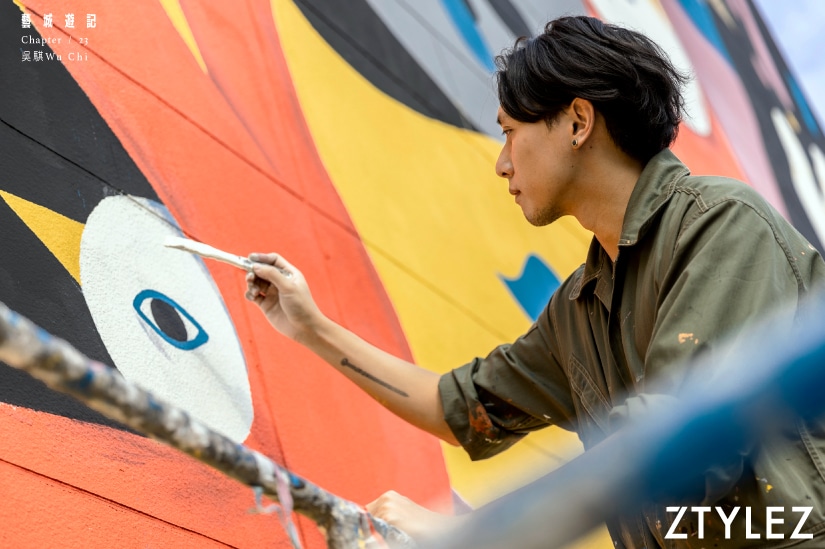
He is tall, with a mop of black curls, and quiet until the subject turns to making art, when he speaks rapidly and with obvious intensity. Using a name that plays on the sound of his own, he goes by 57 as a working handle, moving fluidly between commercial commissions and public art. His fantastical worlds leap off canvas and appear on building walls, basketball courts, ceramics, and large-scale installations across Taiwan and beyond, with a particular concentration in his native Kinmen (a small Taiwanese island off the mainland).
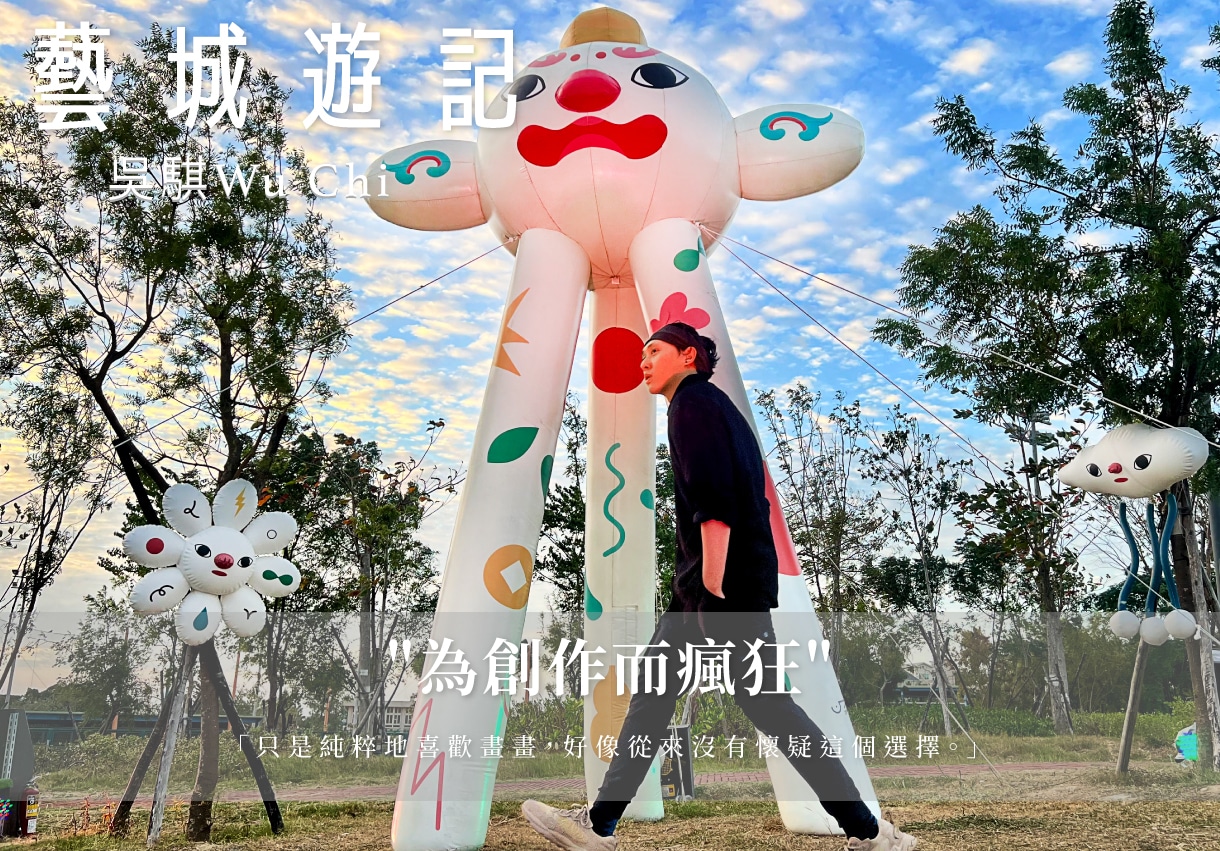
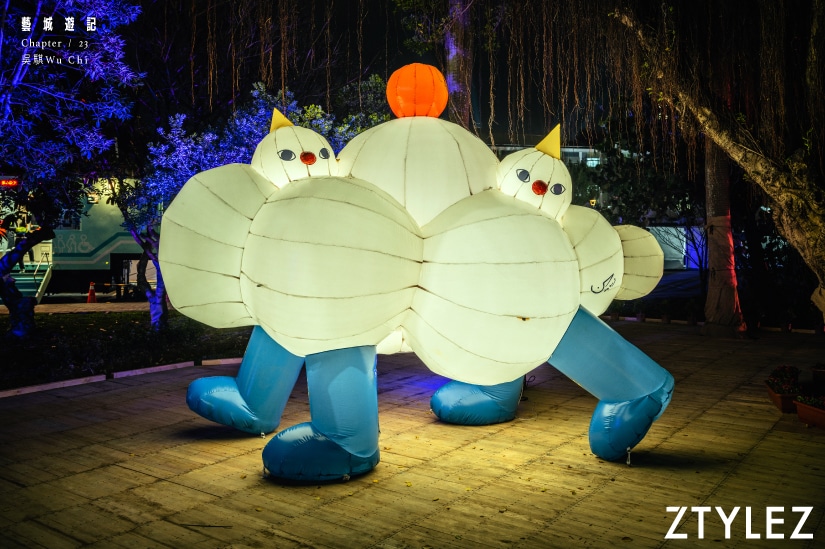
In recent years his work has appeared in neighborhood transformation projects in the Wanhua district of Taipei, the Tainan Blue Print cultural park, the Kinmen Marine Arts Festival, and a colorfully painted Wind Lion God basketball court in Kinmen. He has also painted a large mural and installed a swinging bird figure in Qibao, Shanghai. Earlier this year at Taipei’s 34th Taiwan Lantern Festival, he created three massive lantern installations called the Forest Spirits series, built around the elements of cloud, wood, water, light, wind, and earth.
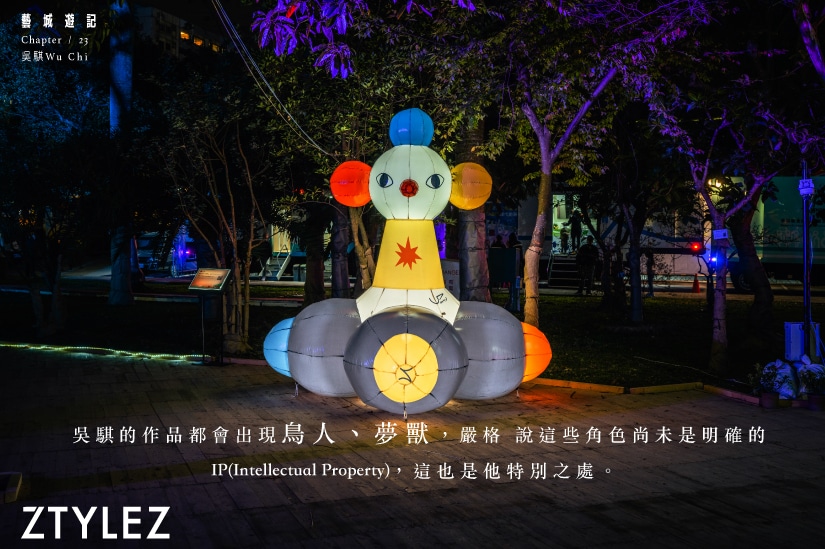
He pressures himself relentlessly, he said, pushing his father the ceramic artist and his siblings to take part in projects and to keep creating. Despite an outwardly rebellious look, he runs a disciplined schedule and balances commercial work with personal practice. His recurring figures, including three-headed birds, dream beasts, and a character he has named Bika, stare at a chaotic world with many eyes, each image a private exhortation to himself.
Taiwan illustrator Wu Chi on why he keeps pushing himself
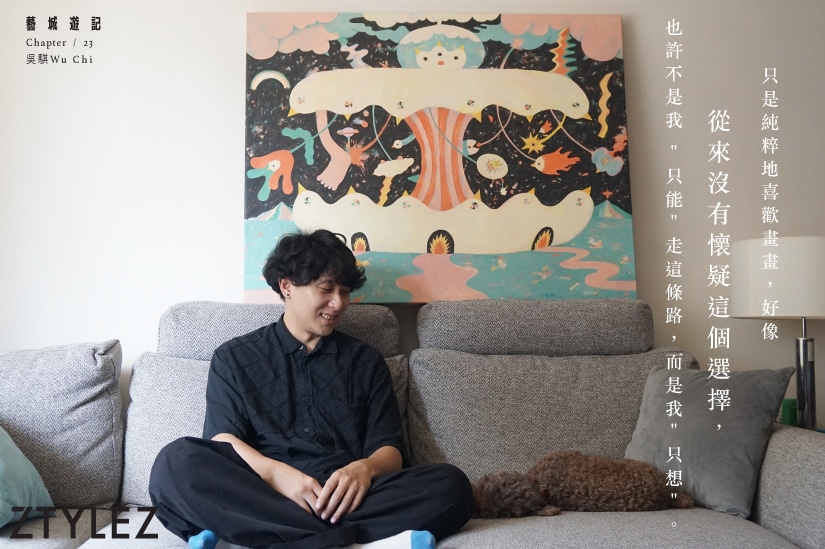
Wu Chi’s studio is a room in his Taipei apartment on a high floor, where he can watch the skyline change with the light. He posts an annual work roundup on social media that shows a remarkable output, and he jokes that his hands cannot move as fast as his ideas. That urgency is practical, he said, because opportunities do not wait.
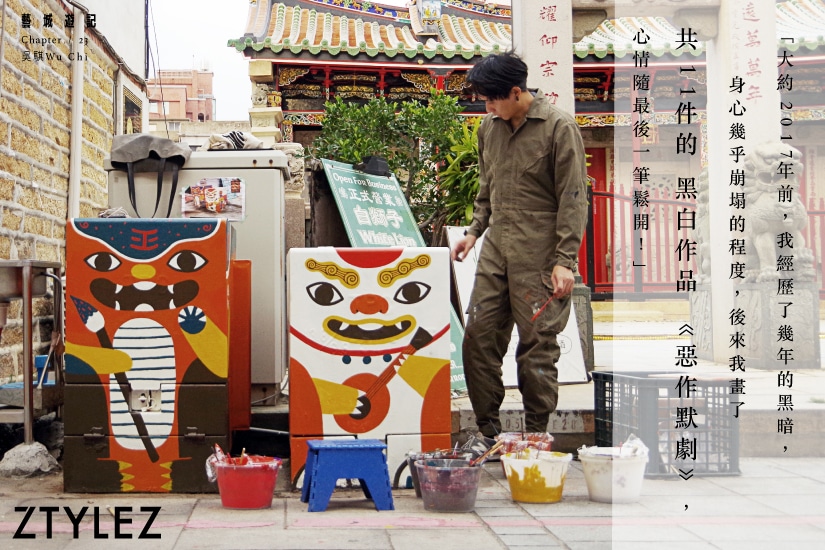
Describing a low period before 2017, he recalled, “I went through several dark years where I almost collapsed mentally and physically. I painted 11 black and white pieces called Malicious Mime, and when I laid down the last stroke I felt relief. I’m a Scorpio who keeps score, but I used painting to lessen the pain. Bad experiences made me more certain of my goal, to become stronger.”
He believes pressure can be converted into creative fuel. “I can find energy inside pressure,” he said. “Pressure motivates me and forces me to overcome my shortcomings.”
Early training, relentless practice
Wu Chi grew up in Kinmen drawing constantly in class, from Teenage Mutant Ninja Turtles to Rambo, until he moved to Taipei for vocational training at Fuxing Vocational High School of Arts and Crafts, a Taipei trade school for applied arts students. He said the change was a shock.
He remembered his first year at the school as brutal, when teachers encouraged him to transfer departments or schools and even gave him failing marks. Instead of quitting, he said, he doubled down on assignments and routinely turned in many times the required work to secure the grade he wanted. That drive, he said, shaped his working habits.
At National Taiwan University of Arts he said he reached a turning point, finding a clearer direction toward illustration. He closed himself off for six months, studying art daily and forcing himself to copy 10 works a day and learn one new thing each day until a style emerged. “After six months I painted Squareism and felt a flash of insight, like this was my style,” he said.
How he negotiates art and commerce
Wu Chi said he learned to compromise without surrendering his identity. “Early on, commercial projects required sacrifices and that was painful. I gave myself a rule that every collaboration must teach me something new,” he said. “For one project, European Phantom, I revised colors 16 times and learned to use blue better, but the final work still had to be something I loved.”
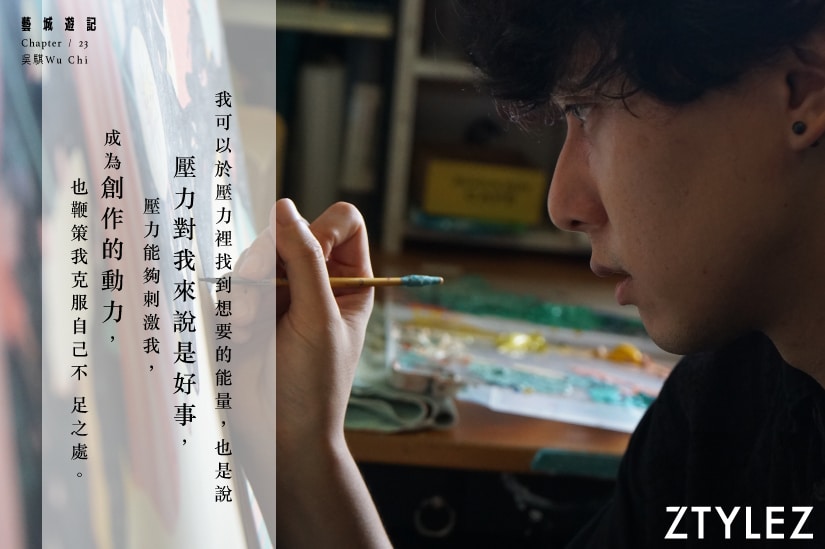
He said balancing art and commercial work has taken 17 years to refine, and he now treats each commission as a chance to grow technically or conceptually. “If I cannot learn, then it’s not worth doing,” he said.
Creating characters, and deciding when they become IP
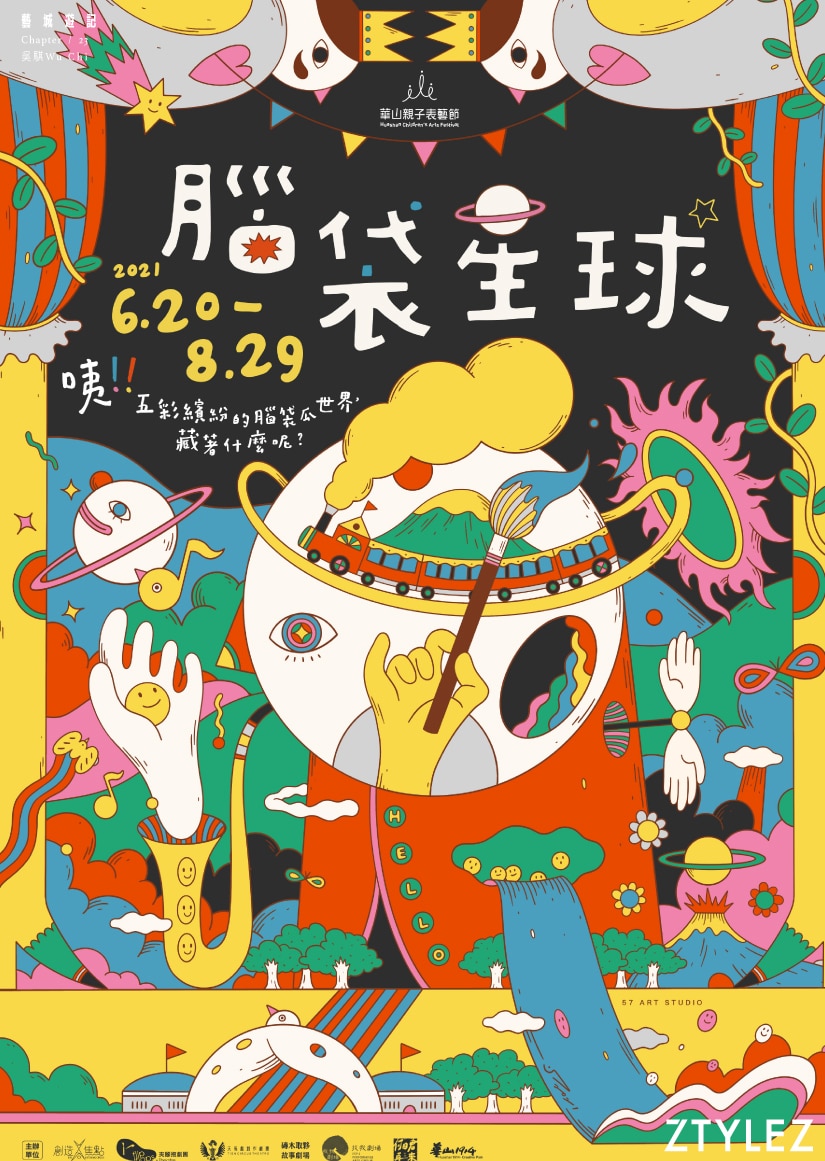
Recurring figures such as bird-men and dream beasts populate his work, but he said they were not initially designed as intellectual property characters. He said contemporary art may be moving toward an era of IP-based art, and he respects that development when it helps artists sustain themselves.
At a joint show called Anime Future 2023 in Songshan Cultural and Creative Park, he said he decided to make one character he created in 2017 into a formal IP. “The conviction for this character reached 100 percent, so I decided to name the three-headed bird Bika, symbolizing freedom, thought and commerce,” he said.
A view of Hong Kong and art markets
Asked about Hong Kong’s art scene, he said he admired the city’s IP development. “I like Hong Kong’s atmosphere. My brother once wanted to join an exhibition there and was told you need a clear IP, which shows how polished IP development is in Hong Kong,” he said. He added that meeting Hong Kong illustrators through joint shows has given him new contacts and perspectives.
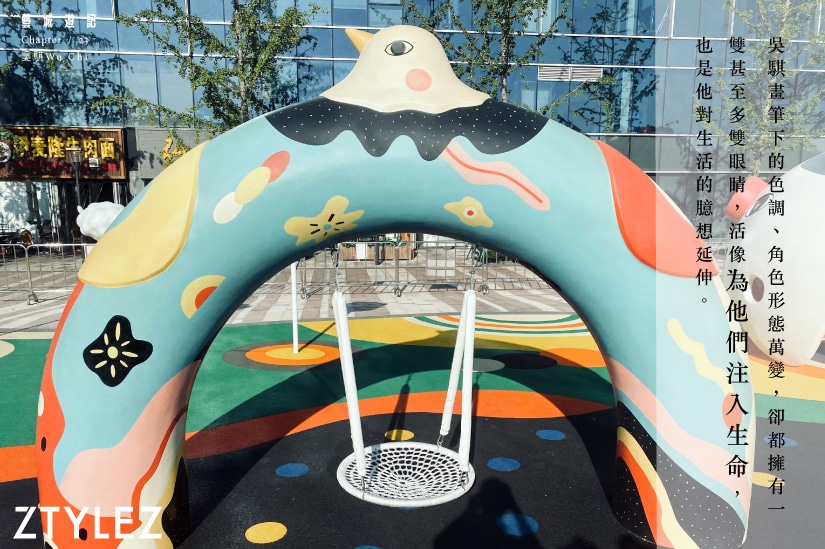
He often draws everyday objects and imagines them with legs and eyes, he said, a habit that led him to give many characters multiple eyes, which he described as a way to breathe life into them. The bird-man figure came from watching a Japanese Birdman Championship where students dressed up and leapt, a moment that made him both envious and inspired about freedom.
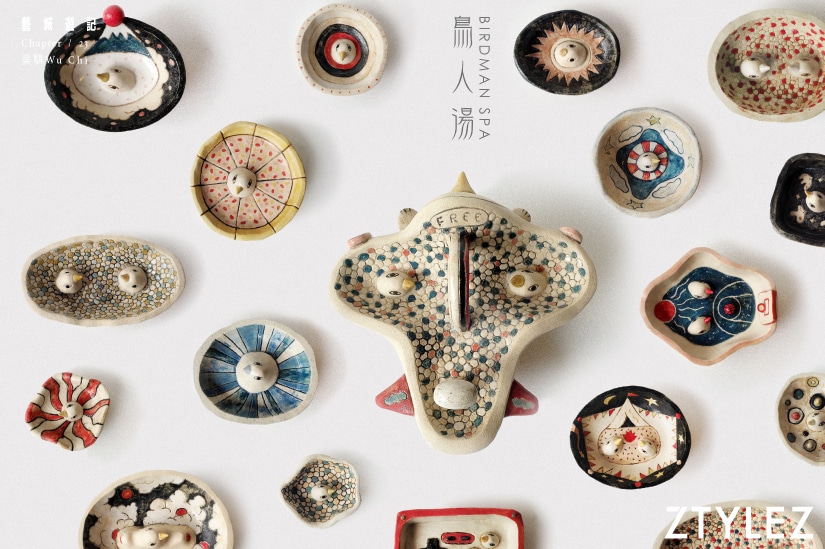
Leaving work behind for a legacy is another source of pressure for him. “Creators want to leave work behind. If I get old and find I left nothing, that would be a great pressure,” he said. He uses pressure to drive himself toward the fantastical worlds he imagines.
Giving back to Kinmen
Although he trained in Taipei, Kinmen remains central to his work and identity. He has completed 18 large public works, he said, around the island and recently designed the exterior graphics for what he described as Kinmen’s only McDonald’s. He told the interviewer his motive is simple: he wants the island to look better.
He and his father founded Bird Islet, a creative studio in Houpu that produces Wind Lion God souvenirs and ceramic pieces. He described the studio as a place where talents who trained elsewhere can return and bring aesthetic skills back to Kinmen, creating a positive cycle.
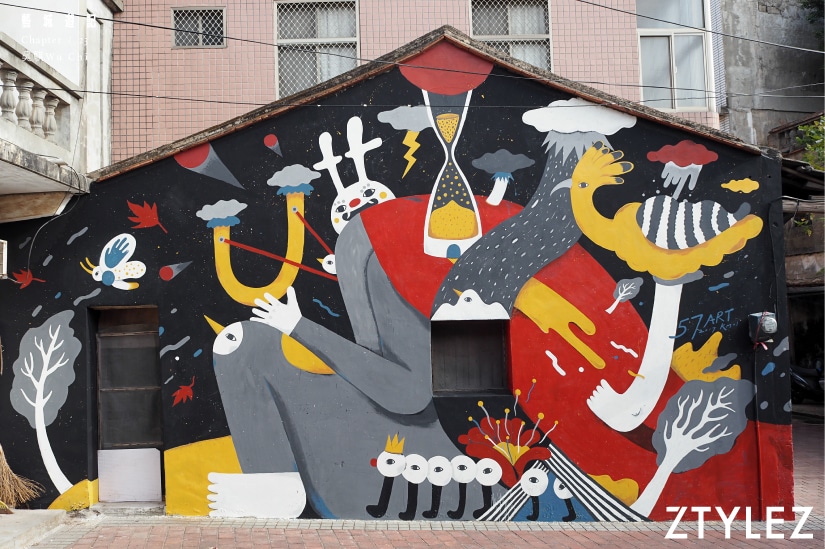
He expressed frustration that some local projects returned to bland appearances after being repainted, and that the Forest Spirits lantern pieces taken by local officials might be destroyed. “I am really angry,” he said. “The more you expect, the more you are disappointed, but I will keep doing what I must do, until the day I hate Kinmen.”
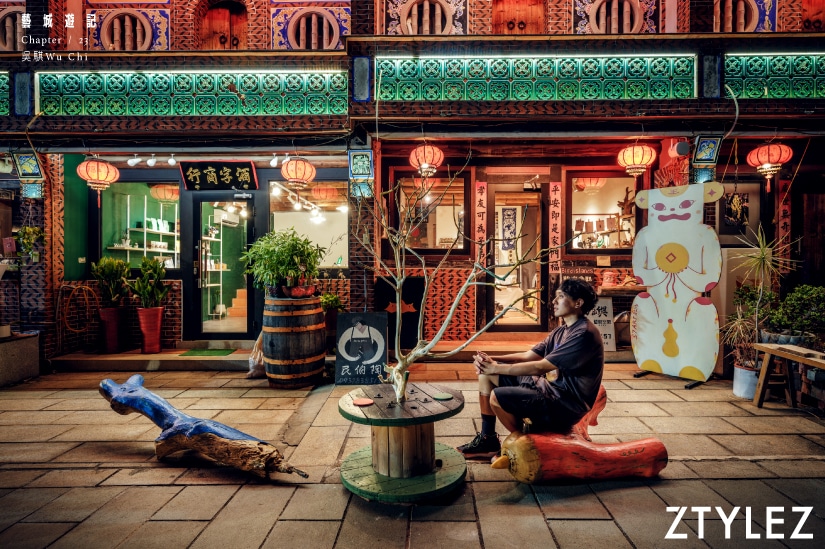
He said the founding idea of Bird Islet was symbolic: Kinmen is home to birds, and like young birds that fly out, gain experience, and return, he wants to bring skills and creativity back to the island. That impulse, he said, is why he continues to invest time and energy in public art there.
Producer: Mimi Kong
Interview and text: Kary Poon
Photographer: Wei
Video editor: Kason Tam