



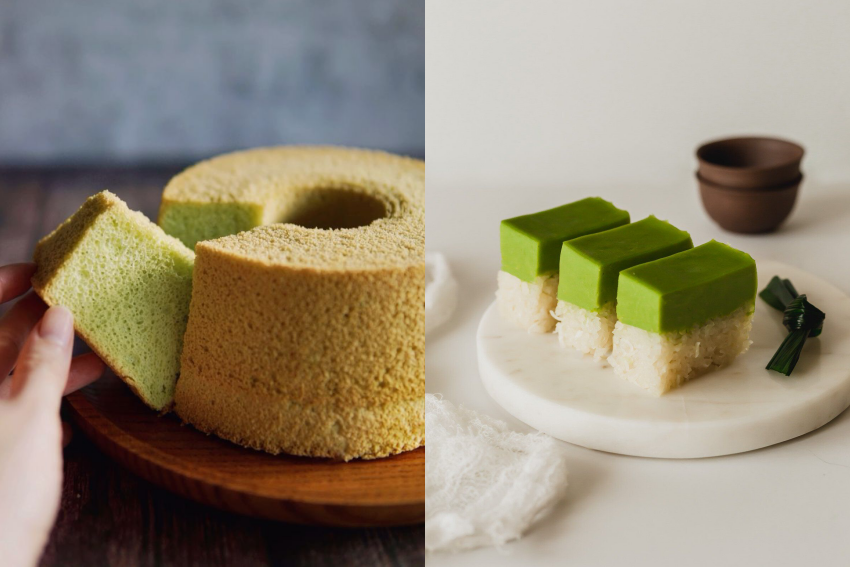
Pandan desserts can look healthy because of their natural green color, but that appearance does not guarantee low calories or good nutrition, registered nutritionist Kayla (胡嘉琪) said.
Pandan leaves, what they actually provide
Pandan leaves are prized in Asian cooking for their aroma and color, and they do contain antioxidants such as polyphenols, flavonoids, and chlorophyll, Kayla said. However, she noted that when used in sweets, chefs normally add only pandan juice or extract for flavor and color, so the real intake of those micronutrients is minimal.
In short, pandan usually contributes aroma and color rather than substantial nutrients, Kayla said.

Pandan desserts: three popular treats and what to watch for
To judge a pandan dessert, Kayla said the key is what it is paired with, because coconut milk and sugar drive most of the calories and saturated fat in these items.
1. Pandan chiffon cake
Traditional chiffon cake uses vegetable oil, which keeps the cake light and typically lower in saturated fat than butter-based cakes, Kayla said. However, some commercial bakeries replace vegetable oil with hydrogenated or shortening-type fats to improve texture or shelf life, and that substitution can raise trans fat or saturated fat content substantially.
Watch for added sugar and fats, Kayla warned, because recipes that support a tall, stable crumb often require significant amounts of white sugar, which can cause blood sugar spikes if eaten in excess.

2. Kuih lapis, the layered pandan cake
Kuih lapis, often labeled as layered pandan cake, is made from tapioca starch, glutinous rice flour, large amounts of white sugar, and thick coconut milk, Kayla said. The dessert has a chewy, springy texture, but that texture comes at the cost of high carbohydrates and saturated fat from the coconut milk.
Portion control matters, because the concentrated sugar and coconut fat in kuih lapis can raise low-density lipoprotein cholesterol when eaten frequently.

3. Pandan kaya spread on toast
Kaya is a coconut-and-egg jam cooked with sugar and pandan, commonly spread on toast. As a spread, kaya concentrates both sugar and oil, and if you add a generous pat of butter the toast becomes a high-calorie, high-saturated-fat snack, Kayla said.
Consider thinner spreads and lighter breads to cut calories, she recommended.

Common health traps and practical tips
Long-term excess of these pandan desserts can add up to excess calories, weight gain, and a higher risk of chronic conditions such as heart disease and type 2 diabetes, Kayla said.
She suggests treating pandan desserts as occasional treats rather than daily staples, and adjusting the rest of the day’s meals to be lighter and balanced when you indulge.
Practical swaps Kayla recommends include using reduced-sugar recipes, choosing spreads sparingly, selecting leaner cake fat sources such as nonhydrogenated vegetable oil, and trimming portion sizes to keep overall intake reasonable.
For home cooks, she also suggests using fresh pandan extract or blended pandan leaves for authentic aroma without adding more sugar, and pairing a small pandan treat with fruit or tea to slow sugar absorption.
About the expert
Kayla (胡嘉琪) is a registered nutritionist with the Hong Kong Nutritionists Association and a nutritionist at the Home Nutrition Center. She holds a Bachelor of Science in Food and Nutritional Sciences from Northumbria University in the U.K.
Learn more via the Home Nutrition Center Facebook page: Home Nutrition Center.