




Find your ikigai: Who are you waking up for, and why? This morning guide draws on the ikigai philosophy from Okinawa, Japan, to help you recover a sense of purpose and simple daily happiness in a busy life.
Ikigai does not demand grand ambitions. It is often hidden in small, shining moments: a well-brewed cup of tea, a task completed with care, or a sunset that stops you in your tracks. By focusing on the present and doing small things well, you can rebuild a lasting sense of contentment. Start today and try to find your ikigai through everyday practice.
Every morning, what wakes you: an alarm or anticipation?
When you woke up this morning, what was your first thought? Did you rise with expectation, or did the idea of another repeat day feel heavy? Routine work and life can make days feel like they are on autopilot, and you may lose sight of what you truly want, or question why you keep pushing so hard.
If you feel that way, consider the ikigai philosophy from Okinawa, Japan. The word combines iki, meaning life, and gai, meaning worth or value, and it is often described as the reason you get up in the morning.
What is ikigai?
When people hear “life purpose,” they often imagine achievement, fame, or changing the world. The core of ikigai is the opposite. According to Japanese neuroscientist Ken Mogi, ikigai does not require great success. It can be the satisfaction of making a good cup of tea, the pride of finishing a small task well, or the quiet joy of a beautiful evening sky.
Ikigai in daily life: do small things well
We are often pulled by outside expectations, chasing the image of success others set for us. Ikigai asks you to let go of unrealistic burdens, and face your inner truth. When you focus on the present and do small, ordinary things with care, you slowly become who you are meant to be, and everyday life becomes meaningful.
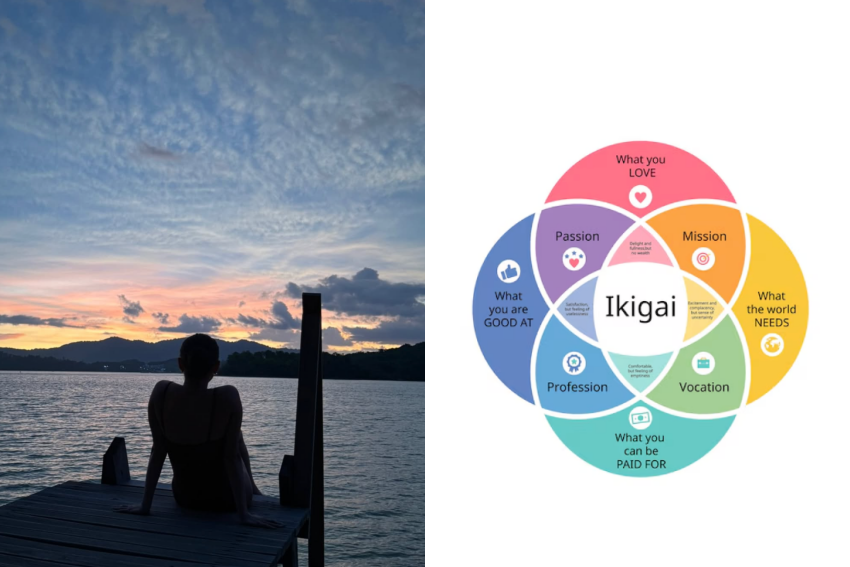
The four circles of ikigai
1. What you love
Activities that fill you with passion and make you lose track of time.
2. What the world needs
Things you want to do that make some corner of the world better.
3. What you are good at
Skills you perform with ease and that others often find difficult.
4. What you can be paid for
Work that can support your life and create tangible value.
Step one to find your ikigai: meet your passion and mission
How do you find your ikigai? Use the four overlapping circles as a map. Start with what you love and what the world needs. Think about activities that make you lose track of time, that energize you. Reading, painting, or deep conversations with friends may point to your passion.
Next, ask what the world needs. It does not have to be a grand plan to save the planet. It could be sharing healthy eating habits with people you know, or using your writing to comfort someone. When your passion also has a positive effect on others, that overlap becomes your mission.
Step two to find your ikigai: discover your skills and value
Passion and mission are important, but practical considerations matter too. Now look at what you are good at and what you can be paid for. Everyone has unique strengths. Maybe you are a good listener, excellent at organizing, or skilled with certain software. These talents are your assets.
When a strength can generate income and cover your basic needs, it becomes your profession. In ikigai thinking, money is not the only goal. Still, a stable financial base gives you the freedom to pursue what you love, without compromising for survival.
Find your ikigai, embrace a life you want
When what you love, what you are good at, what the world needs, and what you can be paid for all overlap, the central sweet spot is your ikigai. Finding ikigai is an ongoing, inward journey, not a one-time achievement. If you cannot draw a complete overlap now, do not be discouraged.
Try different things in daily life, notice the moments you laugh most freely, and pay attention to what others praise about you. Stay curious, and fully experience each moment. If you take the first step, one day you will find the reason that makes you want to get up early with enthusiasm, and you will build a life that truly belongs to you.