


Shigeo Otake exhibition Agoraphilia opened in July in Hong Kong, where the air hangs heavy with summer humidity and the city moves at a relentless pace. Walking on the pedestrian bridge over Connaught Road Central, in Central, you see red taxis threading through traffic, and commuters pressed forward by algorithms, targets and deadlines. Opening the door to White Cube Hong Kong feels like stepping into another time and place, a temporary reprieve from the citys sharp edges.
Japanese artist Shigeo Otake presents his first solo show in Hong Kong, titled Agoraphilia, at White Cube Hong Kong. The exhibition title derives from the Greek agora, the public market square where people met across social divides to trade goods, exchange news and whisper rumors. The gallery said the show reframes that charged public space as a mirror for contemporary metropolitan anxieties.
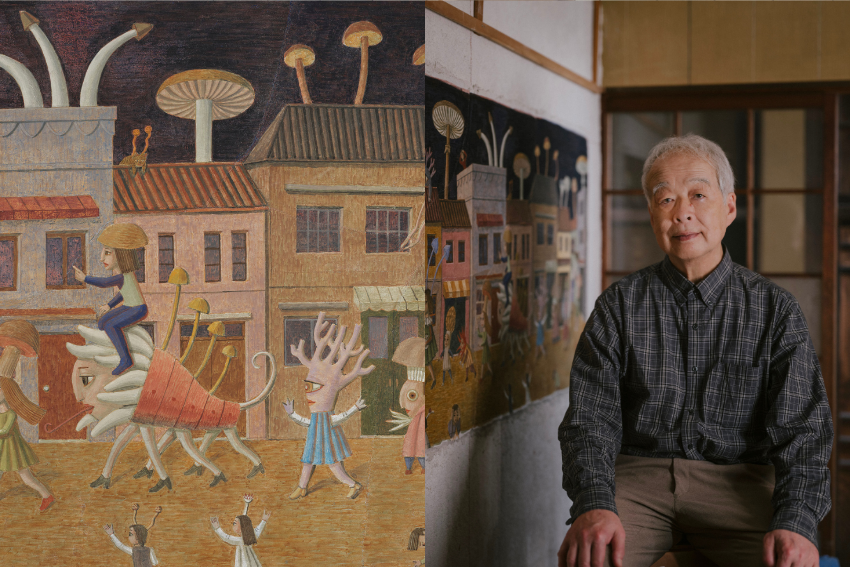
There are no didactic manifestos on the walls. Instead, Otakes canvases, painted in the egg tempera technique, open like miniature jewel boxes, both luminous and strange. Human, animal and plant figures play out scenes of interdependence that are at once comic, unsettling and tender.
Shigeo Otake exhibition explores a fungal imagination
To read Otakes surreal imagery, you must look to his life and practice. Shigeo Otake exhibition materials and the artist studio provided biographical details for this report. Otake was born in 1955 in Kobe, Japan, and remains based there, working amid the citys portside atmosphere.
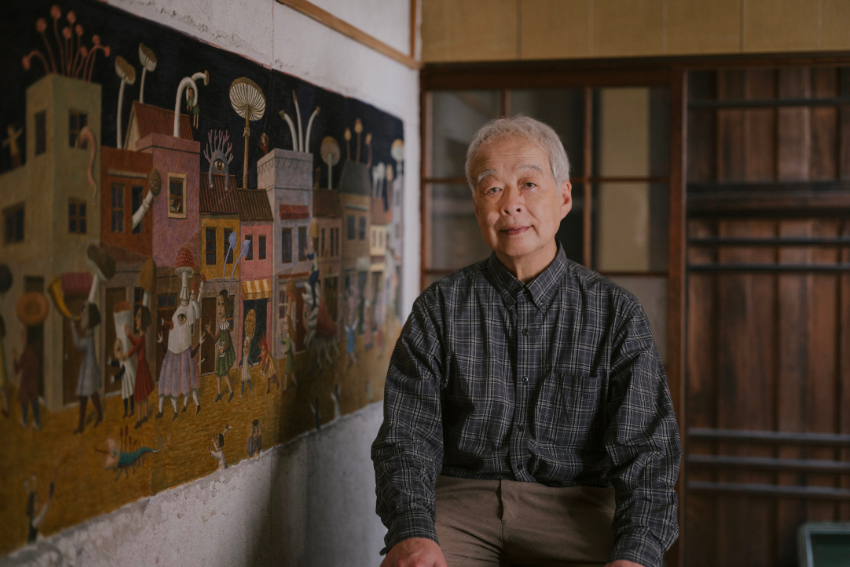
Otake trained at Kyoto City University of Arts, earning a bachelor of fine arts and a master of fine arts between 1979 and 1981, the studio said. His tutors gave him a firm grounding in early Italian Renaissance practice, which set him on a path toward oil painting and mural work during his early career. He later traveled in Europe, studying works by Hieronymus Bosch, Pieter Bruegel the Elder and other Northern Renaissance masters.
What distinguishes Otake is his long study of nonhuman life forms, especially parasitic fungi and Cordyceps, the studio said. Under microscopes and in forest shadows, he saw modes of life that break down the boundaries of the individual, weaving hosts, soil and root systems together into vast invisible networks.
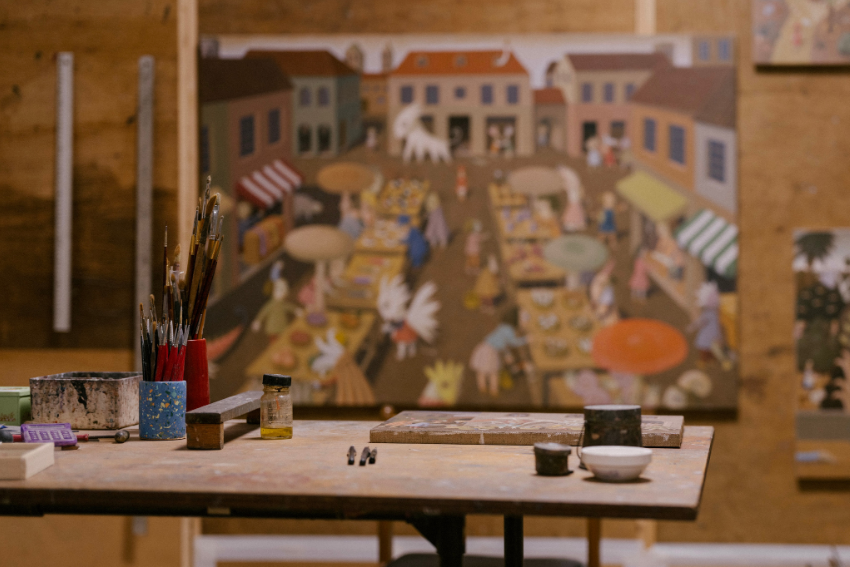
Where mainstream culture often equates fungi and parasitism with sickness and decay, Otake treats them as modes of coexistence and transformation. He wrote about this perspective in an essay titled Until the Mushroom Artist Sprouted, and those ideas permeate his canvases.
Posthuman tableaux, made with ancient methods
Look closely and figures have mushroom caps, beaks, insect wings or plant grafts. Otake does not position humans at the center of his world. Instead, people, animals, plants, fungi and supernatural beings coexist, exchange and collide in an ecology that sometimes harmonizes and sometimes threatens to collapse. The result is a vision of a posthuman collective.
Otake achieves a timeworn, museum like sheen through his devotion to egg tempera. The artist and his studio say egg tempera requires painstaking patience. Egg yolk is mixed with mineral pigments, then applied in thin, layered strokes to a wooden panel to build a water resistant surface with a restrained, inner glow.
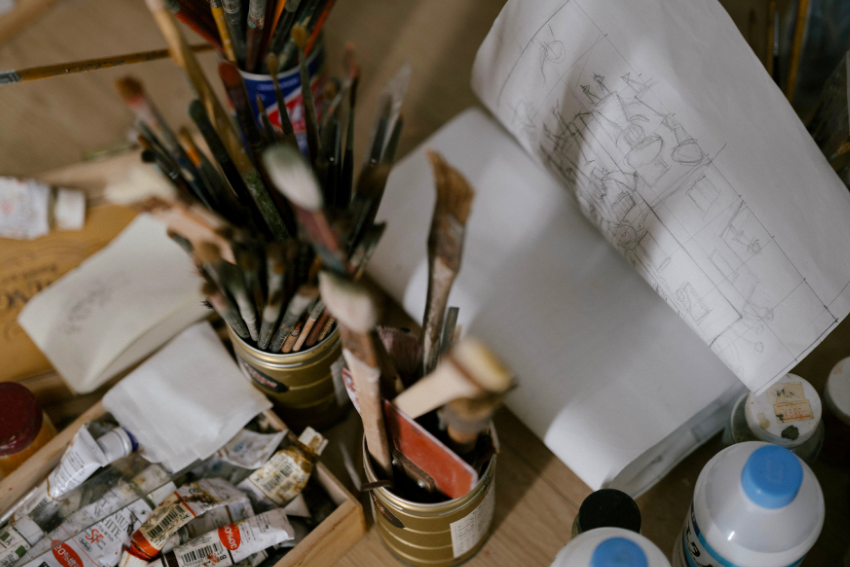
In an age when artificial intelligence can generate images in seconds, Otakes slow, physical labor reads as a quiet rebellion. Each brushstroke carries the weight of time and invites the viewer to slow down.
At White Cube Hong Kong, Otake also presents a rare wet mural executed with the strappo transfer method. The two panel work, Night Parade of One Hundred Fungi, 2026, required painting on a wall, then adhering layers of cloth and adhesive, and finally pulling the painted layer away and mounting it on wood, the gallery said. The process is delicate and carries a high risk of failure.
That transfer, which maps tearing and lifting into the image, becomes a formal exploration of time, trace and disappearance. Each tear and pull remains part of the work, registering fragility and breath.
Key works in the Shigeo Otake exhibition
Agoraphilia takes its name from the market as a meeting place, the gallery said, and Otake uses the concept to examine modern spaces of exchange, from supermarkets to online platforms. The show includes 16 works, several of which merit close attention.
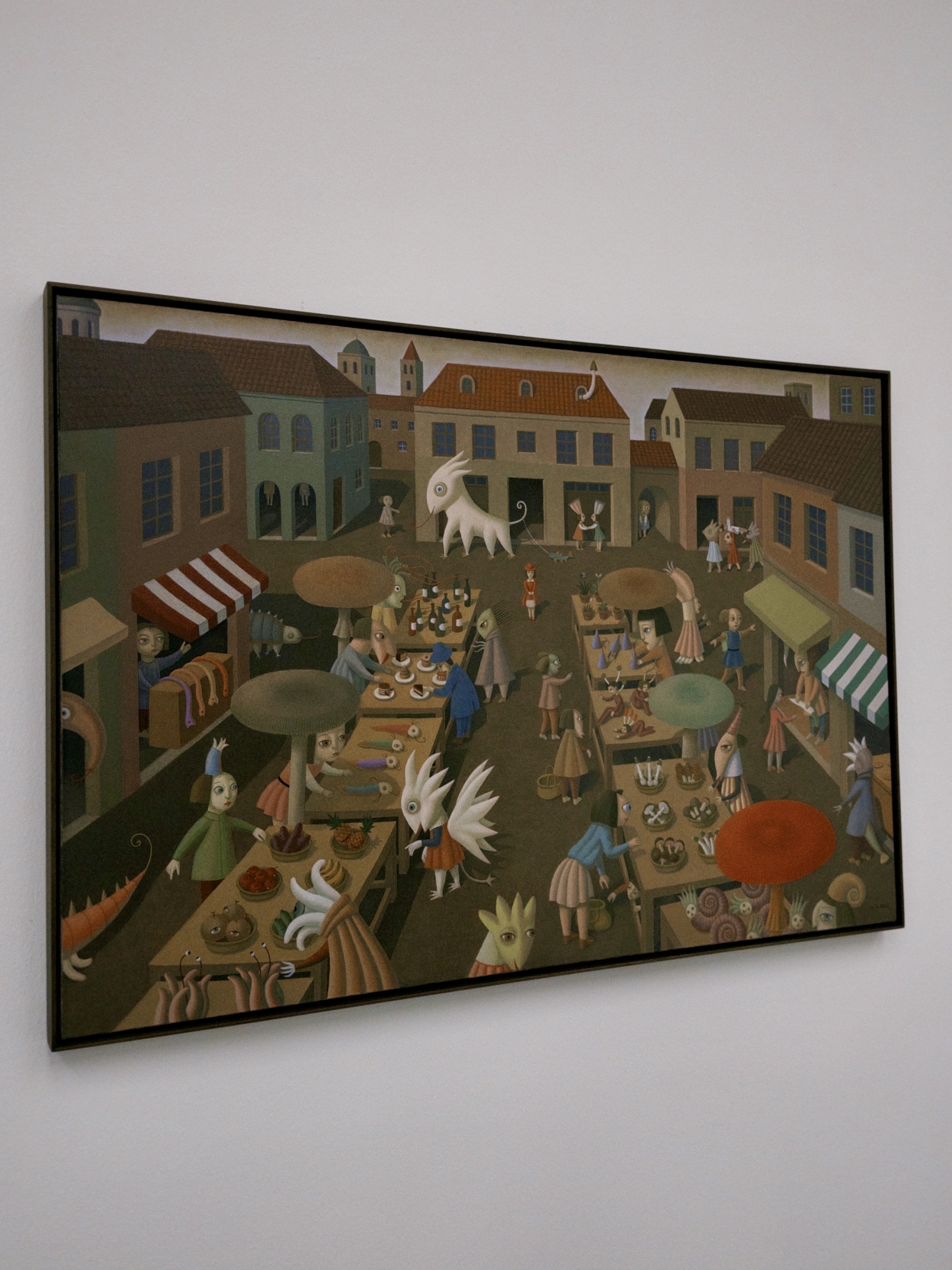
Myco Market Day is one of the largest canvases in the show. At first it looks like an orderly daytime market, with stalls and a sun warmed palette of ochres and warm browns. But details unmoor that illusion: a disfigured body is being carried away in one corner, a child is lifting a shoppers purse in another, and a bird person covered in white feathers points casually to a basket of fruit. The scene satirizes possession and deprivation with a cartoon like bite.
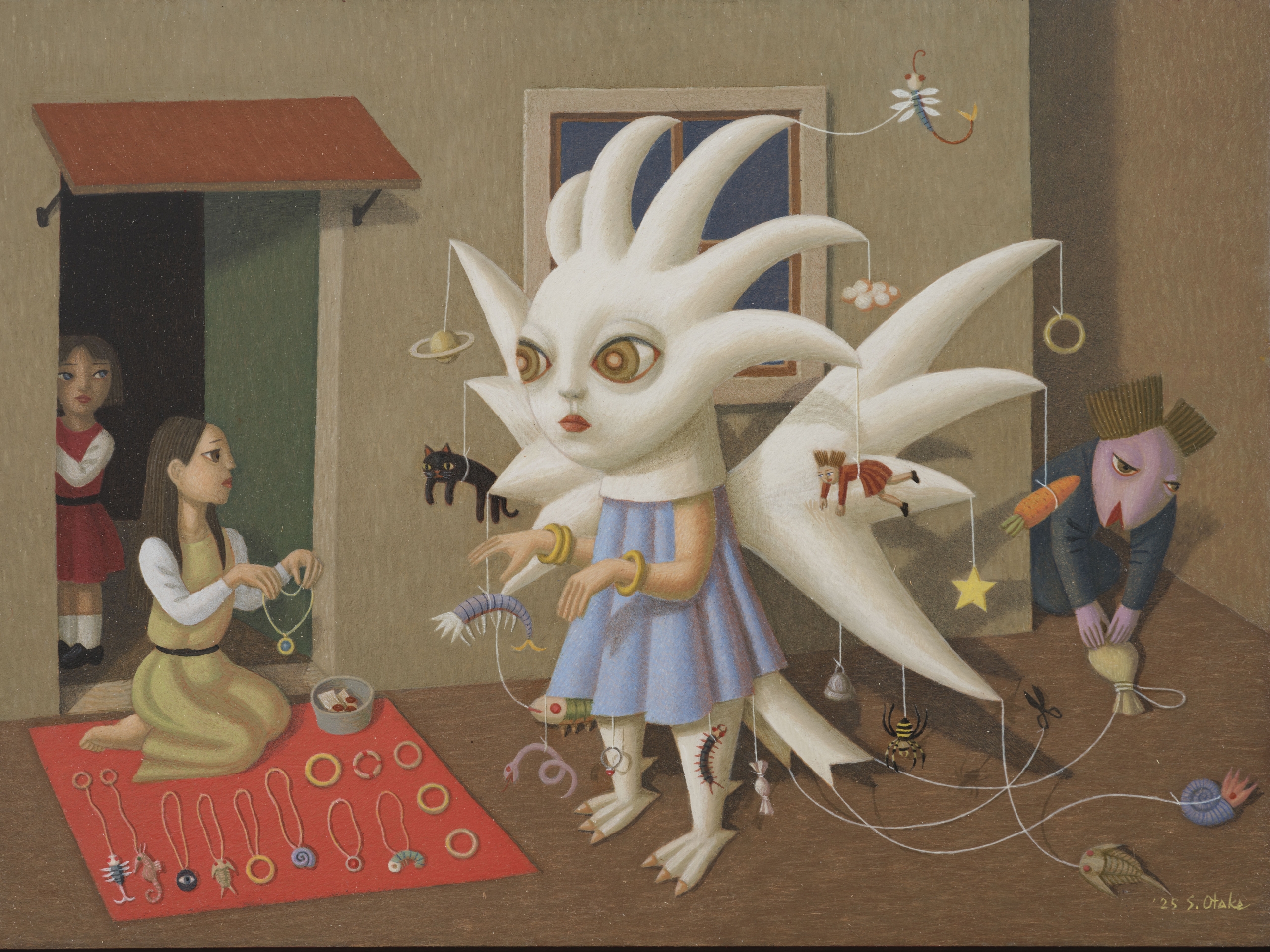
The bird person reappears in The Magnate, draped in jewelry like an over decorated tree and accepting a necklace from a kneeling vendor. The figures eyes are hollow and unfeeling, and someone in the background reaches for a drifting money bag. The composition reads as a precise satire of power and wealth rendered with a playful absurdity.
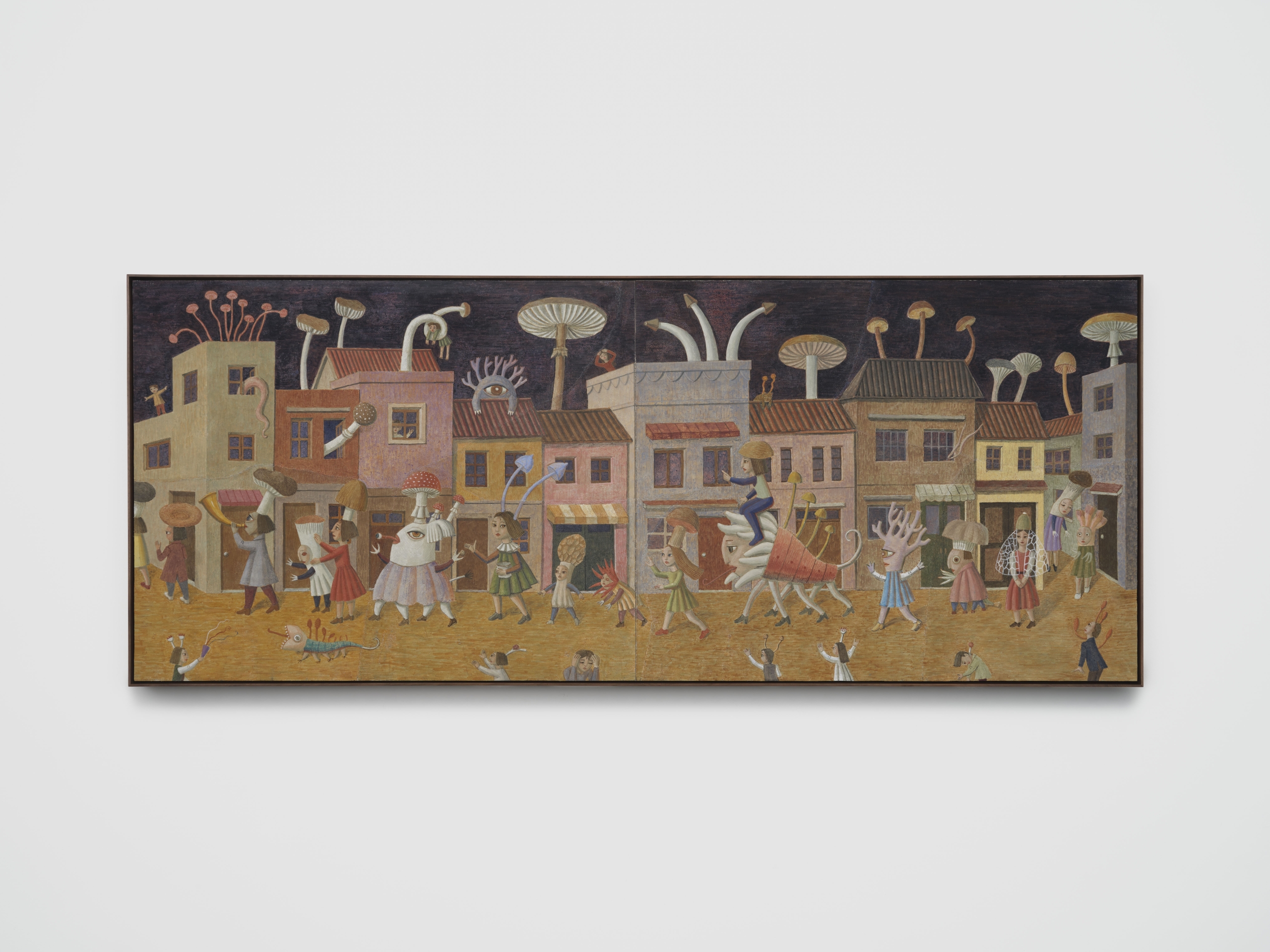
The exhibition highlight is the two panel Night Parade of One Hundred Fungi, which reimagines the Japanese folk legend hyakki yakO, or the night parade of a hundred demons, the studio said. In Otakes version, shops are shuttered and a procession of insects, marine creatures and hybrid human fungi reclaim the streets, turning a space usually reserved for commerce into a nocturnal commons of collective energy.
Otake asks us to see markets as more than commerce, and desire as more than appetite. Each act of buying and exchanging participates in an older, more complicated ritual, he suggests in these paintings. For visitors, the works are a prompt to look up from daily routines and ask what they are doing and why.
Shigeo Otake: Agoraphilia
Dates: July 10 to Aug. 29, 2026
Hours: Tuesday through Saturday, 11 a.m. to 7 p.m.
Location: White Cube Hong Kong, 50 Connaught Road Central, Central (Hong Kongs financial district), the gallery said.