


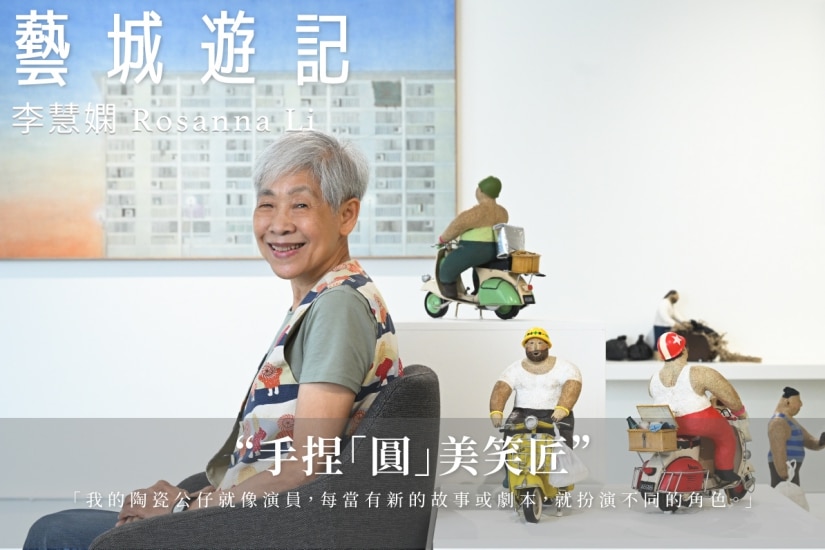
Hong Kong ceramic artist Rosanna Li (李慧嫻) has spent years shaping plump, rounded figures that challenge narrow beauty ideals while celebrating ordinary life in the city.
Though the notion of “thin is beautiful” has waned, many people still prefer a slim, balanced silhouette. After years working in ceramics across Hong Kong, Rosan brings her deliberately chubby figures into public spaces across the city, from the Yau Tong MTR station to Lee Tung Avenue in Wan Chai and the Hong Kong International Airport. When her so-called “fat uncle, fat aunt” characters appear in groups, their friendly, approachable expressions make them instantly likable.
Whether they are palm-size clay figures or larger-than-life sculptures in public spaces, Rosan’s rotund characters look content and relaxed, projecting warmth and joy. Painters use color to capture scenes, and ceramicists shape clay to tell human stories. In Rosan’s work, playful characters step out of Hong Kong daily life: shopping at the wet market, riding a motorcycle to deliver food, or simply standing on a street corner, each depicting small, honest Hong Kong stories.
Rosan jokes that her figures are actors and that life is their stage. They change outfits and props to play different roles. On this visit to her studio and gallery, we watched the sequence from clay shaping to final costume, and learned how she crafts these “big-size performers.”
“Small lives deserve to be recorded.”
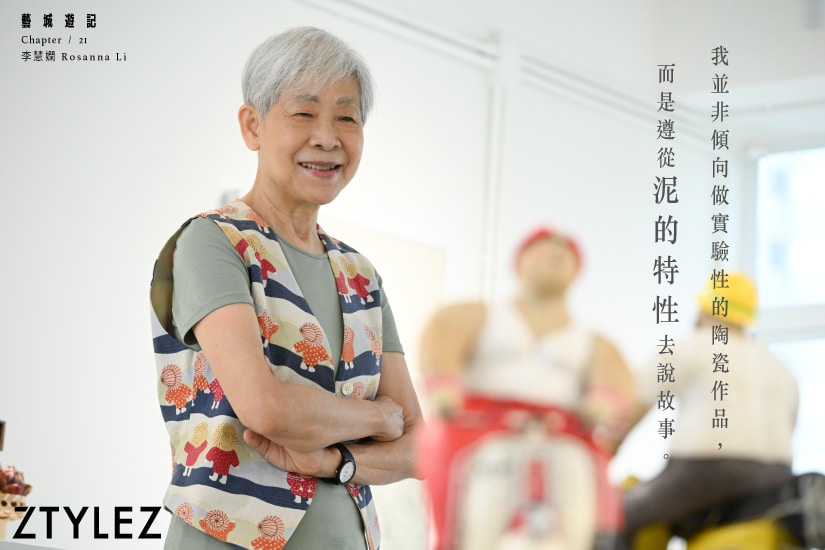
When the figures are actors, Rosan says, she is the “behind-the-scenes director.” She keeps many past pieces and new arrivals in cabinets in her studio, and when inspiration strikes she selects figures to take the stage. “Whenever a new story arrives, I feel like I open a cabinet and pick them out to play different roles,” she said.
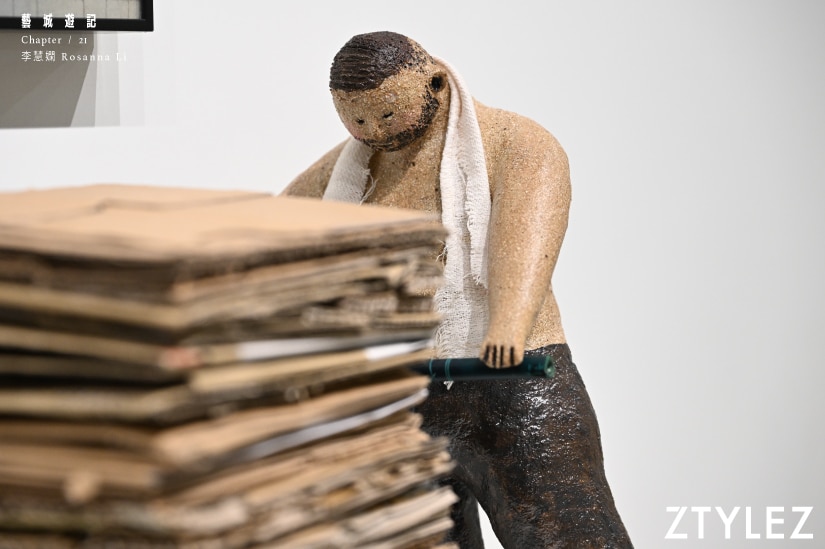
If you know Rosan’s work, you know these clay figures do not star in epic sagas, but in small vignettes of everyday life. The scenes closest to daily experience are often the most affecting. Her characters focus on ordinary people, and when asked why these anonymous figures draw her attention, she replied with a personal connection.
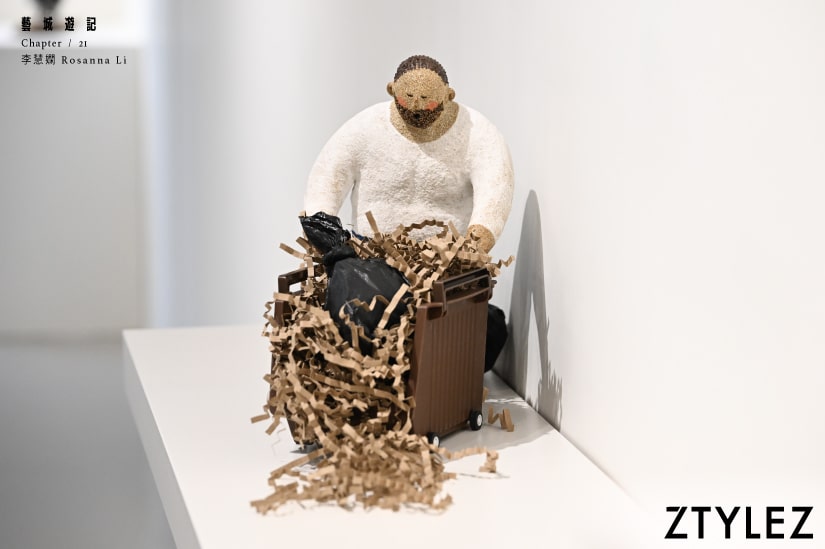
“I am one of those small people,” Rosan said. “I live in an old neighborhood with many long-term residents, traditional shops, and markets. I walk through markets and tea restaurants and see what real life is. I create because I want to record what I see and feel. These scenes deserve to be remembered.” She added that familiar details in daily life are often overlooked but reward close attention.
Hong Kong ceramic artist reshapes beauty with plump figures
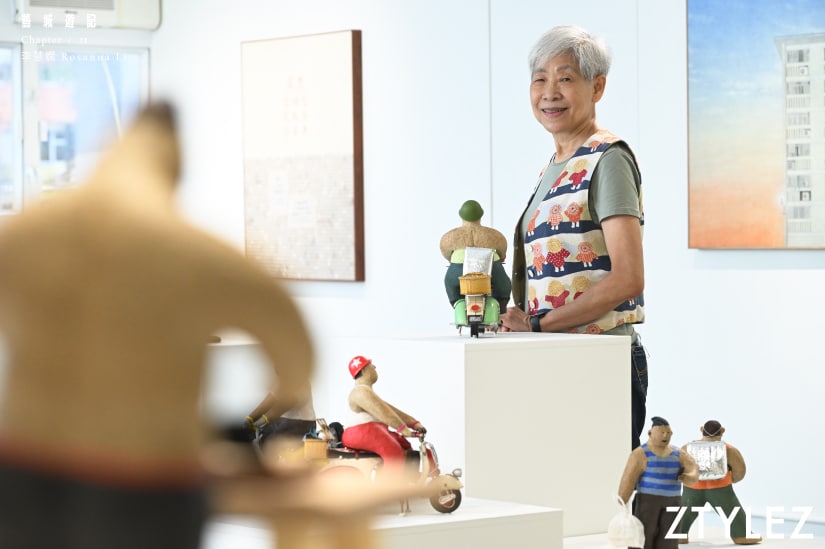
Earlier this year Rosan opened a collaborative show with friend Yang Yuk-ken, and during our interview she was preparing a separate exhibition at SC Gallery with local young artist Jacky Tao called “Market Spins.” The SC Gallery exhibition, she said, was a perfect match for her work because of its street-level subject matter.
The show pairs two generations of creators and produced an unexpectedly fresh visual dialogue. Jacky paints detailed market scenes in a steady style, while Rosan contributes her warm and humorous ceramic figures. On first glance, viewers might assume the paintings were made by a veteran artist and the ceramics by an emerging maker, yet both artists share an emphasis on craftsmanship.
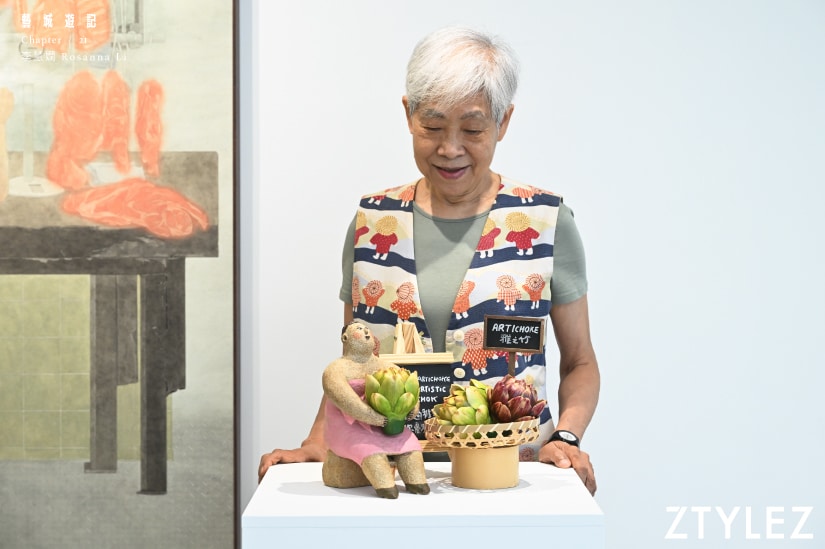
“I really like Jacky’s market paintings,” Rosan said. “We exchanged images while preparing the show and saw possibilities. We did not discuss color in detail, yet the installation surprised us. Our works create a dialogue; it does not feel like Jacky is Jacky and I am me, it feels like everything belongs to the same event.”
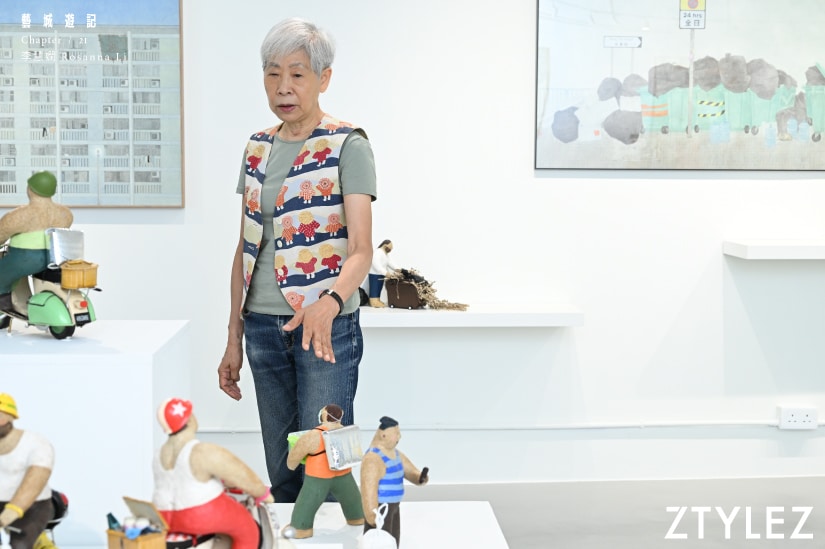
“Small accessories are crucial to my work.”
In the market scenes some figures hold scales, others carry bamboo skewers, and a butcher brandishes his cleaver. Props add character, and Rosan says those small accessories are essential. “If the figures were only clay people, they would feel a bit plain,” she said. “When they play different roles, they need costumes and props to appear on stage.”
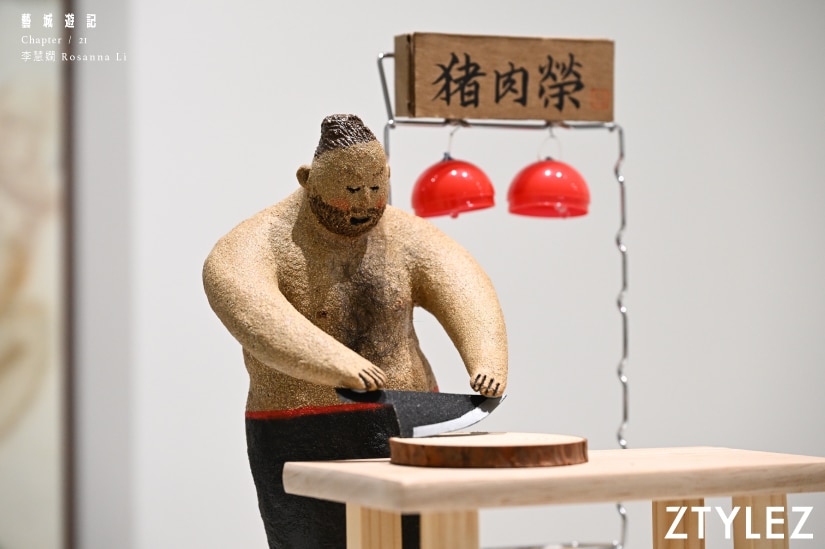
Rosan collects small, interesting objects to build a prop box. For themed works she calls on friends with specific skills, such as sewing or fashion design. “I do not always find the perfect accessory on my own, so friends help. I often rely on friends who are excellent at sewing or costume making,” she said.
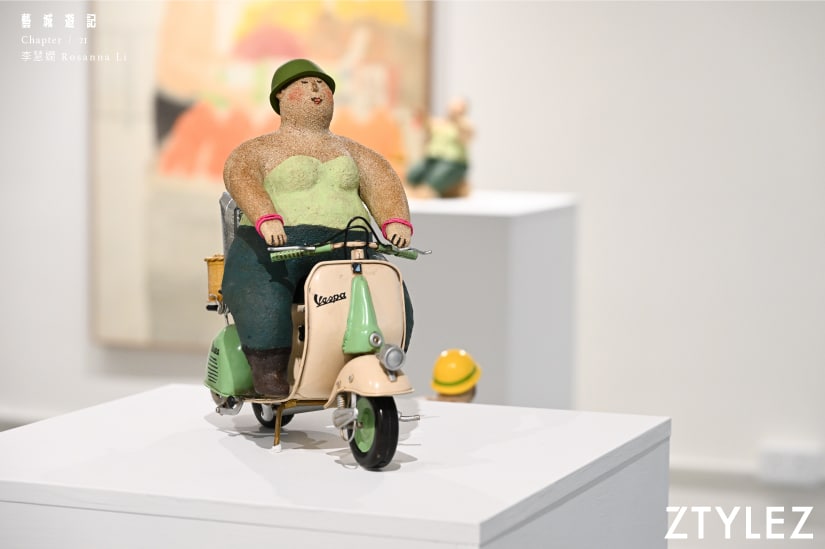
For this exhibition she specially made figures of food delivery workers to honor their pandemic-era contributions. The foot soldier carries an insulated bag, lunch boxes, and plastic and paper bags that a friend helped design, while the rider’s motorcycle is a modified found object. When the clay figures pair with these refined props, Rosan’s theatrical vision feels complete.
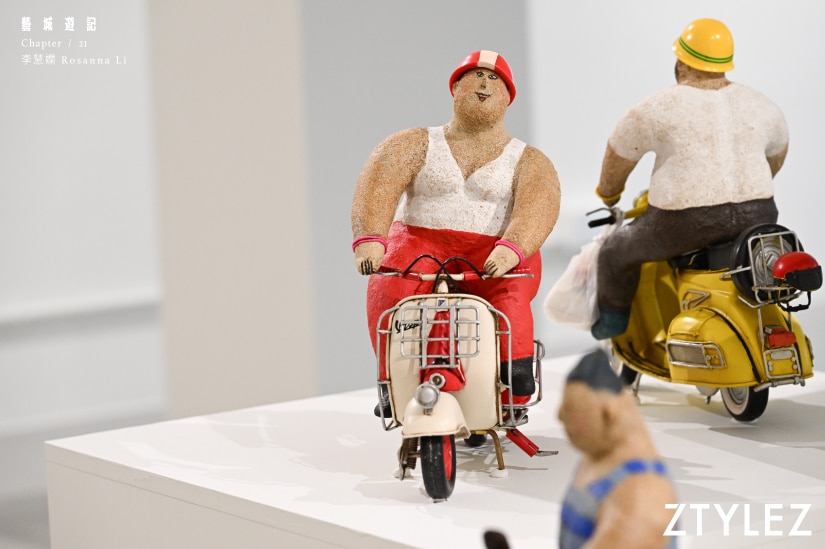
The long creative process can be solitary, but choosing accessories and designing outfits brings Rosan close to friends and students. Some props exist because people in her circle lent their talents, which Rosan says reflects years of teaching experience.
She has taught at The Hong Kong Polytechnic University School of Design since the early 1990s, where she teaches ways of seeing and design thinking. “Teaching is a two-way process,” she said, reflecting on her classroom years. “I have learned a lot from my students; it becomes a cycle of give and take.” That teacher-student friendship has turned many into willing collaborators and costume makers for her figures.
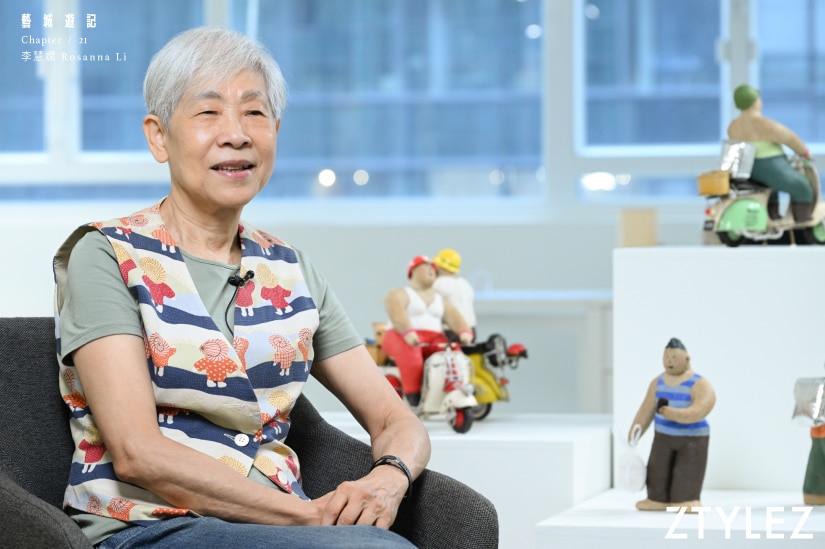
“Society’s beauty standard is too monolithic.”
Rosan urges students to break conventional frames and see multiple perspectives. “Society’s standard of beauty is too narrow,” she said. “Many people think thinner is better, but I think you can be thin and I can be plump.”
Her attraction to fuller forms draws inspiration from Tang dynasty pottery. She finds the rounded bodies convey a leisurely sense of time and ease. “They slow down the watching time compared with a sharp, thin figure,” she said. “When I feel a form is not rounded enough, I add clay until I am satisfied. The making process must slow down. After a basic model is formed, it still requires multiple firings and glazing; nothing can be rushed.”
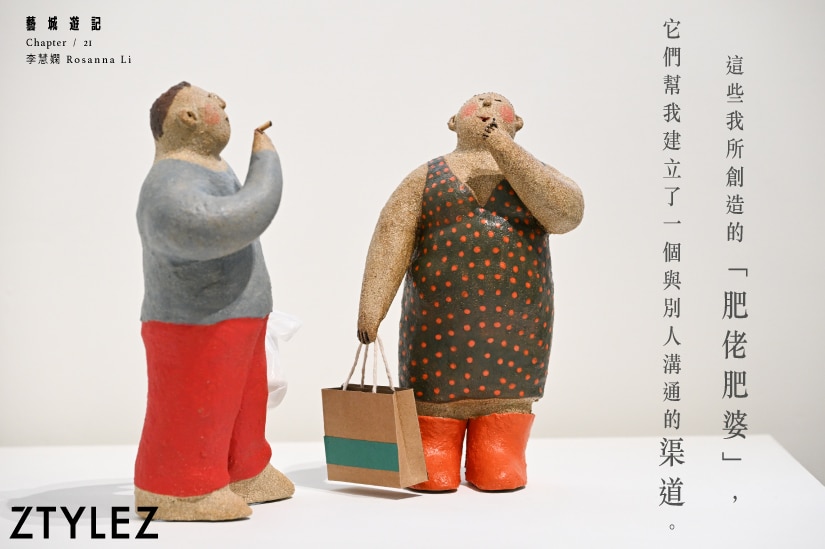
Asked what feeling she hopes the figures convey, Rosan smiled and said, “They bring me peace and joy. When viewers see them and smile, that makes me even happier. The audience gives me affirmation and pleasure. I rely on these fat uncles and aunts to build a bridge for me to communicate with others.”
“Hong Kong ceramics are diverse, each eye finds its own flower.”
As a veteran Hong Kong ceramicist, Rosan was asked how she views the craft’s local transmission. Hong Kong lacks the deep pottery traditions of places like Japan, and its practitioners face fewer stylistic or material constraints. Rosan welcomes that openness.
“People in Hong Kong treat ceramics as a medium you can use any way you like,” she said. “Some make functional vessels, while others experiment with conceptual pieces. The field is broad, and that is exciting. When you enter the scene, you feel the artist’s ideology and breath coexisting with the work.”
Rosan added, “Hong Kong ceramics are diverse; when you look, each eye sees a different flower, and when you make, each person shines in their own way.” After decades quietly shaping clay, she reminds herself not to be bound by rules and to keep collaborating across disciplines to expand her practice.
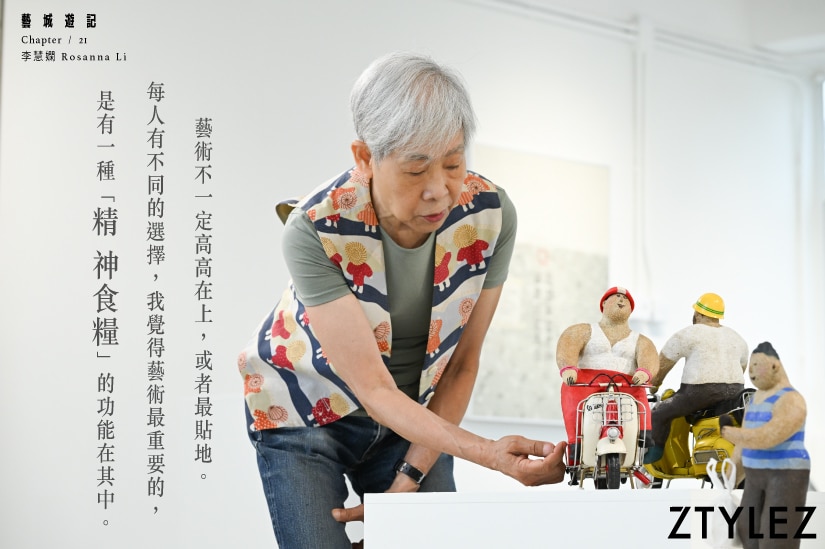
For Rosan, art must first satisfy herself; it is spiritual food. Though she shapes clay dolls with her hands, those characters also help shape who she is. “The creative process helps me know and correct myself,” she said. “I do not know exactly what kind of Rosanna Li I will become, but I change as I make and develop, and I hope to become a better person.”
The world is large and rich, and artists who feel life deeply can turn ordinary sights into moving works. Rosan presses clay with passion and focus, and the little lives she forms radiate a cheerful charm. Her figures are born comedians, and we look forward to this backstage dramatist continuing to create with humor so the laughter never ends.
Executive Producer: Angus Mok
Producer: Mimi Kong
Interview & text: Ruby Yiu
Videographer: Kason Tam, Alvin Kong
Video Editor: Kason Tam
Photographer: Ken Yeung
Designer: Michael Choi
Special Thanks: Lin Ing, Rosanna Li, SC Gallery