


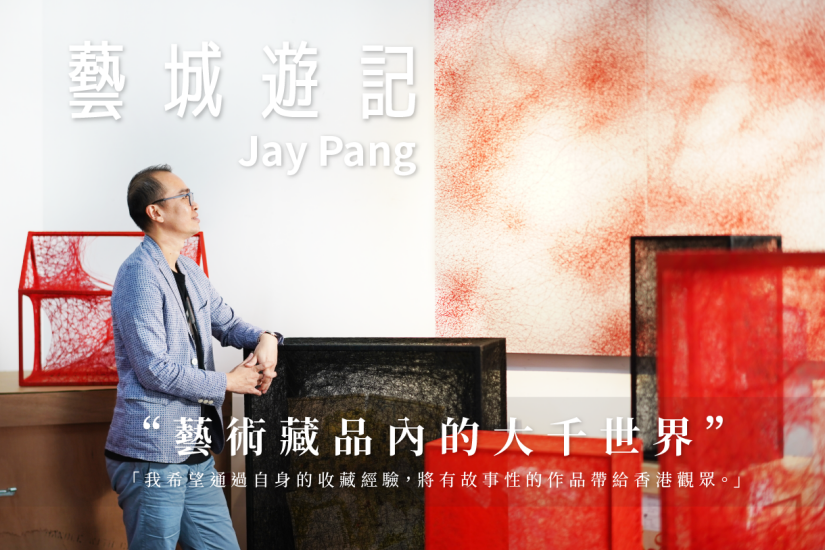
Hong Kong art collector Jay Pang says an artwork’s value extends beyond beauty to the stories it carries and the creative ideas it keeps alive.
For more than a decade, Jay has built a collection that ranges from traditional Chinese painting to Western abstraction, guided less by market speculation than by whether a work can open new avenues of thought.
He does not limit himself to a single medium. Recent additions include installations by Japanese artist Chiharu Shiota and abstract work by North American artists such as Pat Steir, Jose Parla, and Megan Rooney.
How the Hong Kong art collector chooses what to buy
Jay says the excitement of collecting is not merely ownership, but embarking on an exploration of aesthetics and everyday life, and in the moment a piece is acquired the collector also takes on part of the artist’s life story.
He has developed a personal set of criteria from years immersed in the art market: narrative depth, technical execution, and whether an artist has a distinct visual language.
“I care more about the meaning a work can lead me toward than about an artist’s fame or resale potential,” Jay said. “If a piece continues to teach me something, I will keep wanting to live with it.”
Inside his Tsuen Wan warehouse
For this visit, Jay selected highlights from his large warehouse in Tsuen Wan (a district in the New Territories), including several sculptures and contemporary paintings, and a series of Shiota’s thread installations that still astonish him.
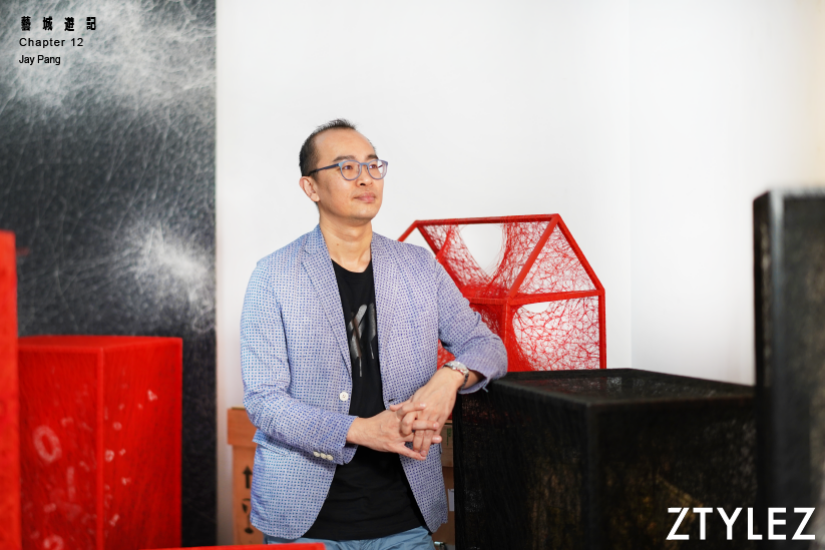
Chiharu Shiota built her international reputation with large thread networks that weave dense, tensile webs to probe themes of life and death, time, memory, and the cosmos.
Jay recalled the first time he saw Shiota’s work: up close, millions of tiny threads become a continuous journey that draws the viewer inward.
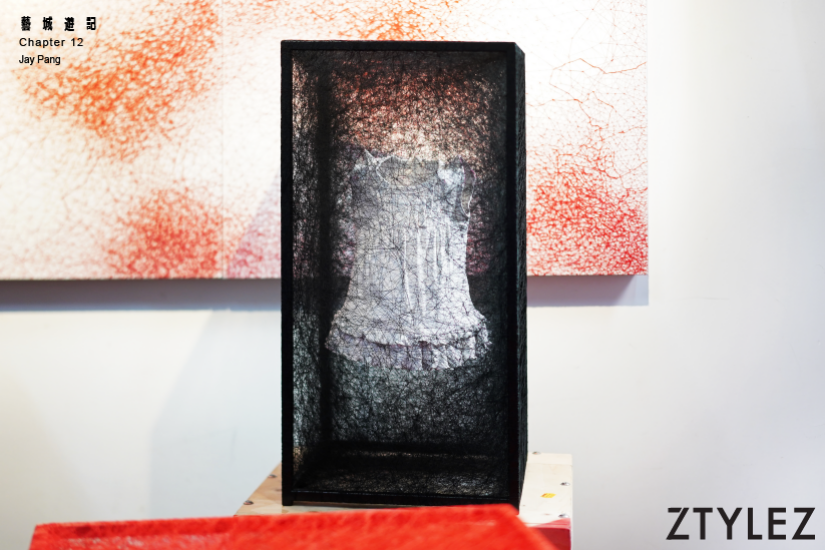
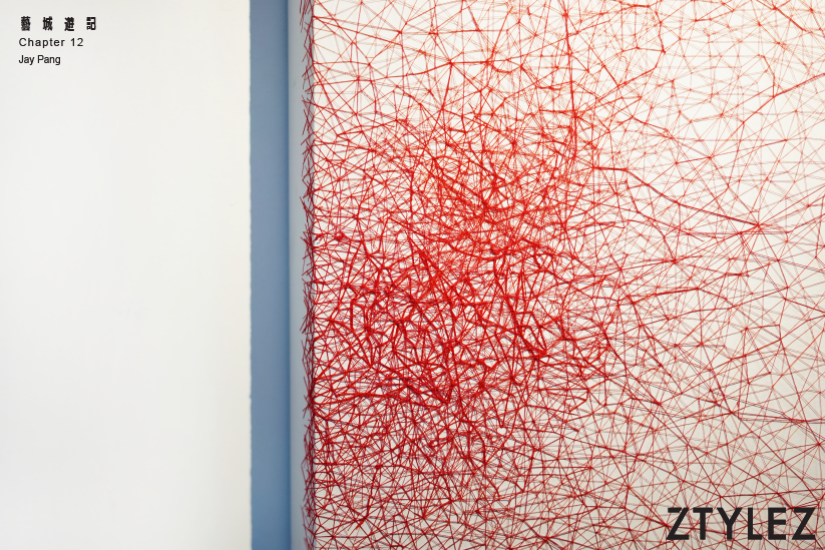
“The first time I saw her work, I felt its shock and emotional pull,” Jay said. “From a distance the flat pieces read as abstraction, but when you come close you see the countless points of thread and realize you are on a continuous journey.”
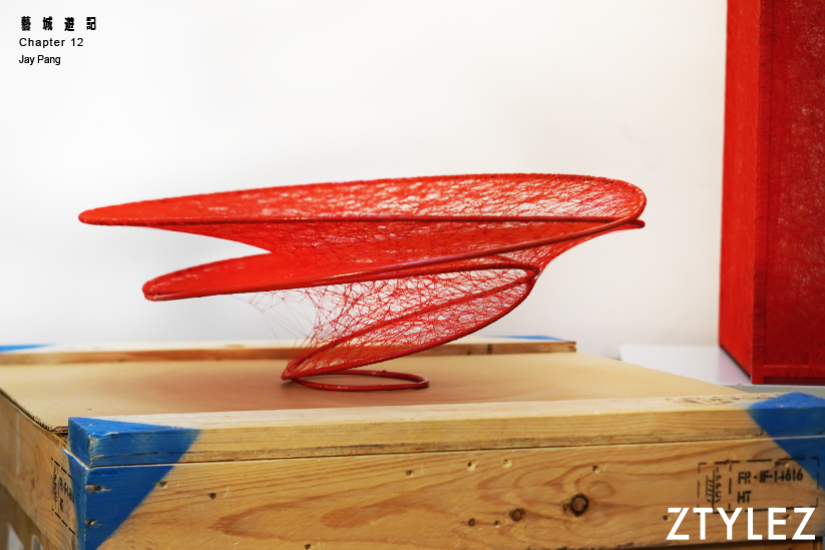
Learning that Shiota had fought cancer, Jay said he reread the white threads in some works as possible symbols of both beginning and ending. “Once you understand an artist’s intent, you look differently at every piece,” he said.
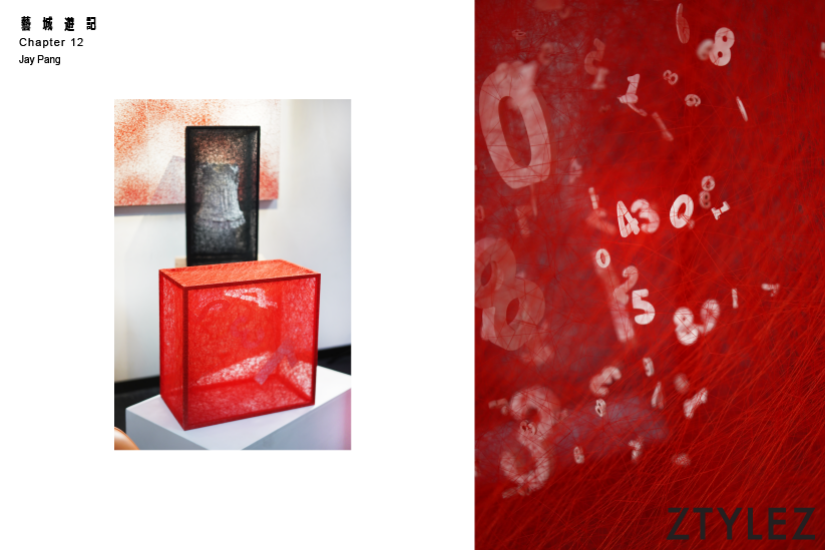
Shiota’s three dimensional works often contain objects such as numbers, keys, and letters placed securely inside the weave. Jay marvels at the time and technique required to fix those objects in place while composing a deliberate, rhythmic structure.
Acquiring museum caliber pieces
Among his Shiota pieces, Jay’s favorite is a large installation more than 2 meters tall, about 6.6 feet, where red thread forms a box and a white dress appears to float inside.
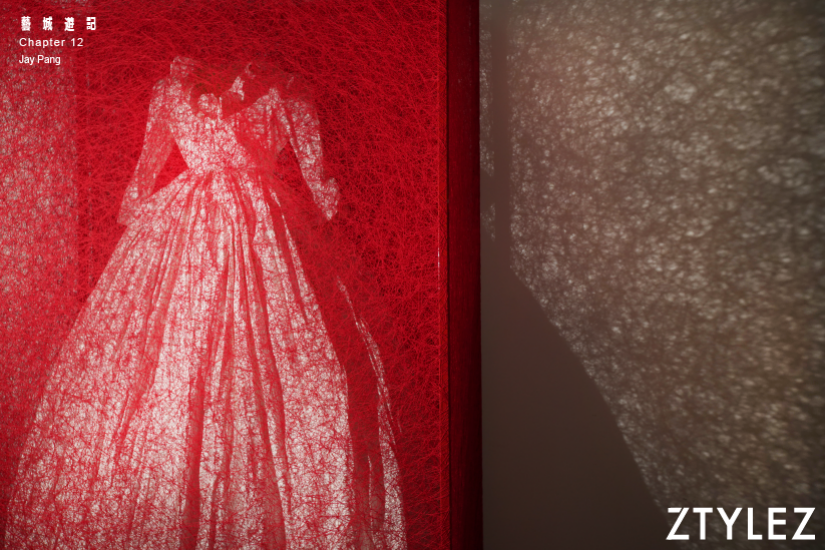
Jay said buyers often assume that money alone guarantees access to sought after works, but the reality can be more complex. Galleries and artists sometimes select collectors based on demonstrated passion and history with the artist, not only on ability to pay.
He described the process for that suspended dress: he had to declare his interest to the museum and artist, explain how many of her works he already owned and why, and then wait until the exhibition closed before the piece could be released. The wait can take months or more than a year.
“Buying art is not a simple money game,” Jay said. “It is a search that combines knowledge, experience, passion, and patience.”
Abstract work and narrative depth
Jay does not favor a single medium, but he is drawn to abstraction because it allows each viewer to bring personal meaning to a work.
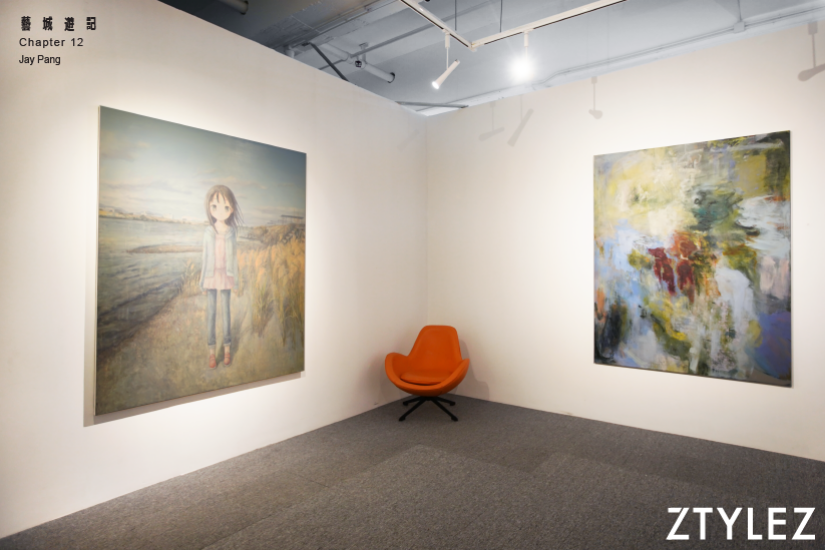
He said an abstract piece that prompts reflection is rare and valuable. “You imagine the artist’s reasoned and emotional choices and gain another way to understand the world,” he said.
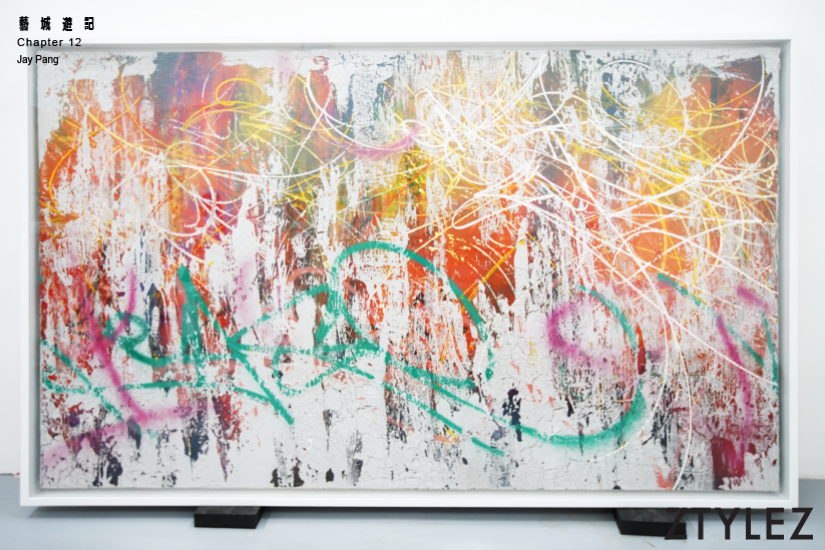
Asked about his selection criteria, Jay listed story, technique, and recognizability. “I want work with rich content so I will not tire of it quickly. I look at the craft, whether the work expresses a school’s characteristics, and whether the artist has a recognizable style.”
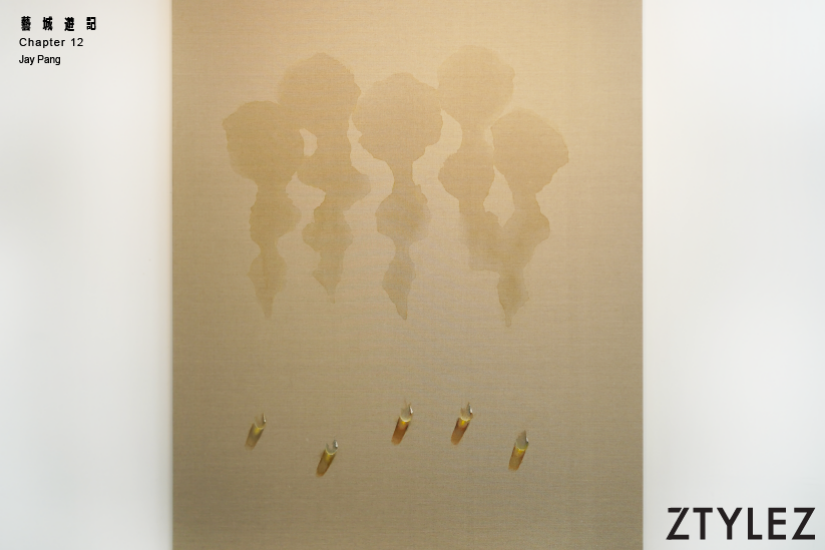
He introduced Korean artist Kim Chang-ryeol (金昌烈), known for a lifetime of paintings of water drops that move from dense fields of spots in youth to a spare, near minimal stage later in life, blending Western minimalism with Eastern philosophy.
Taste before investment
Jay emphasized that preference should come before investment for anyone starting to collect. He displays his collection at home like a museum and rotates works periodically, so living with pieces matters more than resale value.
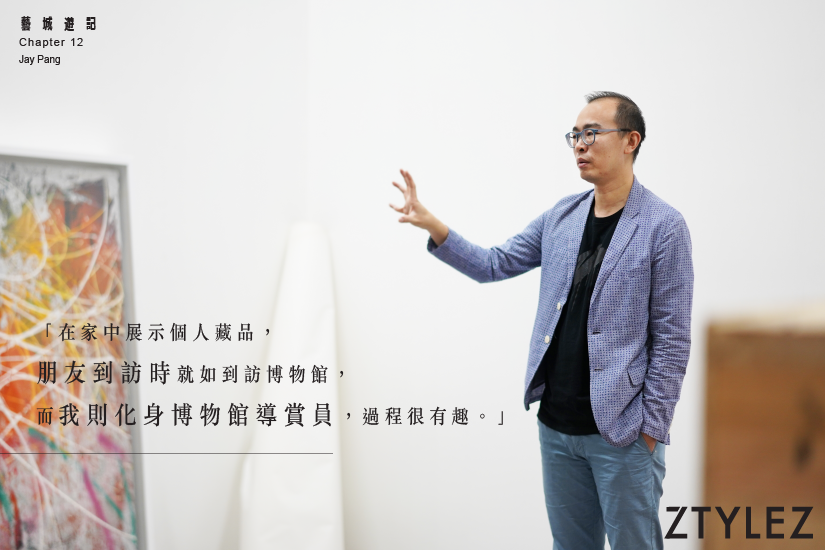
When friends visit, Jay becomes a guide, sharing the ideas behind works and inviting others to interpret them, a practice he says makes collecting more rewarding.
To people asking how to start, he first asks whether they like art or are chasing investment. “If it is only investment, I would not advise them to start. If you love the work, do not treat it only as an asset. The joy of owning a good piece cannot be measured only by price.”
From collector to curator
Drawing on years of visiting galleries worldwide, Jay moved from collecting into consulting and curating, and in 2019 he and friends started the curatorial team ARTICKS to bring a broader range of work to Hong Kong audiences; ARTICKS was founded in 2019, he said.
He follows local practice closely and wants to use his experience and resources to help lesser known creators find audiences, pointing out that high rent in Hong Kong makes exhibition costs steep.
Jay said Hong Kong’s public interest in art is growing, aided by new museums and more art in shopping centers, but that the ecosystem still has room to deepen in understanding and enthusiasm.
He is planning collaborations with international auction houses and local institutions to lend parts of his collection for public display, and invited collectors and enthusiasts to stay tuned.
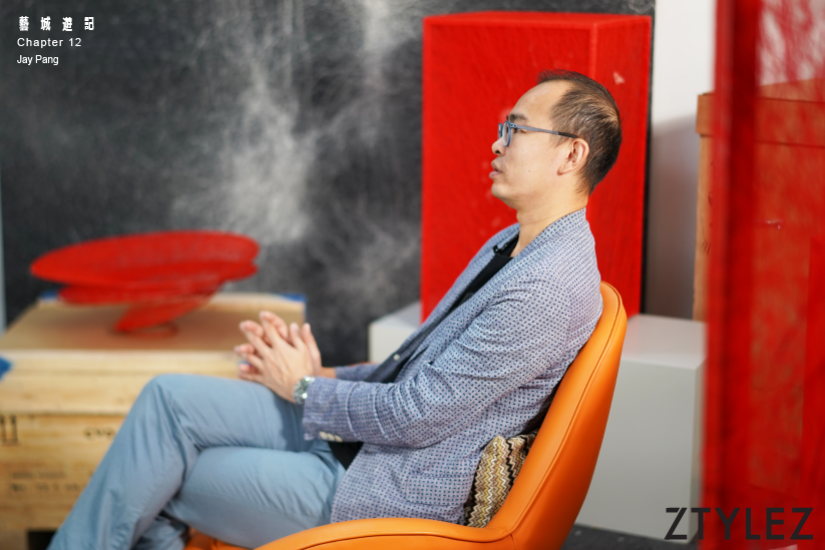
Jay’s collecting story is a search: a way to engage with creators across time and place, and to let their values and ideas continue to live in new contexts.
His closing advice to new collectors is to be proactive. Hong Kong hosts Art Basel, the Affordable Art Fair, free gallery shows, and auction previews each spring and autumn, so there are ample opportunities to discover both local and international artists in person.
Executive producer: Angus Mok
Editor: Ruby Yiu
Videography: Andy Lee, Angus Chau
Photography: Kris To
Video editor: Andy Lee
Designer: Michael Choi
Special thanks: Jay Pang