



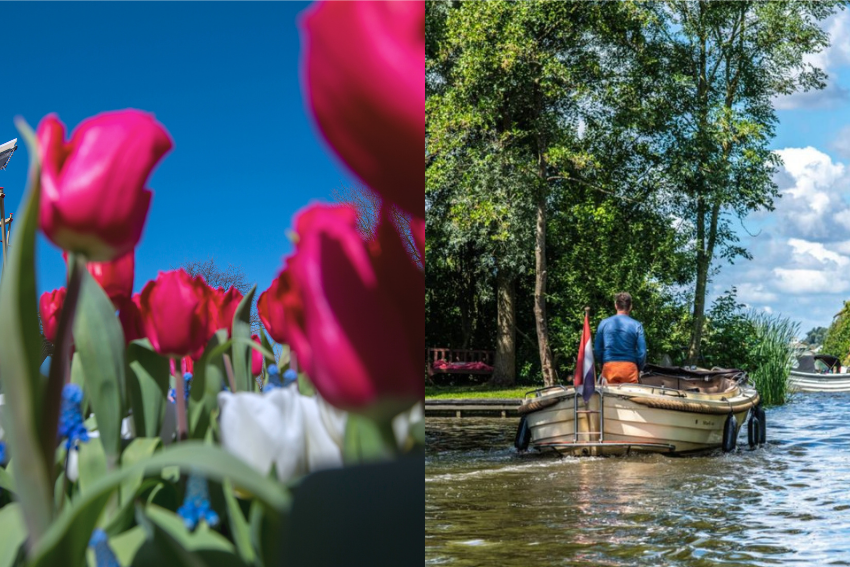
Spring brings tulip season across the Netherlands, and travelers should plan early. Beyond Amsterdam, a quieter Dutch landscape of lakes, historic waterways, and colorful flower fields offers a richer, more authentic experience rooted in history and horticulture.


Aalsmeer:從水路展開的花卉之旅
In a short drive from Amsterdam, the town of Aalsmeer (a town near Amsterdam in North Holland) reveals a different side of the Netherlands. Home to the world’s largest flower auction, Aalsmeer is a legend in the floral trade. Locally, about 95 percent of the world’s lilacs are grown here. To understand the town’s character, explore by water. A Westeinder Cruise on Lake Aalsmeer offers a tour of the region’s lesser known lakes within the Randstad, the Netherlands’ urban region, bringing visitors into the heart of a landscape shaped by waterways and small agricultural islands.

One of the highlights is the Lilac Experience. This program offers a behind the scenes look at traditional local production and the horticultural skill that defines Aalsmeer. As the boat glides past nurseries, the captain explains Aalsmeer’s history as a water based flower village and how growers induce early blooms for spring markets. Lilacs are prized by floral traders as a finishing touch and represent the growers’ commitment to quality, and many of these varieties are available only from Aalsmeer growers. Even in the cold of winter, the cruise across Westeinderplassen provides a rare quiet that contrasts with the riot of color that arrives with spring.

追溯歷史:活生生的花卉博物館
To learn more about that history, visit Historische Tuin (the Historical Garden). The garden is rightly described as a living museum. It tells the story of how Aalsmeer rose from peat marshes. Beginning in the 10th century, early settlers dug canals that created the strip roads that still define the area today.

The first residents farmed, fished, and raised livestock. Around 1350, large scale peat extraction reduced arable land and pushed farmers toward more intensive cultivation. Tree nursery cultivation grew from that shift and by the late 19th century outdoor flower growing had taken hold. The first rose greenhouse opened in 1896, and the launch of two flower auctions in 1912 triggered explosive growth in the trade. The Historical Garden sits on former nursery land and preserves historic crops and buildings, including a notable dahlia collection inherited from the Dahlia Maarse family. It remains a genetic resource for modern horticulture and a place to walk through the centuries of cultivation and innovation that underpin today’s vibrant flower industry.

湖畔絮語、鬱金香與水泵的智慧
Driving through the countryside makes the region’s bond with the land even more apparent. Many people visit tulip gardens during peak bloom, but for a more playful and sustainable option, consider a self drive with Renzy electric cars. These open seat, two person electric vehicles are easy to operate and include GPS navigation to guide you along the most scenic routes, bringing you close to the floral tapestry in an eco friendly way.

What made all this possible is a story of Dutch ingenuity and the persistent human effort to manage water. The Cruquius Museum preserves that story. Inside the museum stands one of the largest steam powered pumps ever built. That machine, along with two sister pumps, drained the vast Haarlemmermeer, the lake that once covered much of the area, in the 19th century and turned hazardous water into fertile land. Without that engineering feat, the wide tulip fields and thriving nurseries would not exist.

The delicate beauty of the flowers is the direct result of that raw engineering power and determined effort. It is a reminder that the beauty of the Dutch countryside is a story of human ingenuity and perseverance, where aesthetics and practical design coexist. The Dutch approach to land and water management helped create the region’s fertility, and it remains a living legacy that has contributed to the country’s environmental leadership.
一趟重新發掘荷蘭靈魂的一日遊
This itinerary is ideal for visitors who want more than a checklist of photo stops. It offers a deeper understanding of the Dutch spirit, visible in the delicate structure of a flower and the monumental design of a pump.


The region is an invitation to slow down, explore, and appreciate the craft behind windmills and the creativity under the tulip fields. The next time you visit Amsterdam, step outside the city. A landscape reclaimed by human effort is waiting, and every flower tells a story about water and will.