


Guillermo del Toro’s Frankenstein was the biggest stylistic winner at the 98th Academy Awards in Los Angeles, winning three Oscars for best makeup and hairstyling, best production design, and best costume design, recognition for a team that built a haunting and unforgettable monster through obsessive detail.
Frankenstein was this year’s big winner for makeup, hair, and costumes
The 98th Academy Awards concluded with Guillermo del Toro’s Frankenstein claiming three major honors, sweeping best makeup and hairstyling, best production design, and best costume design, a clear endorsement of the film’s visual approach and the team behind it.
Behind the scenes makeup and hairstyling team played a crucial role
Makeup and hairstyling designers Mike Hill, Jordan Samuel, and Cliona Furey received a standing ovation when they went on stage to accept the award. “Del Toro turned his dream project into all of our dreams,” Mike Hill said, speaking with visible emotion, summing up years of quiet dedication and passion from the entire crew.
The sculptor grew up in Warrington, England, making monster masks from river clay as a child, and worked his way up from special effects makeup on television to the Academy Awards stage. The film’s wins represent a powerful affirmation of the years of work by the crew behind the scenes.
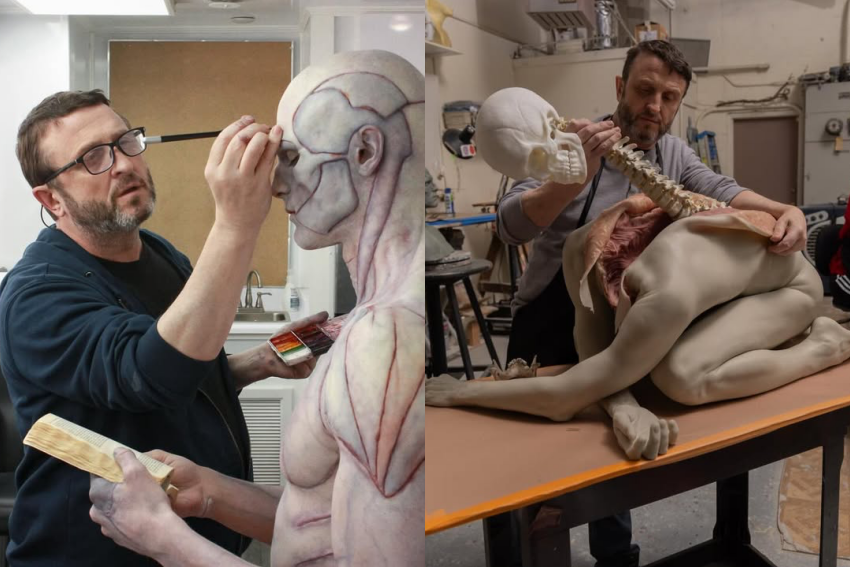
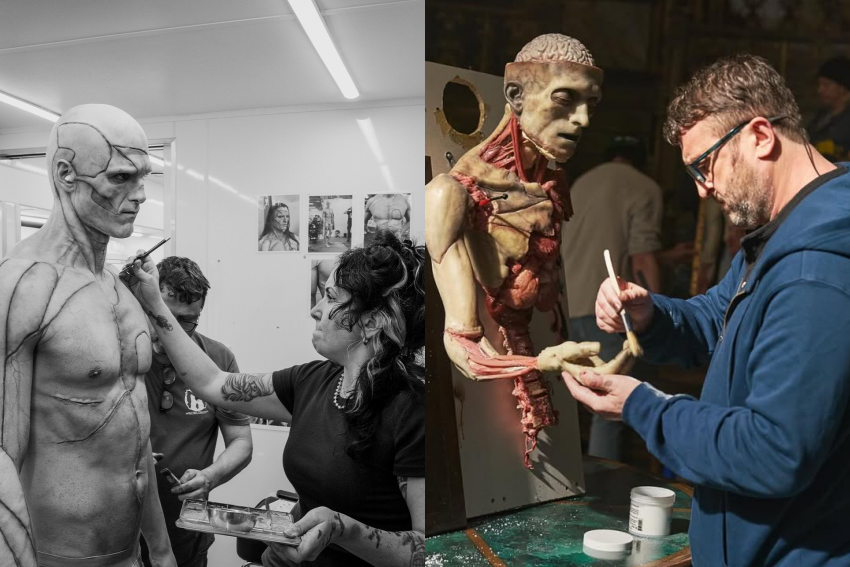
Jacob Elordi’s transformation into the monster
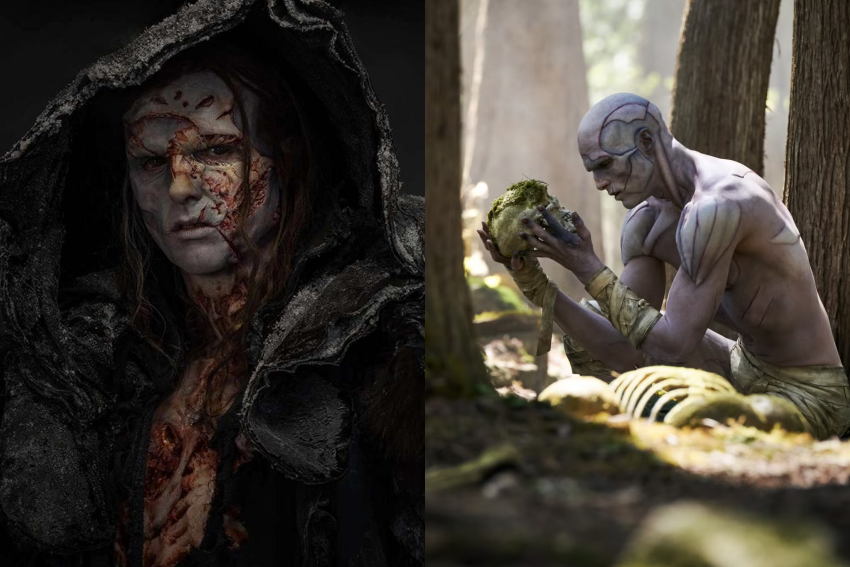
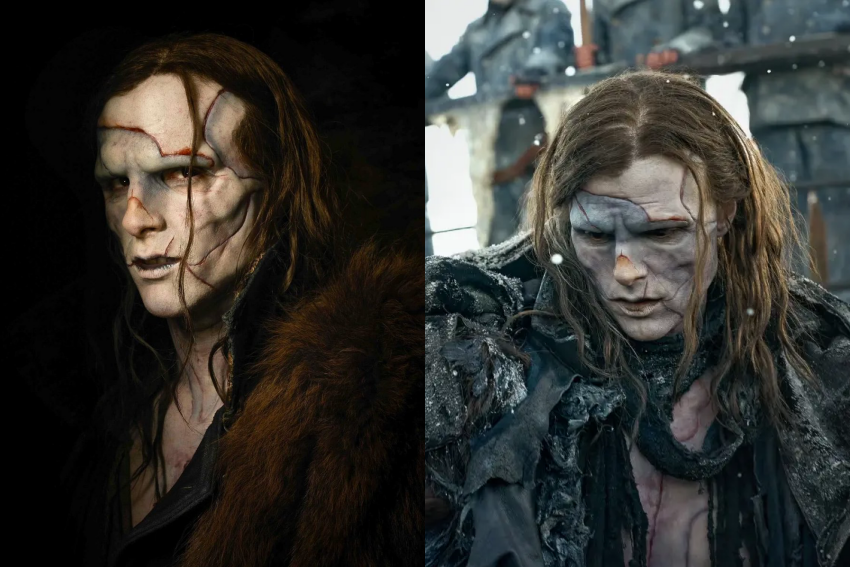
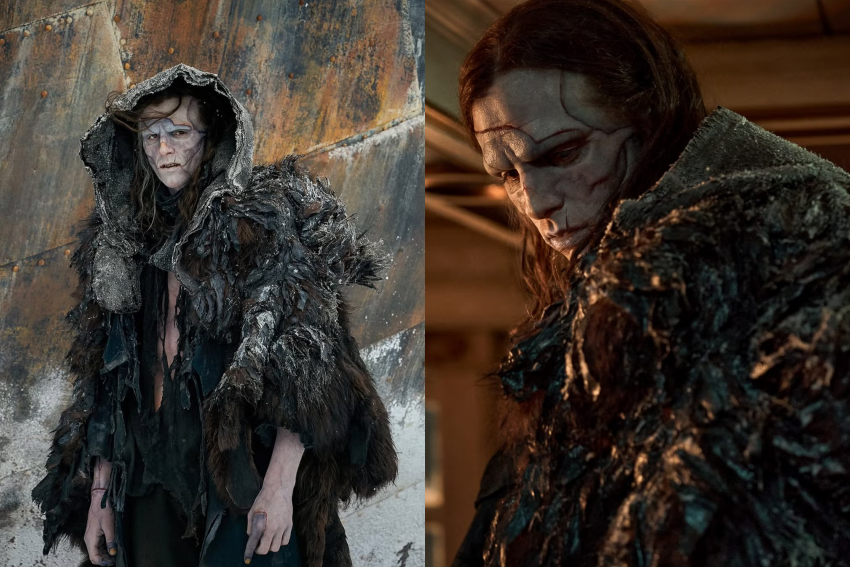
Acting alone was not enough to bring the Frankenstein creature to life. Jacob Elordi, who plays the monster, had to arrive early for roughly 10 hours of makeup each day, and wear up to 42 silicone prosthetic pieces across his body to achieve the stitched together look. Every scar and seam was carefully designed and applied.
Elordi’s facial design drew on multiple historical makeup references to create a look that is both pitiful and impossible to ignore. Because so much of the prosthetic work covered his face and body, he was often unable to eat or drink normally during shoots, and endured significant physical discomfort.
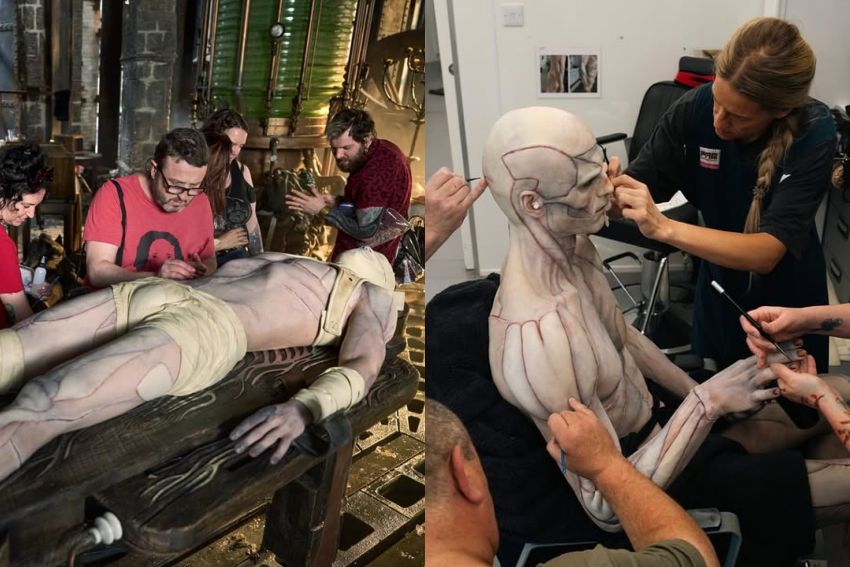
“The most important principle was that the monster be pitiful, not terrifying,” Mike Hill said. The makeup team layered silicone skins so the scars and stitches on Elordi’s face could quietly convey the pain of a created life, rather than merely shock the audience.
The man who sat in the makeup chair for 400 hours
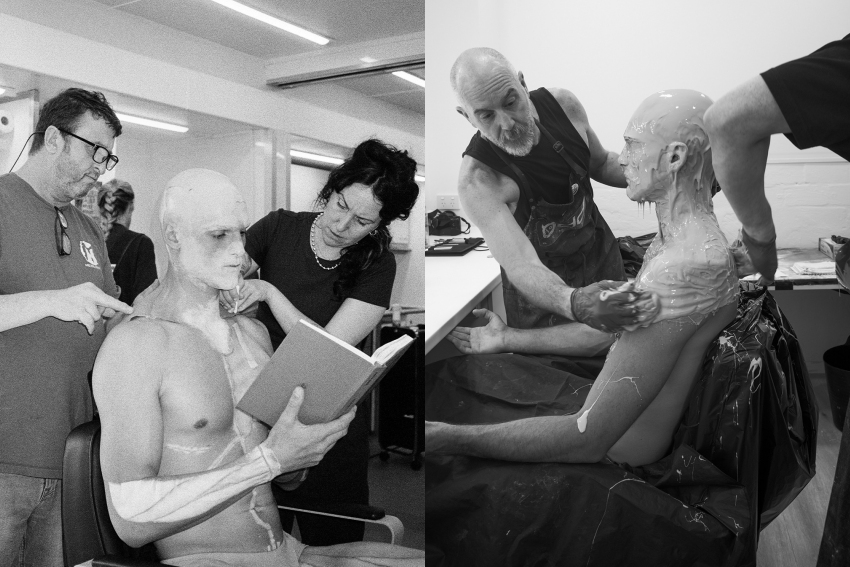
On stage, Mike Hill also praised Jacob Elordi for the sacrifices he made during filming. “He sat in the makeup chair for 400 hours during filming,” Mike Hill said. “He is my mate.” That endurance and professionalism helped make the role so affecting.
The monster’s hair actually has a subtle glow
One surprising detail in the makeup and hairstyling was the monster’s hair. At first it appears dirty and unkempt, but it was actually made from a blend of real human hair, horsehair, and a special synthetic fine metal wire.
An electrical hint in the hair
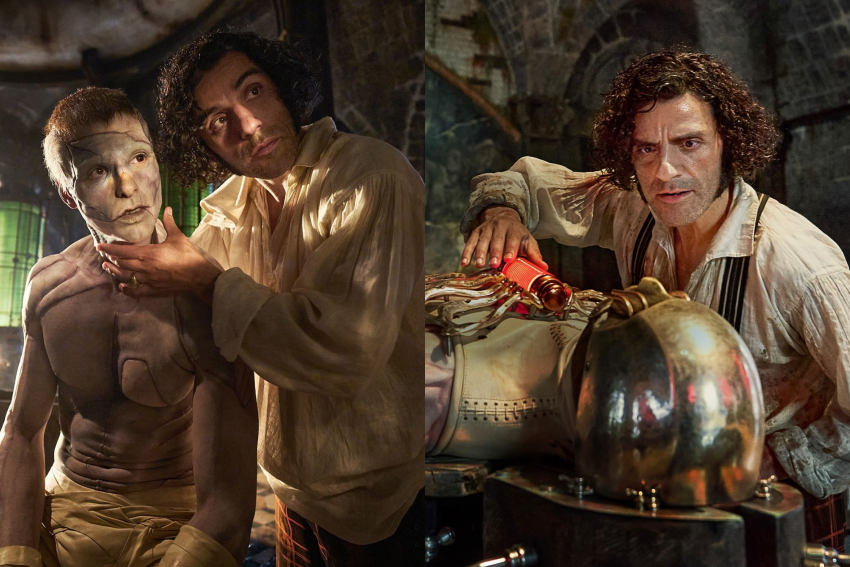
The fine metal wires are nearly invisible under normal light, but at certain angles or under bright lights the hair takes on a faint metallic sheen, suggesting electricity flowing through it. The hairstyling team intended this as a visual metaphor that the reanimated life is sustained by electric power, adding an uncanny, nonhuman quality.
The overall hairstyle was crafted to feel messy and heavy, as if this being had never been cared for. Achieving that deliberate disarray required painstaking work from the hairstyling crew, arranging each strand to create an effortless yet richly detailed look, one of the most labor intensive parts of the design.
Dirt under the nails as a mark of guilt
Oscar Isaac’s character also features chillingly subtle styling details. He is dressed in refined upper class clothing, but a closer look at his hands reveals faint dirt under the fingernails, a deliberate choice by the styling team that undermines his polished appearance.
Hands that cannot hide guilt
In the designers’ concept, those hands tell the true story, showing that no matter how carefully someone dresses themselves, the sins committed by those hands are impossible to conceal. The best design work often tells a story where the audience least expects it.