


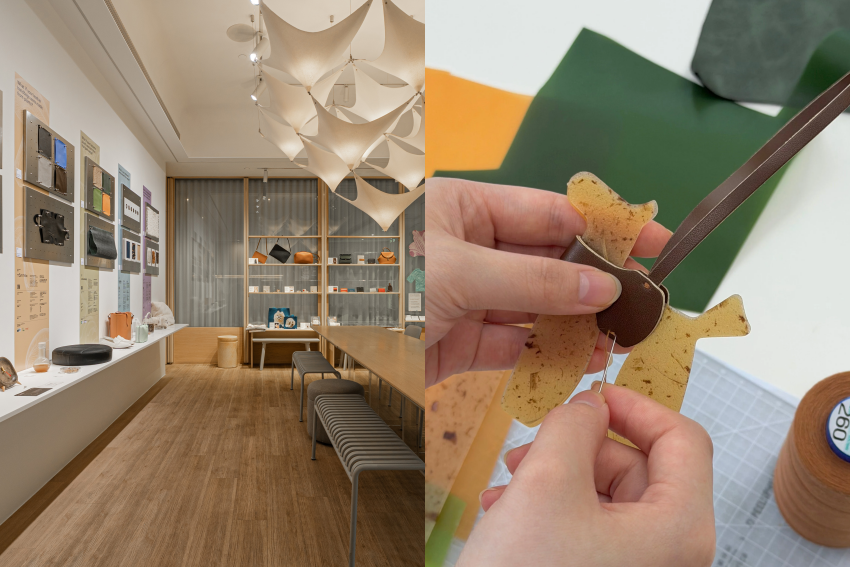
The Mills Fabrica’s creative platform Fabrica X and Sheung Wan cultural coffee space commaa have opened an immersive exhibition called “What If? Life Continues: Reimagining Materials,” bringing experimental bio-based materials into a neighborhood setting to show how material science and circular design could reshape daily life.

Fabrica X, operated by The Mills Fabrica, connects designers, brands, and innovators through retail and experience platforms that highlight sustainable materials. Its partnership with commaa, an architect-designed cultural coffee space in Sheung Wan (a neighborhood in Hong Kong), marks Fabrica X’s first move out of its usual exhibition venue and directly into a community setting. Working with LAAB Architects, the show turns an everyday cafe into a tactile place for observation and conversation, inviting visitors to consider how design can integrate with daily life.
The exhibition focuses on five material-innovation teams: TômTex, Peelsphere, BioFluff, Bell Living Lab, and Lenzing Group. These researchers and brands display bio-based materials made from plant fibers and agricultural byproducts, demonstrating how overlooked resources can become the next generation of design materials. Visitors can closely touch samples, feel textures and flexibility, and learn about potential uses in fashion, accessories, and household goods.

TômTex shows a plant-based material that contains no plastic or harmful additives, while retaining a leather-like feel and durability for fashion and accessories. Peelsphere’s material is made from fruit waste and algal binders, and is fully biodegradable, offering potential reductions in carbon emissions and landfill waste. BioFluff develops faux fur alternatives from bio-based fibers, aiming to replace animal fur and petroleum-based synthetic fibers in the fashion industry with more environmentally aware options.

Some exhibits extend into architectural and interior materials. Mush Composites cultivates building panels from mycelium and agricultural byproducts, transforming rice husks and sawdust into lightweight, durable boards without petroleum-based components or synthetic adhesives. These materials offer both environmental benefits and new natural textures for interior design and architecture.

Bell Living Lab’s research converts coffee industry byproducts into new materials. Working with coffee farmers and cafes, the team turns coffee cherry husks and other organic waste into biodegradable materials that are soft, water-repellent, and durable, suitable for handbags and footwear. Lenzing Group displays fiber materials made from renewable wood sources, including its Tencel™ fiber line, which has long been used in textiles and fashion and highlights the role of regenerated fibers in sustainable design.
The show also includes an Asia brands section that features designers working with sustainable materials. A New Leaf crafts handmade jewelry from plants and fishtail palm, turning natural textures into refined pieces. Jun616xteen creates bags from oyster shells, pineapple leaf fiber, and recycled polyester while reducing polyurethane use by about 32 percent. Hong Kong brand LOXE upcycles leftover yarn into garments and accessories, rethinking material waste in fashion production.

The exhibition adds food and sensory experiences. Food-tech brand Atomo presents a bean-free coffee brewed from carob and sunflower seeds that aims to preserve coffee flavor and caffeine while reducing land use and carbon emissions. Prefer uses fermentation to transform leftover bread and grains into coffee and cocoa alternatives, demonstrating food technology’s potential within a circular economy.
During the exhibition, organizers are running a series of talks and hands-on sessions, including design discussions, materials workshops, and sensory experiences. Participants can join a peel-based jewelry workshop, design talks, and tastings to learn how material innovation and circular design can be integrated into everyday life.

Pulp Lab: Lunar Newborn Jewelry Workshop
March 14, 2026
Approximately US$45, includes one Atomo bean-free coffee, two sessions total, maximum 16 people per session
Sensory Stroll: A Taste of “Flavor”
March 20, 2026
Approximately US$32
Slow Pour, Deep Talk: Regenerative Business, Turning Waste into Value
March 21, 2026
Approximately US$14, includes one Atomo bean-free coffee
To register and buy tickets, visit https://www.fabricaxhk.com/zh