


Tomás Saraceno exhibition Ancestral Futures opened at Munich’s Haus der Kunst, presenting the artist’s largest show in Germany to date, the museum said.
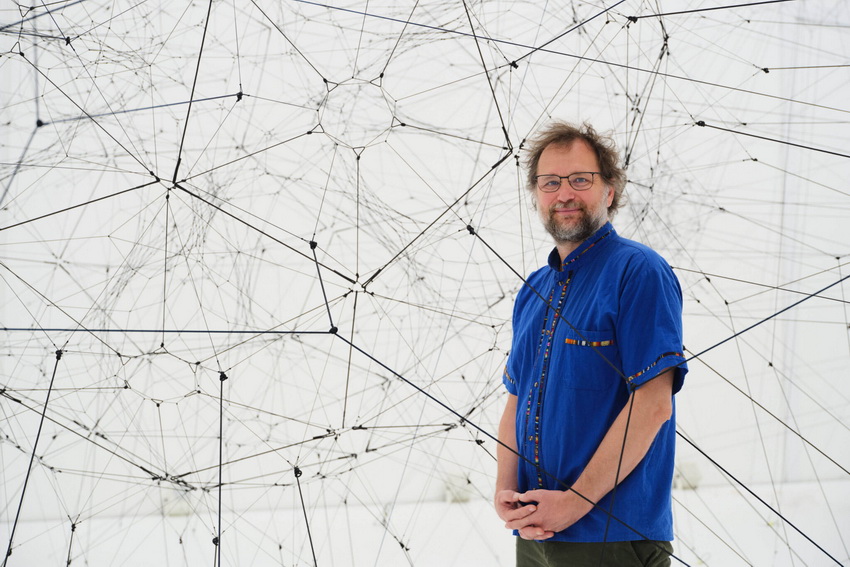
The show gathers nearly 20 years of Saraceno’s work across art, architecture, natural science, and traditional ecological knowledge into an interconnected environment, the museum said. Rather than displaying single, isolated pieces, the exhibition builds what organizers call a living, circulating ecosystem of installations, performances, and collaborative projects.
The installations include floating air sculptures, an immersive sound work made from translated spider web vibrations, and a site-specific project developed with indigenous communities from Argentina’s Salinas Grandes salt flats. Haus der Kunst said the presentation is intended to invite visitors to rethink human relationships with the natural world and other forms of life.
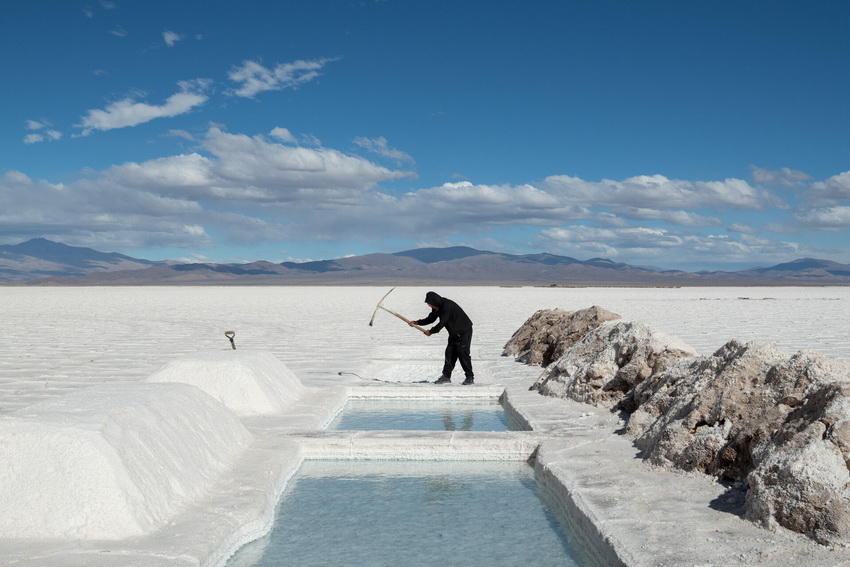
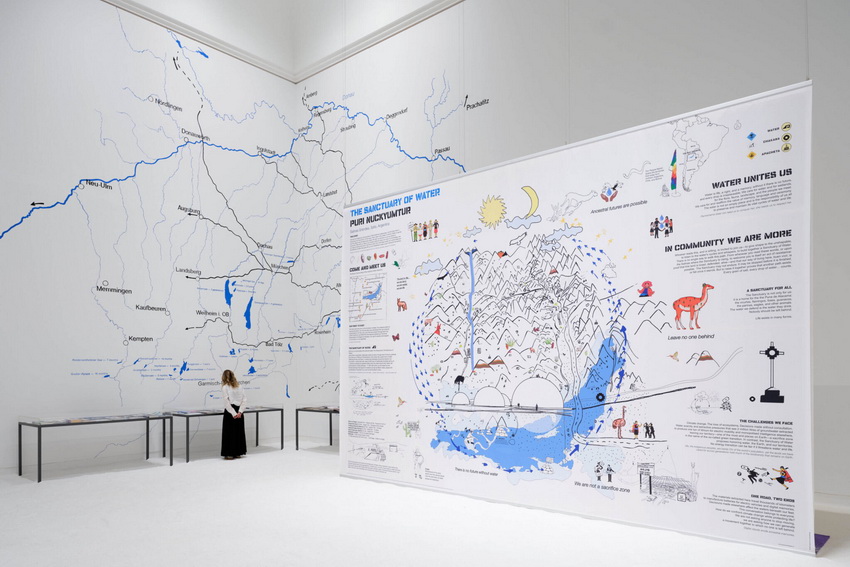
At the center of the show is Towards the Sanctuary of Water (2026), which Saraceno developed with eleven indigenous communities and described as part of a larger permanent public artwork titled The Sanctuary of Water, the museum said. Built using Andean traditional construction methods, the finished structure will be managed locally to support salt flat ecology and cultural continuity.
Tomás Saraceno exhibition highlights key research projects
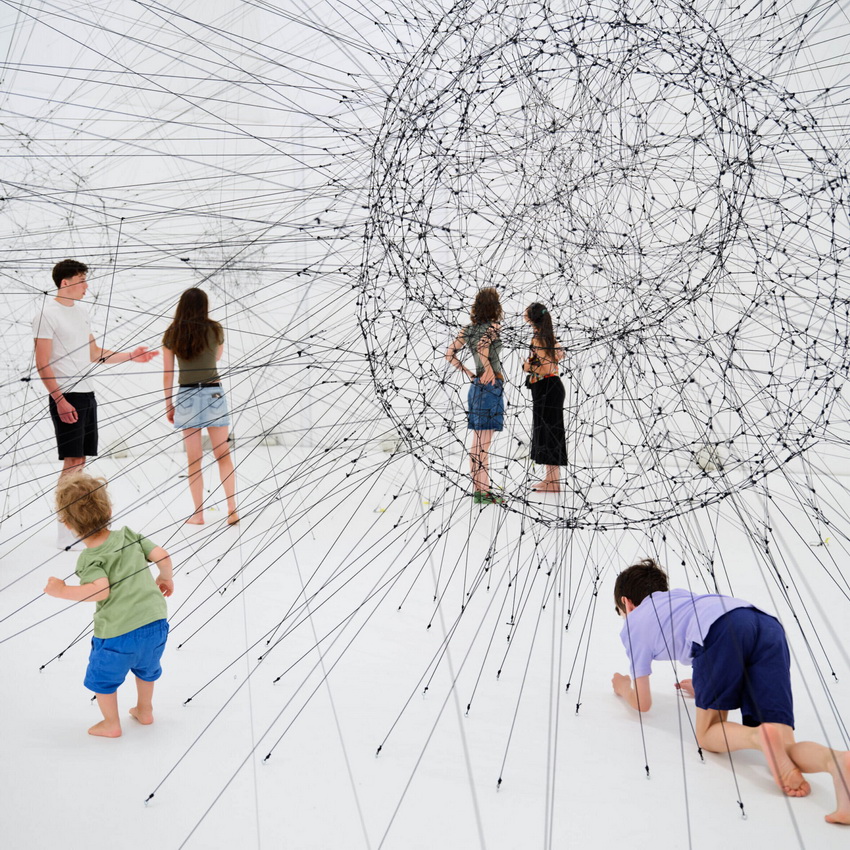
Two of Saraceno’s long-running research platforms anchor the exhibition. Aerocene proposes carbon-free flight and reframes air as a shared commons, the artist’s studio said. Arachnophilia explores cross-species communication, building, and material intelligence through collaborative work with spiders, and it has become a signature strand of Saraceno’s practice.
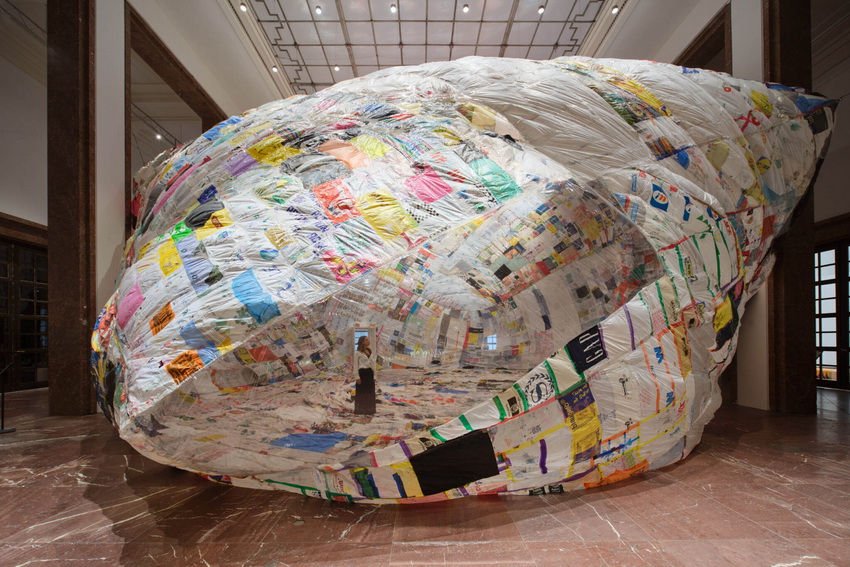
The exhibition also includes Museo Aero Solar, on view here in its large-scale form. First begun in 2007, Museo Aero Solar is made by communities worldwide from recycled plastic bags, and it floats on sunlight and thermals, the museum said. The project reframes flight as a practice of cooperation and shared sustainable methods rather than as a symbol of speed and technology.
Other featured works include the Webs of At-tent(s)ion series and the immersive installation Algo-R(h)i(y)thms, which juxtaposes spider web vibration frequencies with cosmic electromagnetic signals to suggest shared rhythms across life systems. The show also presents scent-based pieces designed specifically for dogs, aiming to shift viewing away from a strictly human sensory frame.
Public projects, community programs, and museum operations
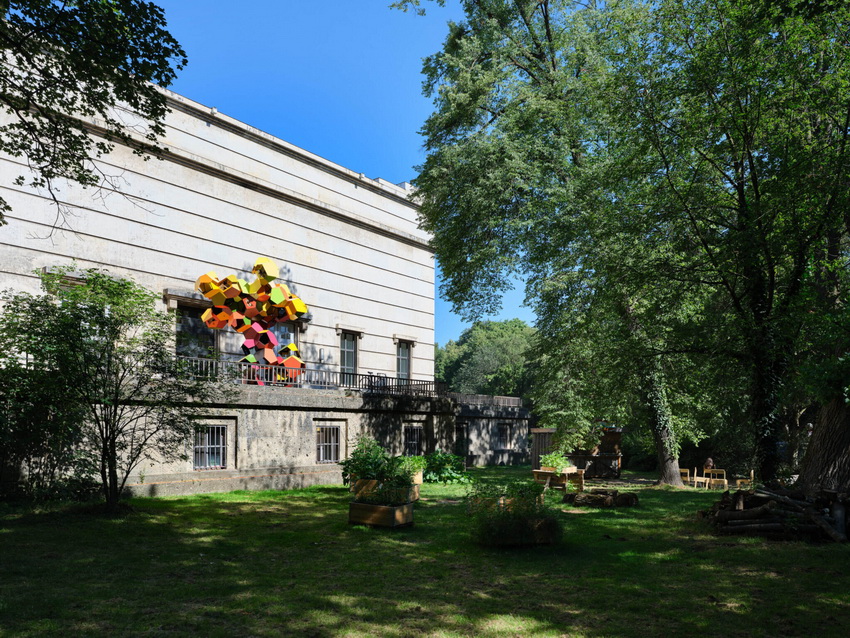
Outside the galleries, Saraceno’s Cloud Cities: Species of Spaces and Other Pieces appears as 12 suspended structures inspired by cumulonimbus cloud forms, the museum said. The forms function both as architectural installations and as habitat modules for urban birds, insects, and spiders, extending Saraceno’s long-standing interest in shared urban ecologies.
To coincide with the show, Haus der Kunst opened a community garden and is running nature tours and workshops in which the public can help construct new Museo Aero Solar balloons, the museum said. The museum also redesigned parts of its water system to recycle hand-washing water for toilet flushing, a change that the institution estimates will save about 264,000 gallons a year (1,000,000 liters).
Organizers said the museum’s operational changes are meant to extend the exhibition’s sustainability concerns into daily practice. The projects on view, the museum said, are meant to link exhibition display, environmental action, and local stewardship.
Curators emphasize that Ancestral Futures is premised on collaboration, bringing together scientific research, traditional ecological knowledge, and communal building practices in ways that ask visitors to consider how humans might coexist with other species and with planetary systems.
For more information on the exhibition program and public events, Haus der Kunst’s website lists visitor information and workshop schedules, the museum said.