


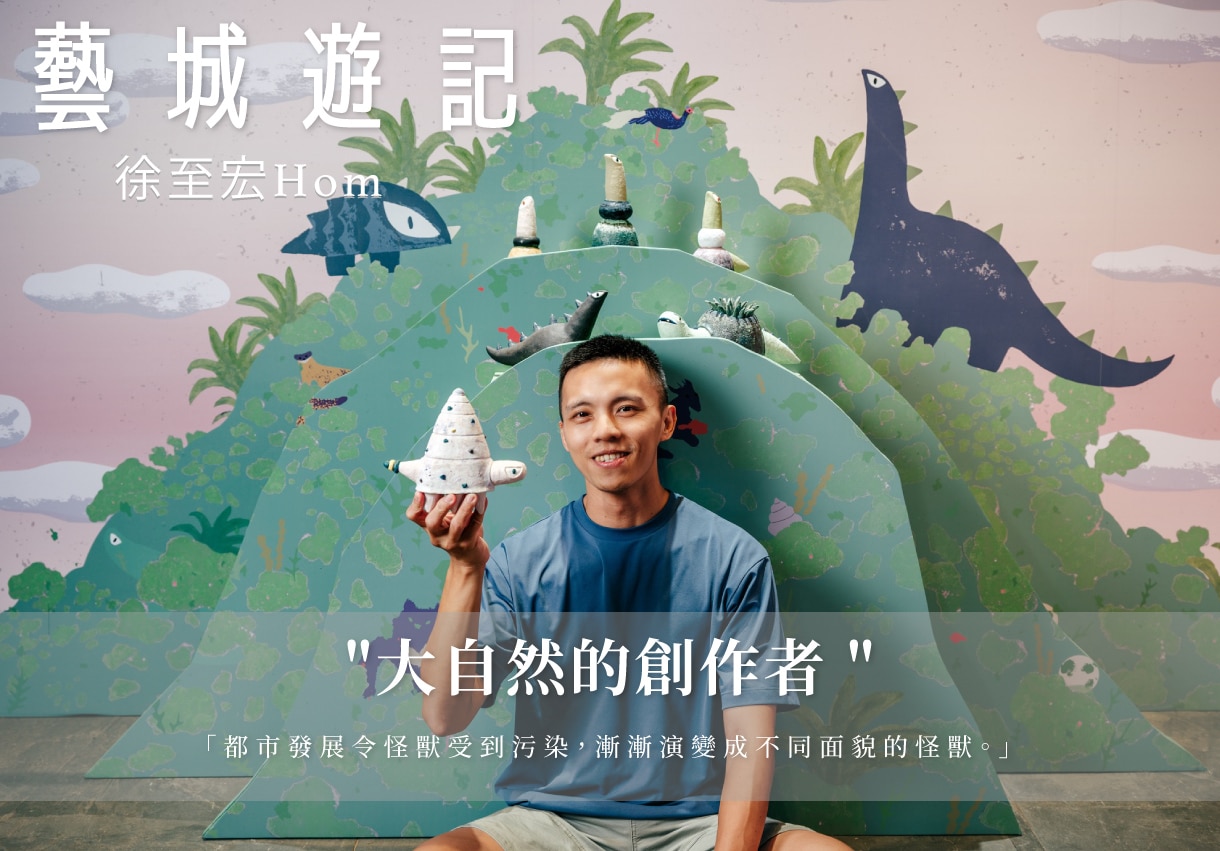
Taiwan artist Hom arrived at his studio in Fengyuan (a small city in northern Taichung) one autumn afternoon for an interview, and he said the path to becoming an artist felt more like good timing than drama.
Hom grew up drawing from comic books, studied art at Hualien University of Education, and after military service kept sending samples to publishers until he was invited to work as a book illustrator. He won the 2016 Golden Tripod Award for book illustration, the publishing industry’s top honor in Taiwan.
Taiwan artist Hom on origins and style
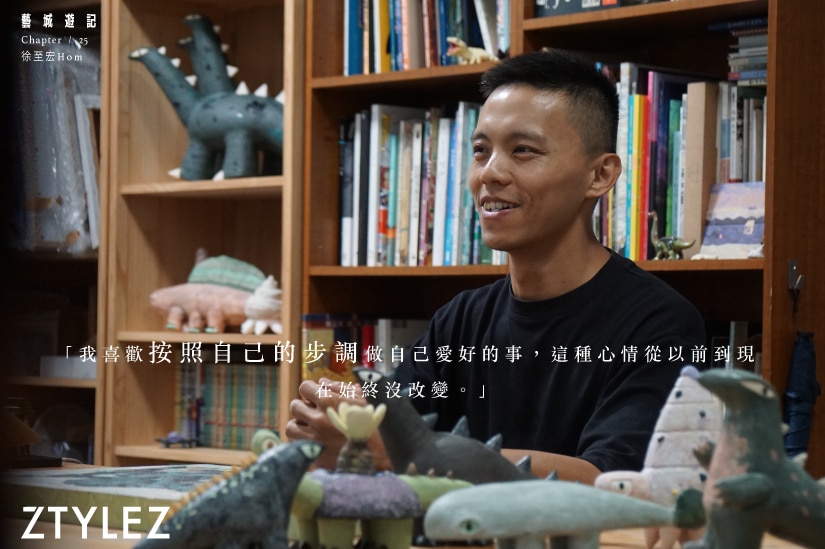
At his simple second floor studio, Hom wore a plain T shirt and flip flops, and he guided the visitor through a small alley before opening an old wooden door. In an interview at the studio, Hom said he keeps few finished pieces on the walls because he prefers not to look at his own work all the time.
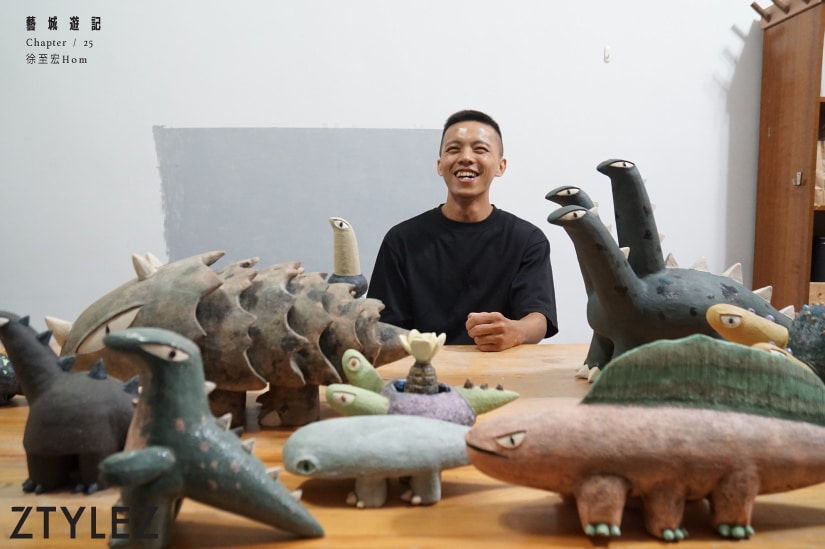
Hom said he once considered installing air conditioning but did not, and that the studio summers reach about 38 to 40 degrees Celsius (about 100 to 104 degrees Fahrenheit). He smiled and offered hot tea and snacks to guests, a quiet hospitality that matches his work.
He describes himself as lucky, but his routine and focus tell a different story. Hom said he did not begin formal art training until college, and that long hours of steady practice shaped his career more than any single break.
Early influences and a quiet practice
Hom, born in 1985, said his early influences were paper comics such as Doraemon and Detective Conan, which taught him how to look at composition and character. “In junior high I was a strange kid, I would set a theme each week and draw it over and over,” he said.
After graduating and earning a teaching qualification, Hom chose to do mandatory military service rather than a master’s degree or an immediate teaching career. He used the service period to draw constantly, and on leave he visited bookstores to note publishers listed on spine credits and submit his work directly. He said that persistence led publishers to invite him to collaborate.
Color, mood and the turn to gray
Hom’s early picture books carried a childlike charm, but his later street scene book Quiet Time moved to a muted blue gray palette. He said he begins many paintings in gray because dark tones make him feel secure and help him imagine how a piece will develop.
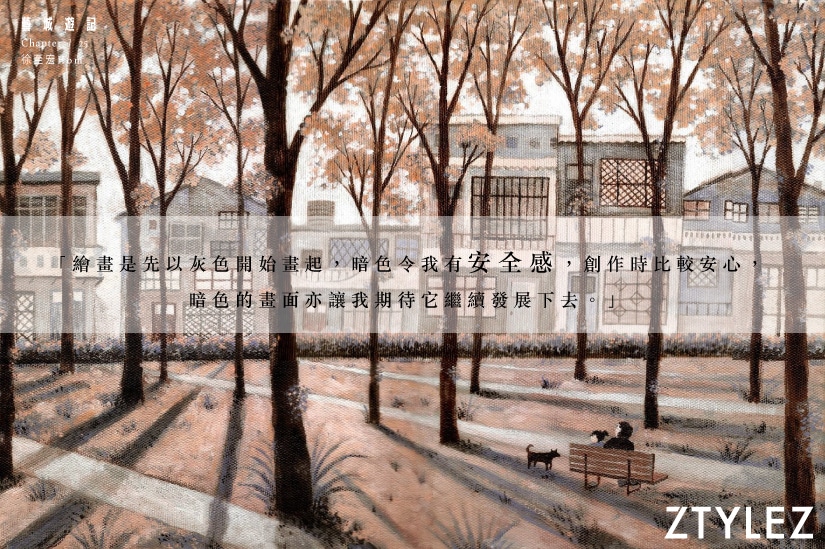
He said the shadows and evening reflections he saw in Tainan influenced that palette: “I remembered the shadow of buildings and alleys at dusk, and I wanted to show that with more gray.” Hom also prefers to keep human figures out of many scenes, and said cats recur because they are quiet observers that do not disrupt the visual calm.
Residencies, travel and natural impressions
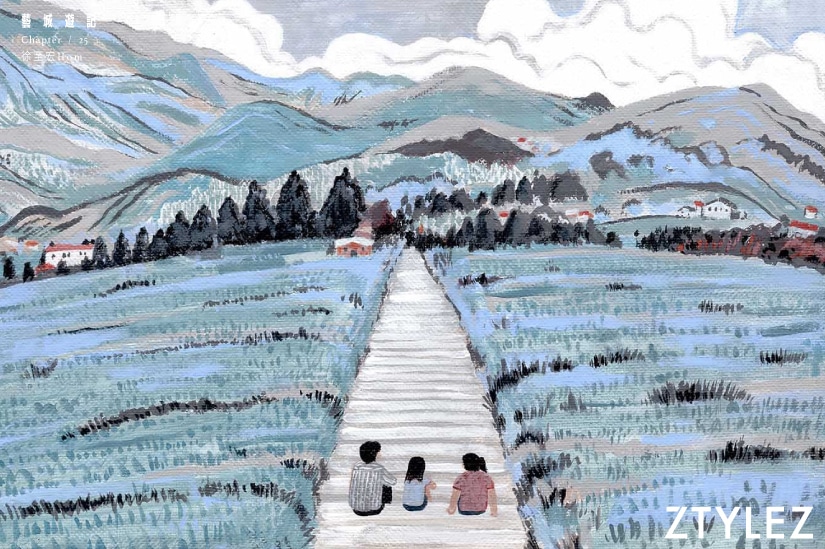
Hom applied for an artist residency at the Xiaolung Cultural Park in Tainan in 2014, a two month stay that he said opened a new way of seeing and helped him develop a personal style. He later traveled across Taiwan to Kaohsiung, Yilan, Matsu, Keelung, and Lanyu, often cycling around the island and hiking mountains, and he turned those observations into picture books including Daily Blues, A Day by the Sea, and Places to Watch the Sea.
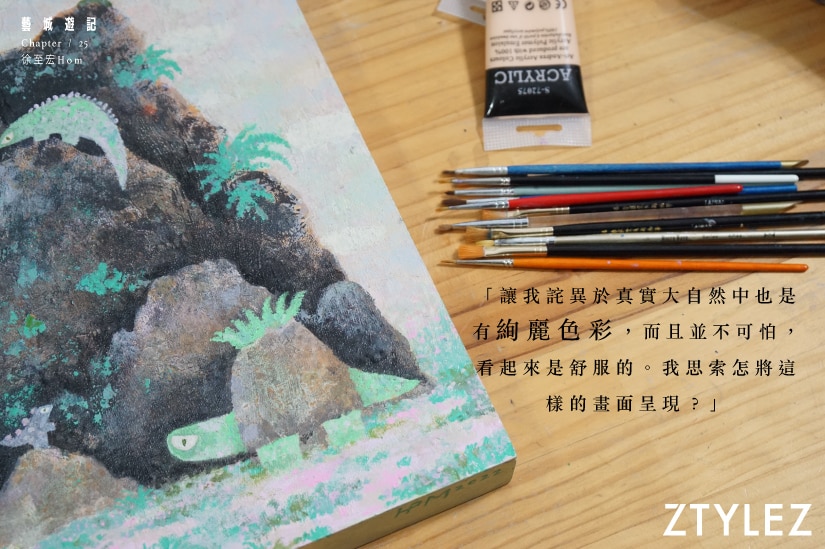
He described the regional differences he found: Keelung felt cool with an inky green harbor that reinforced his preference for gray based palettes, Matsu’s granite produced brighter tones that let him introduce more vivid color, and Orchid Island’s deep ocean blue drew him to paint coral and reefs after snorkeling.
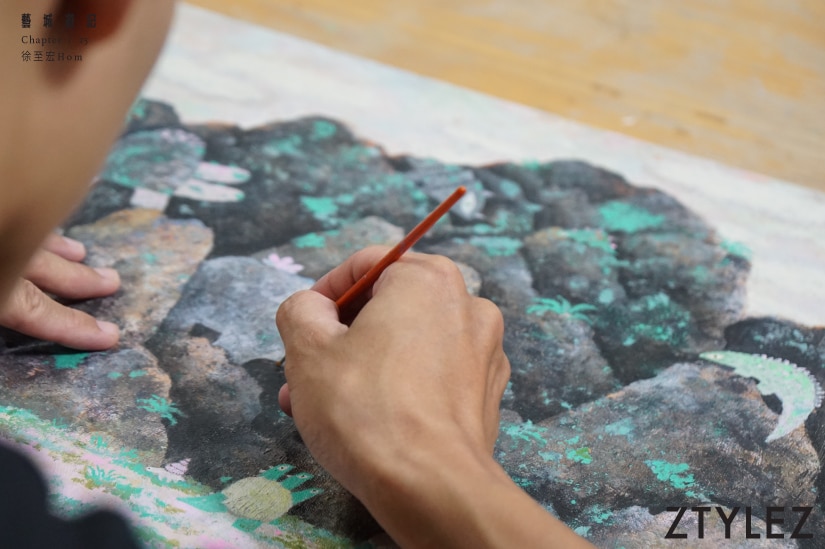
In Yilan, he said, plants look especially vivid after rain, and that observation prompted him to experiment with monoprint and rubbing techniques to capture the irregular textures of nature. Hom said he needs to leave for nature from time to time to refill his creative energy, whether on long bike rides or mountain hikes.
Monsters born from city and sea
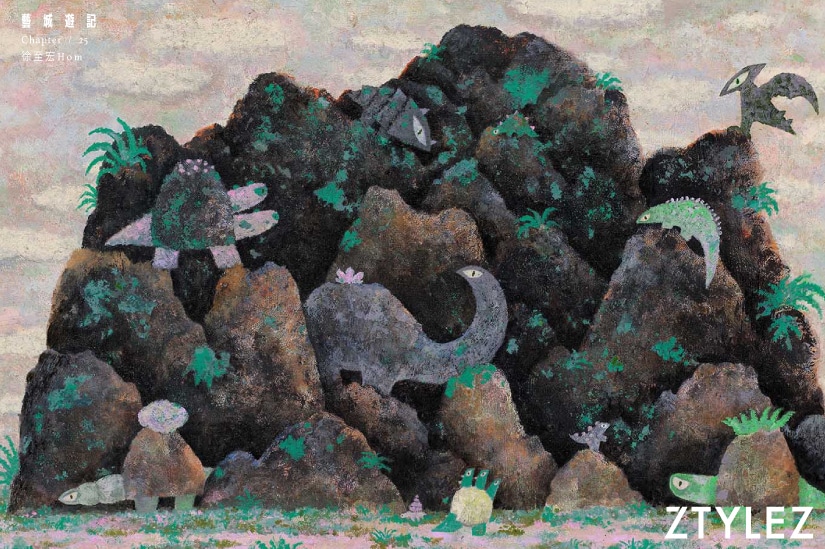
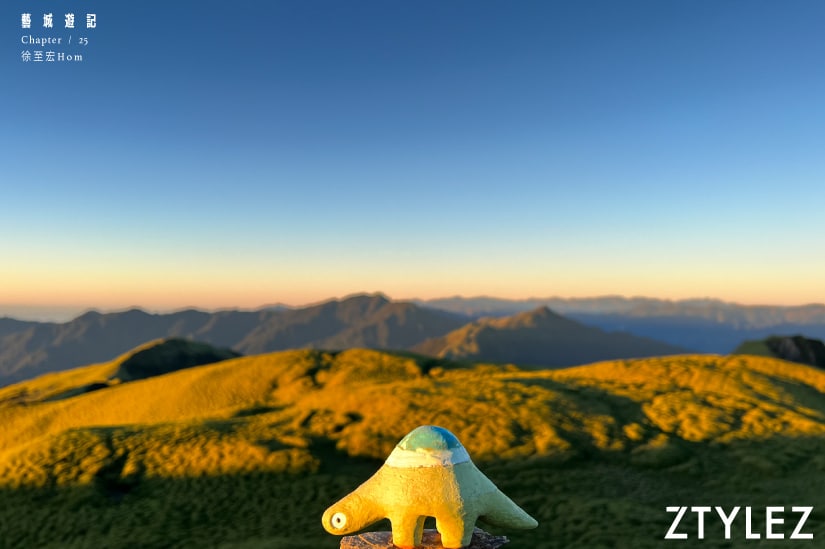
Nature and city scenes merged in his imagination and led to a series of monstrous characters. The first came while he was in a residency at Pier-2 in Kaohsiung, where night runs along the Love River and dim reflections prompted memories of childhood dinosaurs and the idea for a two headed dragon that floats above the water.
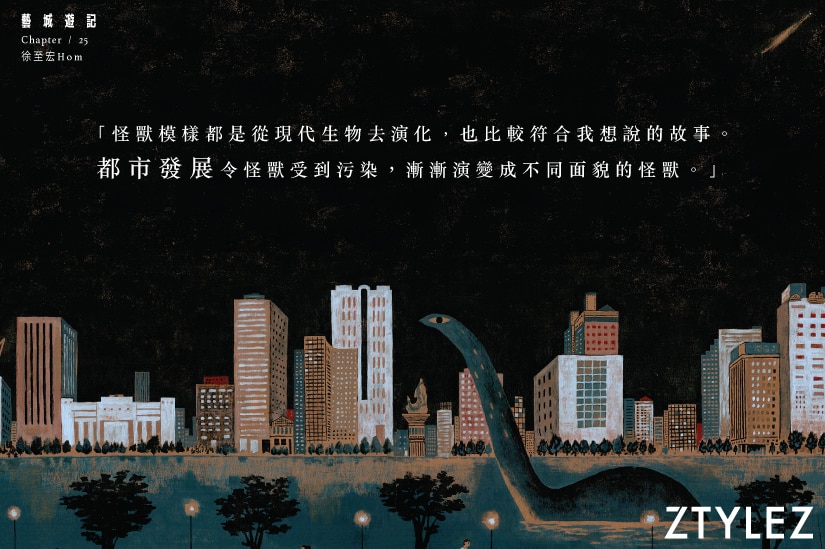
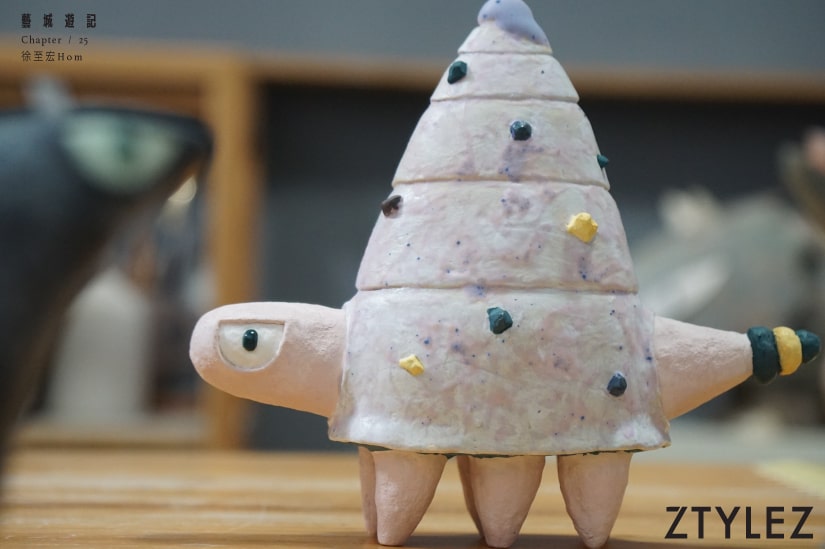
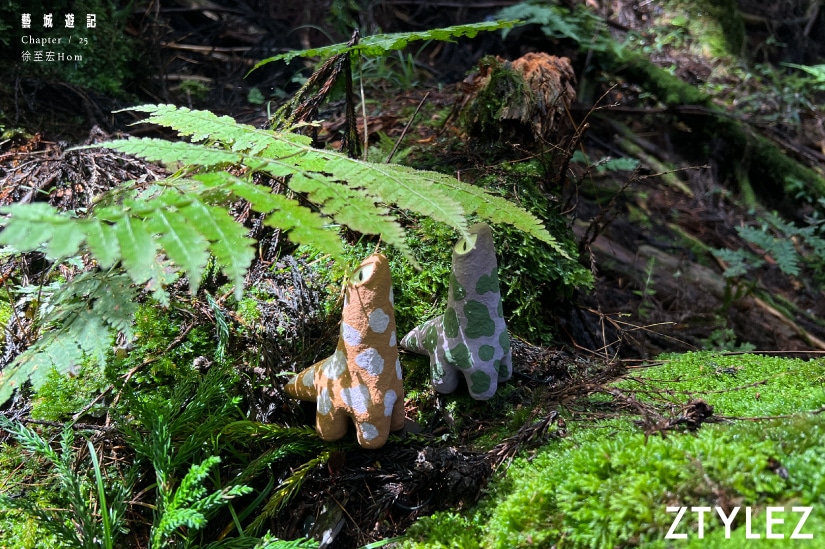
He imagined urban development and pollution altering creatures into new forms, and so he drew monsters that evolve from modern organisms, or from shells and coral turned strange by contamination. That process led to characters with shells, multi heads, and coral like textures with names such as iridescent dragon and cloud peak beast.
From drawing to clay
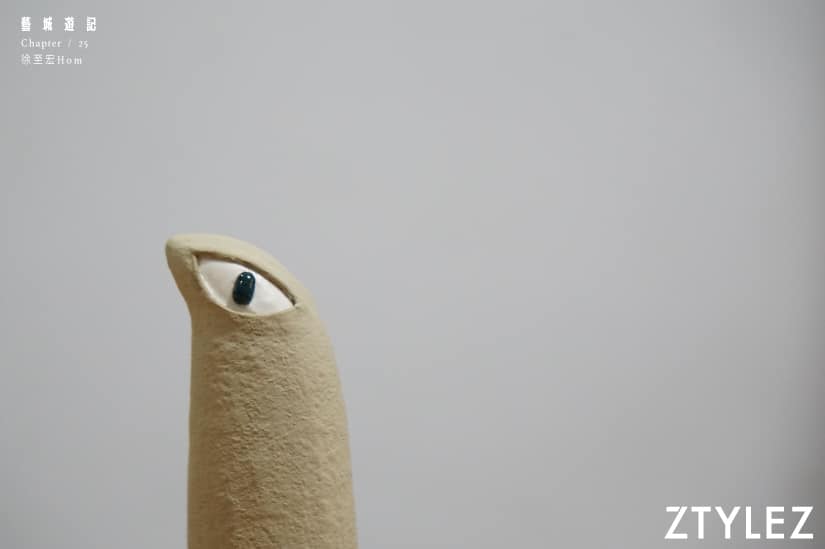
Hom began learning ceramics before the Tainan residency as a way to relieve creative burnout. He said the tactile process calmed him and allowed a different approach: “Ceramics is like switching to a different brain for creation,” he said.
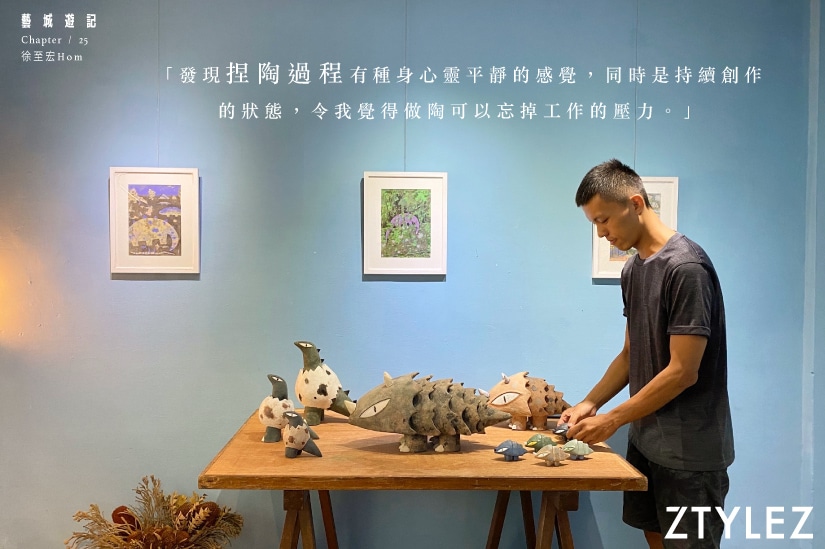
Clay required planning and a more rational sequence of steps, he said, because once glaze is applied there is no undoing the process. That discipline has fed back into his painting, where he now sometimes uses digital tools to plan color distribution before committing to a canvas.
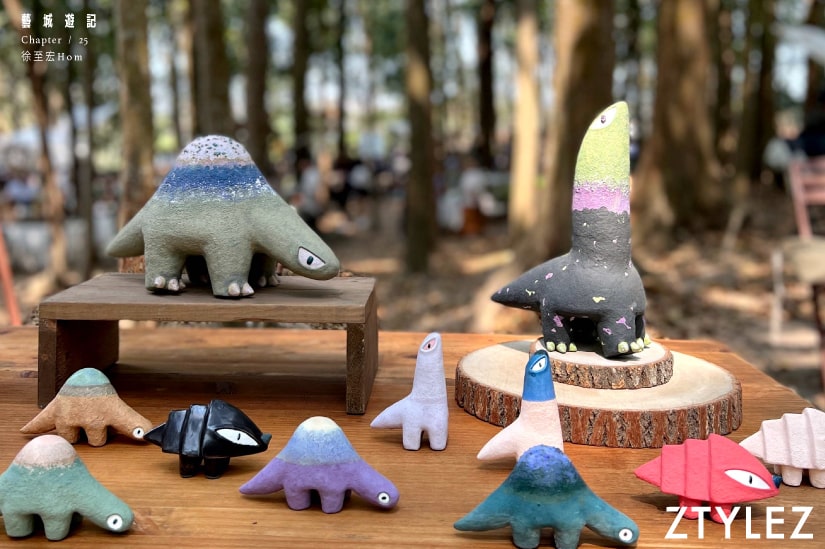
The monster ceramic series has helped introduce his work to new audiences, but Hom said he still hopes to return to picture books to frame those characters in narrative. “Maybe I will not end the monsters, but I want to do something different besides them,” he said.
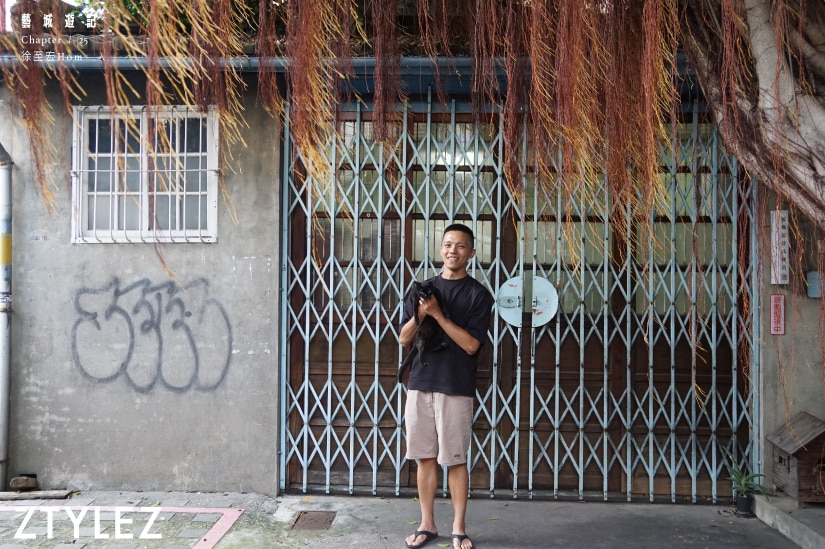
Hom now spends more time in Fengyuan than on residencies. He said that after traveling widely he realized the town fits his pace, though he still looks forward to new landscapes and mentioned he would like to try a residency abroad, including in Hong Kong, to experience a city that blends commerce and nature.
Credits: Executive Producer: Angus Mok; Producer: Mimi Kong; Interview and text: Kary Ng; Photographer: Wei